Showing posts with label animation. Show all posts

Tuesday, February 17, 2009

Review: The 2009 Short Animated Film Oscar Nominees

The Oscars are only a week away, and I finally had some time to sit down and watch all the nominated animated shorts. As per usual, the selection comes from a variety of countries -- Russia, Japan, & France to name a few -- and feature styles ranging from computer animation to traditional hand-drawn. It's always a treat to get to see independent animation up on the big screen, but I felt this year's selection was a tad lackluster.

Nominee Photo Gallery

Of the five films up for the statue, Pixar's Presto was honest to God the best. As much as it hurts me to say it, the Pixar short was just more entertaining: livelier, brighter, sillier, and simply more impressive than the rest of the bunch. A relatively insignificant short about a hungry rabbit and his inept magician owner, the film looks gorgeous and stands head and shoulders above the other entries on technical terms. It goes up against three love stories (one about a Lavatory attendant in a nice but ultimately flat 2D flash design, one from Japan about an old man revisiting his life in gorgeous hand-drawn that's just too long and depressing, and another CG one about Octopi that just doesn't hold a candle to Pixar's lush lighting and shading techniques) and a silly CG animation about two pallbearers that just looks like crap (no offense, producers Mike Judge & Don Hertzfeldt. I still love you and the Animation Show).

The real treats lay in the short list entries, including Plympton's latest Dog short and a real gem from France titled Skhizein about a man who gets hit by a meteor. Worst of the lot was a 24 minute self aggrandizing, overly simplified treatise on the state of the environment called Varmints, directed by Marc Caste. Despite the lush CG and beautiful score by Icelandic composer Johann Johannsson, the film is a gratuitous plea for environmental change. I'll take my metaphors a little less ham-fisted, thank you.

All in all, last year's shorts were a better lot, and I'm surprised so many of the short-listed nominees didn't make it to the top five. Oh well. Either way, it's nice to be able to catch cartoons on the big screen, and I'm glad the AMPAS airs these guys out for everyone to see, even if it is just a glorified screener. (For those who see it -- be on the look out for awful, awful DVD style transitions with insipid quotes about the benefits of the short film medium).

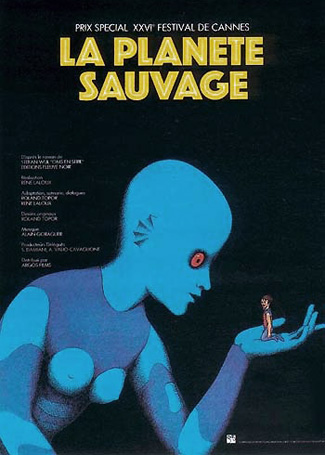
Revisit: Fantastic Planet


An Anchor Bay release 1973

Directed by René Laloux

Written by Roland Topor & René Laloux

Based on the novel by Stefan Wul

On a faraway planet where giants rule, tiny humanoids must fight for their lives and their equality.


This surreal animated film was winner of the Special Grand Prix at Cannes in 1973. Decades later it still reigns as one of the premier surrealist animated features. The film lives up to it's title; artist Ronald Topor populates the story with a host of strange creatures and bizarre landscapes. A beauty to behold, the animation and artistry of images is what makes the film work. Without it, it's a bland tale about learning to live in peace with mutual benefit. But do check it out if you're an animation junkie.

Review: Coraline


Written & Directed by Henry Selick

Based on the book by Neil Gaiman

A young girl walks through a secret door in her new home and discovers an alternate version of her life.


I've seen Coraline twice now and I can't seem to get it out of my head. The mix of intense artistry and chilling children's fantasy is infectious, and incredibly beautiful. As of right now it's my top film of 2009 and sure to be on my top ten list come the end of the year.

There are two major reasons why I love this film. Number one: Henry Selick's incredibly detailed, labor of love animation. This is as good as it gets people -- a fully realized, amazingly in depth 3D world made entirely of miniature puppets and set pieces. A lot of heart and soul went into the making of this film, and every ounce of it shows on screen. Everything from the soundtrack to the V.O. to the little hairs on Coraline's head are pitch perfect. It's truly a wonder to behold, and infinitely more impressive than any computer generated image. It's a shame more filmmakers don't follow in his footsteps.

Number two: Neil Gaiman's beautiful story. A take on the classic Alice in Wonderland, down the rabbit hole type tale, the story of Coraline is as breathtakingly imaginative as the animation that brings it to life. Despite being a fantasy, it doesn't pander to overprotective parents and has some real scares that are sure to upset younger viewers. But no matter -- Gaiman knows that kids are braver than we give them credit, and it's refreshing to see a children's film that isn't all cute animals and silly colors.

The film does have its flaws. Some scenes drag on a tad too long and overall the screen story isn't as streamlined as the novel. But those are some small grievances that were easily overlooked on my first viewing. I may be biased as this film has a lot of elements that tickle my fancy, but seriously -- I don't think I could be friends with anyone who didn't like this film. Selick and Gaiman have done children (and adults) everywhere a service, creating a masterful and resonating work that should be cherished for generations.

Wednesday, January 14, 2009

Revisit: Heavy Metal


A Columbia Pictures release 1981

Directed by Gerald Potterton

Written by Daniel Goldberg & Len Blum, based on the short stories of various authors

A glowing orb terrorizes a young girl with a collection of stories of dark fantasy, eroticism and horror.


A sci-fi snuff film wrapped in colorful kid's clothing, Heavy Metal is about as silly as pulp stories can get. Crossing film noir with science fiction, erotica, action thriller, fantasy and grunt war genres, it's a hodge-podge of adolescent testosterone with a kick ass soundtrack.

The animation is circa 80's Bakshi style, back when studios still believed (somewhat) that there was an adult audience for such things. Crude but colorful, I actually prefer this style to the current CGI kick. I don't think I've seen so much animated sex in my life -- it actually gets kind of awkward -- and a lot of the stories are complete schlock, but it's pretty entertaining nonetheless. No doubt aided by the awesome soundtrack, which features some killer tunes by Black Sabbath, Blue Oyster Cult, Devo, Nazareth, among others.

Interesting production note: Ivan Reitman produced, with Harold Ramis, Eugene Levy & John Candy doing multiple character voices.

Tuesday, January 13, 2009

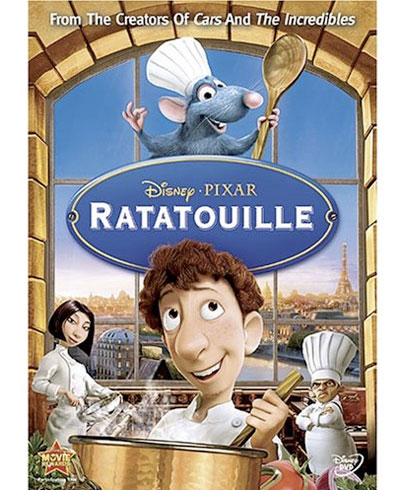
Revisit: Ratatouille


A Pixar film 2007

Directed by Brad Bird & Jan Pinkava

Written by Brad Bird & Jan Pinkava & Jim Capobianco

Remy is a young rat in the French countryside who arrives in Paris, only to find out that his cooking idol is dead. When he makes an unusual alliance with a restaurant's new garbage boy, the culinary and personal adventures begin despite Remy's family's skepticism and the rat-hating world of humans.


It took me over a year to sit down and watch Ratatouille because I have my reservations about Pixar. I tend to find their animation technically impressive, but flat and disinteresting, especially the color schemes (very purple and yellow), character designs, and all too fluid movement. Likewise the writing, while tightly wound, is often very formulaic, safe, and soft. The films hit the right beats, but all too well. For a company that puts so much individual care into each of their films, they sure seem to churn them out conveyor belt style. Not too mention most of the anthropomorphized characters could easily be substituted for humans and not much would change.

After watching, I still don't understand why this film was so well received. The animation is flat and bubble-like, the story has the same elements as every other Pixar film (an anthropomorphized animal is 'different' from the pack, gets separated, is sad about being lost but learns to love it, etc etc), and the humor is so safe it's practically non-existent. This is a kids movie -- Pixar only makes kids movies, let's be clear -- but where's the adventure? Where's the edge? Where is anything interesting? Why am I watching this?

Technically I am impressed -- don't get me wrong, the amount of tiny detail that gets its due is impressive -- but ultimately the film is unsatisfying. I really wish Pixar would grow a pair and make a goddamn movie worth watching. I still haven't seen Wall-E so maybe my feelings will change after that, but nothings done it for me yet...

Saturday, August 04, 2007

Review: The Simpsons Movie


A 20th Century Fox film 2007

Directed by David Silverman

Writing Credits:

James L. Brooks screenplay
Joel Cohen consultant writer
John Frink consultant writer
Matt Groening screenplay
Al Jean screenplay
Tim Long consultant writer
Ian Maxtone-Graham screenplay
George Meyer screenplay
David Mirkin screenplay
Michael Price consultant writer
Mike Reiss screenplay
Mike Scully screenplay
Matt Selman screenplay
John Swartzwelder screenplay
Jon Vitti screenplay

After polluting the local lake, resulting in Springfield being put under a giant government instituted glass dome, Homer must simultaneously save the town and his marriage.


Those of you who read this site may have noticed that I haven't written a review of a new film in quite a long time. That's because I haven't been to the theaters in over two months. That's right - two whole months have passed since I've been compelled to go to my favorite place on Earth, the movie theater, and watch a film. I've been so fed up with the crap that Hollywood has churned out this summer that I simply decided to boycott pretty much every movie that has been released. Sequel after sequel, revised franchise to remake, I couldn't stand to sit through any of them.

But The Simpsons was something I had to see. Eighteen years in the making, The Simpsons Movie was something that was always on the tips of everyone's tongue, but seemed like it would never happen; a mythical idea that looked great on paper but could never be done. Like most of my generation, I grew up watching The Simpsons, and just couldn't picture a jump onto the big screen that would do the show justice.

So when the movie finally landed - to rave reviews, nonetheless - I had to see it. I went in with the best of expectations: that it would undoubtedly disappoint, but if there were two or three good jokes, I'd be happy. And I'm glad to say that the film not only met those expectations, but exceeded them. The Simpsons Movie is about as good of a film one could ask for from a show that seemed to have run its course almost a decade ago.

Without side-stepping the legacy that they've already built, Groening and Co. have managed to craft a fast paced, funny, cinematic counterpart to the show that retains its spot-on portrait of the American family. While some might complain that the satire isn't as biting as, say, South Park: Bigger, Longer, & Uncut, the film somehow manages to make its points clear while staying fresh. After all, The Simpsons was never really about controversy, at least not in the same way as South Park, but the dives it takes at religion and American life are still quite funny while aimed at an incredibly wide audience; I saw the flick with my whole family, and my parents laughed just as hard as I did.

Ultimately the film is a bit short and maybe too fast paced for its own good - it's a bit top heavy and starts to lose steam towards the last act - but I have to say I was impressed. Was it worth the eighteen year wait? No - but it didn't ruin the show in any way, and was certainly an improvement upon the last couple of seasons. If anything, it reminded me of why I liked The Simpsons so much to begin with, and that's certainly a good thing.

Thursday, March 22, 2007

Hilarious Quote of the Day


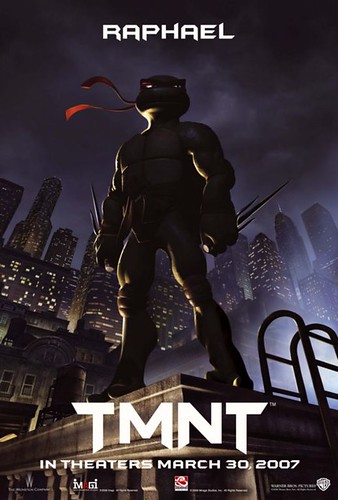
"As a piece of film design, the movie is first-rate; on sheer aesthetics alone, it rivals Triumph of the Will for astonishments." - Stephen Hunter of the Washington Post on TMNT


Seems like an apt comparison to me...

Tuesday, February 20, 2007

Just For Me: An Exploration of Nickelodeon, TV’s First Network for Kids part V


Another way that Nickelodeon created brand image was through animation. By the late 1980s, animation dominated children’s programming on the major broadcast networks. Through limited animation, produced by such studios as Filmation Associates and Hanna-Barbera Productions, networks found they could create shows based around pre-sold concepts that would appeal to advertisers. Programs like Teenage Mutant Ninja Turtles, Garfield, Fat Albert & The Cosby Kids, G.I. Joe, and My Little Pony worked off of previously conceived properties, such as books, toys, or movies, that were instantly recognizable to children and sold as product tie-ins. In some cases, these shows were merely half-hour commercials for the products they featured. Limited animation was economically sound enough to produce sufficient quantity to fill a four-hour time slot, as compared to live-action programming, and such cartoon blocks became quite profitable (Simensky 87-9).


However, these cartoons also received a lot of critical backlash, both from parents and the production community. They were clearly gender divided (He-Man for boys, Care Bears for girls, etc.), promoted little in terms of racial diversity or education, and were typified by violence. Likewise, characters and storylines were shaped by the demands of merchandise licensing. Lobby groups like Action for Children's Television appeared in the late 1960s to voice their concerns about the presentation of violence, anti-social attitudes and stereotypes in Saturday morning cartoons. By the 1970s, TV networks felt compelled to lay down strict content rules for animated programs. Critics and animators have complained that this proceeded to the point where the very basic elements of drama and suspense were severely restricted and artists were left with few avenues of expression. Even more disconcerting was that the prohibition against the depiction of anti-social elements often prompted conformist stories, such as in the Smurfs series, where almost any individual initiative often resulted in trouble for the group and therefore had to be avoided. Aside from the award-winning Muppet Babies program, Saturday morning cartoons continued its legacy as a haven of insipid sitcom rip-offs and hapless reruns (Sandler 46-7).


In order to maintain its kid-parent friendly, non-violent image, Nickelodeon took to creating its own original animated programs, called “Nicktoons”, in 1991. This was revolutionary for several reasons. For one, animation was a costly process and it was rare that a network would produce shows with original characters. “The decision to have original characters made perfect sense in that it would allow Nickelodeon to differentiate itself from the broadcast networks” says Linda Simensky in her essay The Early Days of Nickelodeon (93). “For the most part, the broadcast establishment had little interest in original characters, instead opting to play it safe with easily recognizable marquee characters” (Simensky 93). Also, cartoonists were given creative control, rather than writers and marketing teams, as cartoons had previously always been pre-sold with licensed products in mind. Network shows rarely kept the creator attached to a series for very long because it tended to make the production process slower and harder to manage, but Nickelodeon wanted creator-driven cartoons; they “believed that the best characters all lived inside the heart of their creators” (Simensky 92). By creating it’s own group of characters and allowing cartoonists to do their own work, Nickelodeon could create its own animated identity, as well as its own backlog of programs which could be aired at any time, justifying the production costs. Ultimately, these cartoons were a huge success and have since become the networks staple programming. The creator driven cartoon process has since been copied by almost every major kids network, including Cartoon Network, the Disney Channel, Fox Kids, and Kids WB.


Since its inception in 1979, Nickelodeon has not only become the number one children’s channel, but a household name. The network produces movies, magazines, toys, and all sorts of other licensed products. However, what separates it from previous forms of children’s television is its commitment to quality – putting kids first. Both parents and kids know that Nickelodeon is a fun, safe place to be a kid, and this image extends to every product Nick creates. In such a way, the network is a great example of the way corporate branding functions on cable television. Likewise, Nickelodeon’s radical new forms of approaching children’s programming have had a lasting effect on the children’s entertainment industry, influencing everything from show design to production to basic philosophies. In short, Nickelodeon was the best thing that could have happened to TV for kids.

Check out the whole article!

Sources:
Gore, Chris. "Cel Out- The Plot to Kill Cartoons”. Wild Cartoon Kingdom #1, 1993
Hendershot, Heather. “Nickelodeon & The Business of Fun”. Nickelodeon Nation. Ed. Heather Hendershot. New York: NYU Press, 2004. 1 – 14.
Hutsul, Christopher. “Ren and Stimpy creator tries an online end-run to get back in the game”. Toronto Star. 6 Apr 2006.
Langer, Mark. “Ren & Stimpy: Fan Culture and Corporate Strategy”. Nickelodeon Nation. Ed. Heather Hendershot. New York: NYU Press, 2004. 155 – 181.
Nakata, Hiroko. “Exporting animation a huge Japanese success story”. The Japan Times. 7 July 2004.
Pecora, Norma. “Nickelodeon Grows Up: The Economic Evolution of a Network”. Nickelodeon Nation. Ed. Heather Hendershot. New York: NYU Press, 2004. 15 –44.
Sandler, Kevin S. “A Kid’s Gotta Do What A Kid’s Gotta Do: Branding the Nickelodeon Experience”. Nickelodeon Nation. Ed. Heather Hendershot. New York: NYU Press, 2004. 45 – 65.
Seiter, Ellen and Vicki Mayer. “Diversifying Representation in Children’s TV: Nickelodeon’s Model”. Nickelodeon Nation. Ed. Heather Hendershot. New York: NYU Press, 2004. 120 – 134.
Simensky, Linda. “The Early Days of Nickelodeon”. Nickelodeon Nation. Ed. Heather Hendershot. New York: NYU Press, 2004. 87 – 107.
Stuart, Audrey. “Animation remains all-powerful in kids TV”. Agence France Presse. 18 Oct 2005.
Stuart, Audrey. “Comedy creeps back into kids TV”. Agence France Presse. 6 Oct 2005

Thursday, February 15, 2007

Just For Me: An Exploration of Nickelodeon, TV’s First Network for Kids part III


By 1992, Nickelodeon was beginning to see competition from broadcast channels such as Fox, UPN, WB, as well as cable channels like the Family Channel, Cartoon Network, Discovery Channel, and the Learning Channel. While many of these networks struggled to maintain ratings, Nickelodeon viewer ship steadily rose, making it the number one network on cable and the highest rated children’s network by 1996.


What made Nickelodeon so special? For one, the network had the advantage of brand association before any other kid’s network could develop. In his essay, “A Kid’s Gotta Do What a Kid’s Gotta Do”: Branding the Nickelodeon Experience, Kevin Sandler writes, “promoting specific prosocial elements such as diversity, nonviolent action, appropriate levels of humor, and guidelines for success – all without ever talking down to kids – characterizes the brand attitude of Nickelodeon” (45). In other words, Nickelodeon offers kids the chance to be kids, while still under the approval of adults – something broadcast networks could not provide.


Nickelodeon accomplished the creation of this image in several ways, namely by gaining the attention of kids. When the show You Can’t Do That On Television introduced ‘slime’, a sloppy green goop used for making messes, in 1984, it became the networks trademark, appearing in commercial spots and other programs such as the hit 1986 game show Double Dare. As a visual message, ‘slime’ resonated with kids, showcasing the network at its goofiest; messy and out of control, yet in the spirit of good, wholesome fun. Other trademark visuals, such as the orange splat logo design, worked to reinforce the kids-first attitude of the network (Sandler 48-9).


Likewise, Nickelodeon live action programs proved that the network had a sensitive, relevant side to it as well. Shows like Hey Dude, Welcome Freshman, Fifteen, and Are You Afraid of the Dark? dealt with teenage issues in mature ways. This was attractive not only to kids, but parents who were tired of the violence and stupidity that ran rampant throughout kids programming (Sandler 49). It also opened the floodgates for sensitive teen dramas, like Degrassi and those that air on WB.

Nick bolstered this kid friendly image by being one of the first networks to destroy gender and ethnic myths that plagued children’s programming. Before Nickelodeon, almost all children’s shows were divided by sex, with white males being the dominant focus group. Broadcast networks featured action adventure shows characterized by slapstick violence that catered to young male viewers, counterbalanced by cute, colorful programs for girls. Female characters were often stereotyped, or eliminated from children’s shows entirely. Most networks assumed that boys did not watch girl’s shows, and vice versa (Seiter & Mayer 122).


However, Nickelodeon shattered this concept by casting female leads in shows like Clarissa Explains It All and The Secret World of Alex Mack while still maintaining a strong male audience. These shows worked because they focused on topics affecting all kids – parents, school, friendship – and were not gender specific. At the time, many TV executives saw this as a bi-product of the cable market: “the message was that it worked for cable, and for an all-kids’ network, but was unrealistic as a business strategy for network kids’ shows” (Seiter & Mayer 123). However, the success of these programs proved that entertainment was genderless, and laid the foundation for future cross-marketable programs, such as the WB’s Animaniacs and Disney Channel’s Lizzie McGuire.


Nickelodeons approach to ethnic diversity was similar to its approach to gender. Most broadcast networks would throw an ethnic character into their programs simply to be politically correct, but shied away from programs featuring ethnic leads, but not Nickelodeon. From its pre-school morning programs to late night teen shows, Nickelodeon programs portrayed many diverse characters. Shows like The Brothers Garcia, a sitcom about a Latino family, The Mystery Files of Shelby Woo, a mystery show about an Asian spy, and My Brother & Me, another sitcom featuring an African American family, showed that programs involving race could be universal, and broadened Nick’s appeal as an “all kid” network. As a global network, Nick caters regional programming to fit the culture of the area, while allowing other distinct cultural voices the right to be heard. Like other Nickelodeon programming, these programming philosophies opened the market for other ethnically driven children’s shows, like Disney’s The Proud Family.


Part IV coming soon...

Check out Just for Me Part II!
Check out Just for Me Part I!

Just For Me: An Exploration of Nickelodeon, TV’s First Network for Kids part II


In the mid 1960s, it was discovered that satellite distribution allowed cable services, originally designed to improve reception in geographically difficult areas, the ability to host channels beyond the normal broadcast stations. By the late 1970s, cable offered super stations, pay-TV and other specialty programming. With these new services, industry revenue grew annually by about 15 percent (Pecora 18).


At the time, the three major broadcast networks – ABC, NBC, CBS – dominated the ratings for the two- to eleven-year-old demographic. Early children’s programming had been relegated to the Saturday morning timeslot, where shows like Howdy Doody were often used as springboards for marketing products. In fact, most networks hadn’t paid attention to kids programming much until the mid-1960s, when CBS introduced Saturday morning cartoons, which only acted as cheap substitutes for live action programming. Realizing the potential for profit in the specialization of children’s programming, Warner Cable Company launched the Pinwheel Network (later changing it to Nickelodeon in 1981) on April 1, 1979 with “hearty, wholesome programming that will delight PTA’s, community groups, and just plain anxious parents… as well as the kids” (Pecora 16).


The network worked to champion the idea of cable television to wary adults. Whereas children’s programming was restricted to certain times before, children and parents could now turn on Nick at anytime of day and know they would find something to watch. By reinforcing a ‘kids only’ image, Nickelodeon could lure suspicious parents into purchasing cable TV through their children. In turn, the growth of Nickelodeon as a network is inextricably linked with the growth of home cable access (Pecora 21).

When Nickelodeon went on the air with programming exclusively for children for the first time in 1979, there was nothing else like it. The network relied entirely on subscription fees, and aired mostly low budget programs, such as game or talk shows that were either produced by (Kid’s Writes) or featured kids (Mr. Wizard, Livewire). While this early programming worked to entertain kids in a pro-social, non-stereotypical way, it also earned the channel the reputation for being the “green vegetable network” (Pecora 23). In other words, the shows were good by adult standards, but not exactly what kids wanted to watch. In order to create new programming and maintain costs, the channel introduced advertising in 1983. That year, Nickelodeon turned a profit for the first time in its history, allowing for the development of original programming (Pecora 23).


Part III coming soon!...

Check out part I!

Tuesday, February 13, 2007

Just For Me: An Exploration of Nickelodeon, TV’s First Network for Kids part I


It’s a fact: children love television. According to Neilson research, the average American child between ages 2-17 will spend about 19 hours and forty minutes in front of the TV screen per week. Approximately 99% of American families own at least one television – 50% own at least three – and 45% of parents say they use TV to occupy their child when they’re too busy. Likewise, 54% of 4-6 year olds say they would rather watch TV than spend time with their parents. 56% of children ages 8-16 have a TV in their bedroom.

It’s a fact: television loves children. In one year alone, the average American child will have seen over 40,000 TV commercials selling a vast array of products. Advertisers spend approximately $1.3 billion on ads directed at young children per year, and almost 97% of American children age six and under own products based on characters from TV shows. In fact, most kids can develop brand loyalty by age 2!


So what do these numbers mean? It is clear that television plays a huge role in the social development of the modern American child, but how does this happen? Who controls it? What makes TV safe for kids?

This next post series will explore the history of Nickelodeon, the number one television network for children, and show how kids went from being completely ignored to the most desirable demographic in all of TV. They will argue that the formation of Nickelodeon in 1979 was crucial to the advent of cable, and will establish that through branding, animation, and other progressive programming, Nickelodeon managed to create a ‘quality’ television environment for children, approved by parents: the perfect example of positive corporate branding on cable TV.

Tuesday, January 30, 2007

New Blog, New Posts, etc.


January 28, 2007 -- ONE of the biggest disappointments in director Steven Spielberg's life was Alfred Hitchcock's repeated refusal to meet him - but it turns out the Master of Suspense had a bizarre excuse. In his memoir, "Things I've Said, But Probably Shouldn't Have," due in May from Wiley, actor Bruce Dern writes that he tried and tried to convince the director of "Psycho" and "The Birds" to say hello to Spielberg, who had just triumphed with "Jaws." "I said, 'You're his idol. He just to sit at your feet for five minutes and chat with you' . . . He said, 'Isn't that the boy who made the fish movie? . . . I could never sit down and talk to him . . . because I look at him and feel like such a whore,' " Dern relates. Completely puzzled, Dern, who appeared in two Hitchcock flicks, finally pinned the director down: "I said, 'Why do you feel Spielberg makes you a whore?' Hitch said, 'Because I'm the voice of the 'Jaws' ride [at Universal Studios]. They paid me a mil lion dollars. And I took it and I did it. I'm such a whore. I can't sit down and talk to the boy who did the fish movie . . . I couldn't even touch his hand."


Why Hitch Shunned Speilberg

Lord knows this isn't real news (I mean, it's Page Six for crying out loud), but I think it's pretty funny. Little did Hitch know that the guy who made the fish movie would become one of the biggest Hollywood whores of all time! Well, at least Hitch had the ability to conceed he was a whore - Speilberg keeps trying to pass the same political thriller he unloads every other year or so off as 'art'. Munich my ass. Expect an academic post crossing the politics behind two generations of Speilberg movies, War of the Worlds and the one about the fish, pretty soon. Also, some more reviews and revisits, as well as a couple of interviews/Q&A's I've done with some filmmakers - all coming soon!

For now, I'm going to take this opportunity to plug my new blog Cartoonering. Think of it as a companion piece to Cinematikal, a sister blog focusing on that other passion of mine, cartoons! It's still under construction, of course, but check it out - there should be some good posts up there within the next twenty-four hours. Expect plenty of videos (including a couple by the Quay Brothers that are up there now), animation news, and academic commentary. I'm gonna try to show some of my own comics, as well as chronicle the progress of the cartoon I'm making on there as well. So check it out - tou'll be glad you did! (If you like cartoons, at least)

Tish-Tash: The Forgotten King of Comedy pt.5

Difficulties with Tashlin as the Auteur

The past few readings of Frank Tashlin’s body of work act merely as a template to determine the consistency of technique and theme throughout the director’s career. While they establish that Tashlin had a well-developed technical style and undercurrent of thematic motifs, there are still several issues that need to be addressed to solidify Tashlin’s status as auteur.


One would be Tashlin’s relationship with Jerry Lewis. The pair worked together on a total of eight films and though it seems clear that the Tashlin/Lewis films are more gag oriented than those directed by Lewis himself, a close comparison and separation of their individual careers is needed.5 Likewise, a thorough appendix on the history of slapstick would be useful in placing Tashlin’s style of topical humor into context.

Much of the readings also centered around connections drawn between Tashlin’s animation work and his feature films. While it is of this author’s opinion that animation is equally as valid as live action in terms of historical significance, the lack of critical attention to animation is quite pressing. Do Tashlin’s animations hold equal weight to his feature films? Can the auteur theory be applied to animated works? These are questions cinema scholars should address.

For those of you interested in reading more about Tashlin's work and his career, I suggest you check out Roger Garcia's anthology of Tashlin essays, simply titled Tashlin. There are a lot of great essays in there, many of which were quoted in these posts, that further expand on Tashlin's style and make a great case for his auteurship (without directly saying so).

And if you don't like to read, just check out his movies! Most are on DVD and readily available on netflix or at the local videostore.

Check out the Tashlin article from the beginning here!

Thursday, January 25, 2007

Tish-Tash: The Forgotten King of Comedy pt.4

The Inner Circle: Interior Meaning

Andrew Sarris defines interior meaning as being “extrapolated from the tension between a director’s personality and his material…It is not quite the vision of the world a director projects nor his attitude toward life. It is ambiguous, in any literary sense, because part of it is imbedded in the stuff of the cinema and cannot be rendered in non-cinematic terms” (562). Based on this description, interior meaning can be interpreted as latent themes presented over a period of time or body of work. While many critics lamented the triviality of post-war comedies, Tashlin’s films often dealt with motifs of sexual fear and offered scorching critiques of consumer society.

The typical Tashlin hero is generally a male protagonist caught in a situation of sexual castration. They often find themselves refusing the ardent passes of strong-willed females. In many cases, these females are often wealthier and more powerful than the males they are chasing; Dick Powell refuses to marry for money in Susan Slept Here and although Jill St. John keeps her riches a secret in Who’s Minding the Store?, Jerry Lewis still rejects her sexual advances because he’s waiting to earn enough money to get married on his own. Similarly, The First Time stands as a critique of the economic struggles inherent in the institution of marriage.


We can see these themes in Tashlin’s cartoon work as well. After initially being pushed around by Petunia Pig in Porky’s Romance (1937), Porky rejects Petunia’s bid for marriage because he fears she’s going to turn into a fat, controlling slob. In Plane Daffy (1944), a femme fatale Nazi spy hen named Hatta Mari4 seduces American fighter pigeons for information, but can’t seem to get a grip on Daffy Duck, who manages to escape her electric kisses. In The Stupid Cupid (1944), Daffy resolutely fights against the Cupid’s attempts to make him lovesick . “Oh no you don’t buster,” Daffy says, whipping out his wallet to show the Cupid a picture of his large family. “You hit me last year and look what happened – tied down, no more fun! Now look at me, a has been!” The Cupid eventually succeeds and sends Daffy into a feverish ménage-a-trois with a married chicken couple; a commentary on the dangers of sexual attraction.


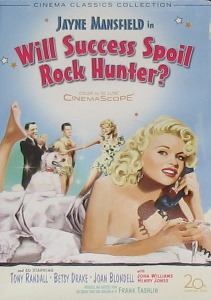
These ideas culminate in Will Success Spoil Rock Hunter?, as Tony Randall resists the attractions of Mansfield’s rich and beautiful Rita Marlowe because he is engaged, choosing a simpler life with a simpler wife over the ‘success’ Rita has to offer. Bill Krohn writes “Clearly, the Tashlin hero’s refusal to be seduced is a moral choice, because he is not without desire – he is just free of certain socially conditioned forms of desire… the hero’s refusal is the central symbol of a general critique of the desire for money, youth, fame, and the catch-all concept of success” (35).

The idea of success in a consumer media-driven society plays a big role in Rock Hunter, as it does in many of Tashlin’s films. In some cases, it takes the obvious form of satire: the validity of comic books in Artists and Models, the failed product pitches in Rock Hunter, the glorified ideal of Hollywood in Hollywood or Bust. But Tashlin often ends his films ambiguously. In The Girl Can’t Help It, Tom Ewell plays Tom Miller, a down-and-out alcoholic press agent forced by gangster ‘Fats’ Murdock (Edmond O’Brien) to boost the singing career of Jerri Jordan (Jayne Mansfield), Murdock’s lover. Miller had seen success before – he propelled singer Julie London to stardom despite her desire to settle down with Miller and live a normal life. Throughout the film, Miller is haunted by the loss of London as a lover, and Jordan acts as his chance to rectify the past through the present. In the end, Murdock appeals to Jordan’s desire to settle with Miller and leave stardom behind, despite the fact that he forced her to cut a hit record. Despite the seemingly happy ending, its sardonic tone and valorization of average-ness and the ordinary leaves a mixed message. Are the characters truly happy, or are they simply substituting one image of success for another? Tashlin’s ambiguity acts as discourse on the American dream and the definition of success in a media-driven society. As Bernard Eisenschitz writes, “Tashlin not only identified and denounced the contradiction of American cinema, but also embodied it, since the ambivalence of his films makes it impossible to say which side he is taking, or to be sure that he is not exploiting the very same thing he is denouncing.” (105)


Some videos from Tashlin's films have been added to parts 2 & 3 - check 'em out! Part 5: The Conclusion coming soon...

Check out Part 3!
Check out Part 2!
Check out Part 1!

Monday, January 22, 2007

Tish-Tash: The Forgotten King of Comedy pt.3

The Middle Circle: Personal Style

One of Tashlin’s most renowned trademarks was his use of reflexive intertextual references – a self-conscious referral to outside texts in order to derive meaning or develop humor. Tashlin used topical references in almost all of his films: Artists and Models features James Stewart in a cameo appearance on a balcony with telescopic camera, as well as a comic book character strikingly similar to Batman; Son of Paleface features Roy Rogers in a role lampooning his own screen image.


However this practice culminates most notably in Will Success Spoil Rock Hunter?, where much of the film’s humor is derived from intertextual references. Take, for example, the films Brechtian introduction, in which Tony Randall mistakenly presents the movie’s title as The Girl Can’t Help It. That particular film, also directed by Tashlin, is mentioned repeatedly throughout Rock Hunter; along with Kiss Them For Me and The Wayward Bus, it is established as one of mega-star Rita Marlowe’s former screen credits – another intertext, as these three titles are all real films in which Jayne Mansfield, the actress who plays Marlowe, formerly performed.


Mansfield herself acts as an intertext throughout the entirety of the film. Her bleached-blond buxom looks and incessant squeals emulate another blond bombshell, Marilyn Monroe. When Marlowe mentions that “the studio is worried about my acting in my upcoming drama”, one can’t help but think of fervor surrounding Monroe’s first dramatic role in 1956’s Bus Stop. Even the name Rita Marlowe is a send up of famous female film stars; a combination of Rita Hayworth, Jean Harlow, and Marilyn Monroe.

Tashlin’s use of intertextuality finds it root in his early work in animation. The majority of his Warner Brothers cartoons are riddled with popular references, both timely and timeless. Of course, this is not specific to Tashlin but to the Warner Brothers animation style as a whole. Take, for example, Bob Clampett’s 1939 short The Film Fan, in which Clark Gable and the Lone Ranger make an appearance, or I.Freleng’s 1936 short The CooCoo Nut Groove, which stars cartoon counterparts of Ben Bernie, Groucho Marx, W.C. Fields, Fred Astaire, John Barrymore, Mae West, and Laurel and Hardy, among others. In general, these references aimed to spoof or lampoon well-established stars for humorous purposes.


However, Tashlin’s use of star references often-extended beyond simple mockery. The 1944 short Swooner Crooner is a great example of this: a group of hens laying eggs for the war effort get distracted by a rooster who looks and sings like Frank Sinatra, bringing egg production to a halt. Porky Pig, acting as supervisor, rushes to investigate and soon finds himself auditioning for a new crooner. Caricatures of Al Jolson, Jimmy Durante and Cab Calloway are presented, but Porky settles on a Bing Crosby clone that introduces himself as "The Old Groaner". A battle of the crooners ensues, and between the two of them, egg production soon becomes more than Porky can handle. This film is an obvious nudge at working women in the war effort – multiple visual references, including a hen assembly line and a gag where bomb bay doors open to release the eggs make this clear. The caricatures serve not only as a source of humor, but act to motivate the plot of the film; their singing battle ultimately resolves the narrative conflict of how to turn the workers’ inactivity into wartime production. Likewise, the contrast presented between Sinatra’s sultry voice and Crosby’s soothingly smooth singing makes a point about the military risks of excessive phallic power. The film is a warning for female workers against erotic distraction and reinforces the idea of domestic duty. In turn, the caricatures become essential to the plot, rather than just throw away gags. Tashlin understood the power of celebrity and used it to critique society – something he would do again later in his career with both The Girl Can’t Help It and Will Success Spoil Rock Hunter?.

Of course not all of Tashlin’s cartoons were as insightful as Swooner Crooner. As Greg Ford points out, Tashlin’s 1937 short Speaking of the Weather “was, in many senses, a typical Warners “Merrie Melody” (80), and Tashlin had many other shorts of the same vein, including 1937’s The Woods Are Full of Cuckoos and 1938’s You’re An Education. These ‘Merrie Melodies’ often featured inanimate objects anthropomorphized to the tune of a licensed Warner Brothers radio single. They too often featured topical subjects – current magazines, radio stars – although they lack the critical punch of some his narrative shorts. While seemingly innocuous, the ‘Merrie Melodies’ provided a good framework for the rock’n’roll intertext of Tashlin’s The Girl Can’t Help It, as then-rock sensations such as Little Richard, The Platters, and Fats Domino help the film movie along in musical interludes that mirror the ‘Merry Melodies’ style.


Due to Tashlin’s frenetic pacing, much of the topical humor in his films is easy to miss. However, he undoubtedly reviled in the use of intertext as both a source of humor and satire throughout his career, making it a mainstay of his style.

Check out Tish-Tash pt.1!
Check out Tish-Tash pt.2!

Part 4: The Inner Circle coming soon!

Aqua Teen Movie Set for March


Aqua Teen Movie Set for March


Aqua Teen Hunger Force Colon Movie Film for Theaters is an action-adventure epic that reveals the mysterious origins of Meatwad, Frylock and Master Shake. When an immortal piece of exercise equipment threatens the balance of galactic peace, it is up to the Aqua Teen Hunger Force to run away from it. Peril escalates when the Plutonians team up with the Cybernetic Ghost of Christmas Past to strive for ultimate control of the sinister deadly device.


Well I guess the rumors were true. Aqua Teen will be hitting about 800 screens on March 23rd. This crap is ridiculous - I don't know how they could strech this show out into 86 minutes, but apparently they found a way. The early teasers were pretty ugly looking, just about what you would expect from the Aqua Teen crew. Here's hoping that it will at least be mildly amusing...

Sunday, January 21, 2007

Review: Tales of the Brothers Quay


Playing at the Film Forum
FRIDAY, JANUARY 19 - THURSDAY, JANUARY 25

The program includes the following films:
The Cabinet of Jan Svankmajer (1984)
The Epic of Gilgamesh (1985)
Street of Crocodiles (1986)
Rehearsals for Extinct Anatomies (1986)
Dramolet (Stille Nacht I) (1988)
The Comb (From the Museums of Sleep) (1991)
Anamorphosis (or De Artificiali Perspectiva) (1991)
Are We Still Married? (Stille Nacht II) (1991)
Tales from the Vienna Woods (Stille Nacht III) (1992)
Can’t Go Wrong Without You (Stille Nacht IV) (1993)
In Absentia (2000)


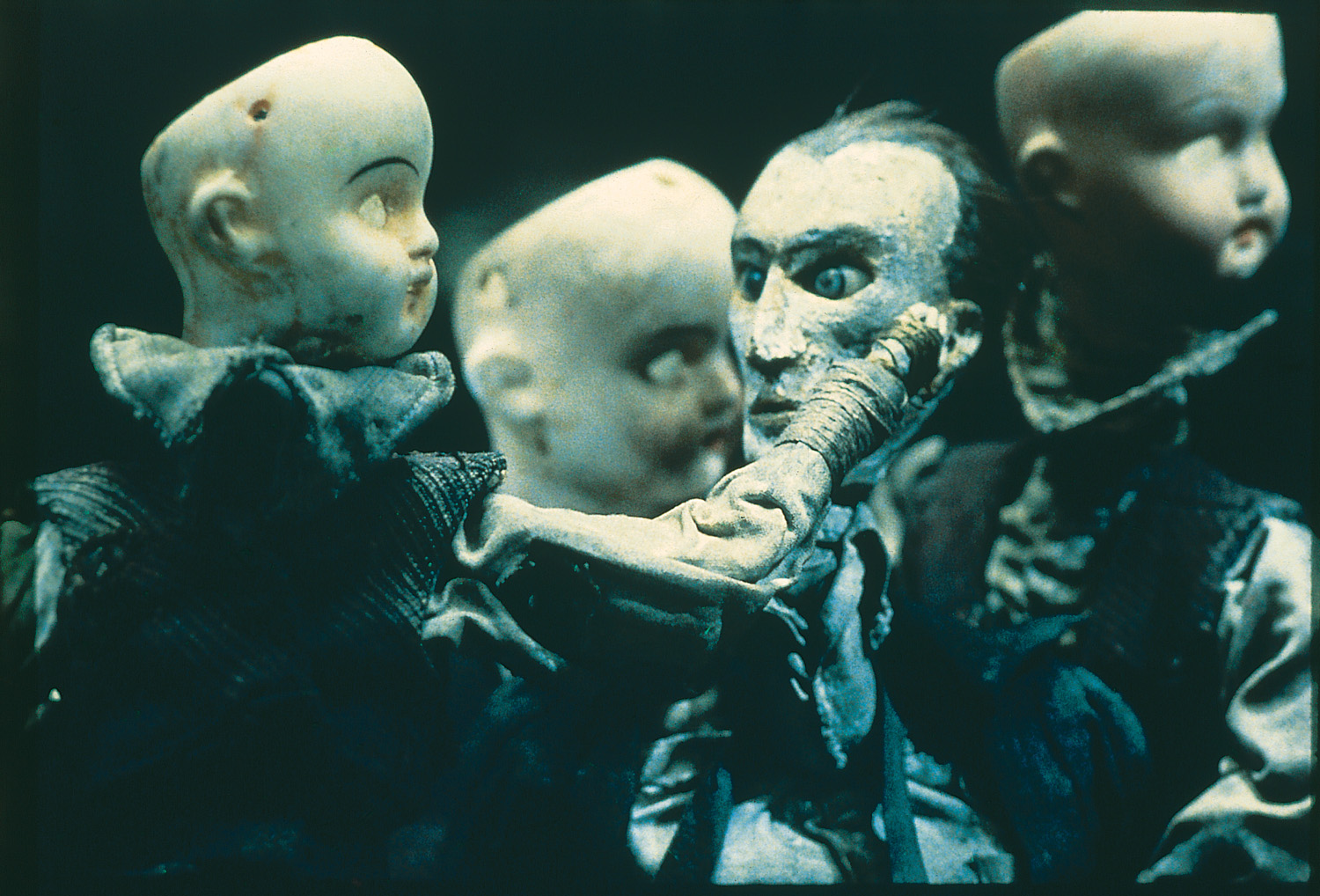
Masters of stop-motion, The Quay Brothers are known for their Freudian-influenced state of conciousness style imagery similar to that of Jan Švankmajer. Most of their films feature dolls, often disassembled, in a dream world of machine parts, meat, wood puzzles and other found objects. Their attention to detail is striking - you can see the layers of dirt, filth and ware on their materials, and their set designs are amazingly constructed. Their camera work is also well definied, utlilizing intense closeups, rack focuses, vertical and horizontal pans, and repetition to built a distinct rhythmic aesthetic. Their best known work is the haunting Street of Crocodiles, based on the short story of the same name by the Polish author and artist Bruno Schulz. This retrospective, playing this week only at Manhattan's Film Forum, is a must see for any animation fan.

Senses of Cinema interview: Quay Brothers

2006 Suicide Girls interview: Quay Brothers

Tish-Tash: The Forgotten King of Comedy pt.2

The Outer Circle: Technique


As an animator, Tashlin was widely recognized for bringing a live action visual vocabulary to his cartoons. Animation historian Greg Ford writes “Tashlin’s taste for the language of feature films was evident from the very beginning in his first stint as an animation director at Warners in 1936…Sometimes Tashlin’s love of live action films took the form of straightforward visual quotation” (79-80). Ford refers to the high and low angle shots used in Porky’s Poultry Plant (1936), tracking shots used in Wholly Smoke (1938), and the opening montage of Brother Brat (1944), which more than borrows techniques from war documentaries of the era. There are other examples of this as well: the use of pans in The Woods Are Full of Cuckoos (1937) and Now That Summer Is Gone (1938); the use of canted angles in Porky’s Road Race (1937); the frequent use of the dissolve as a transition. For the time, these techniques were new to animation, and widened the visual language of cartoons for future animators.

What is particularly effective in Tashlin’s animation work is his use of space. In Porky’s Railroad (1937), there is a scene shot from a low angle perspective to make it appear as if a train were coming at the spectator. In The Case of the Stuttering Pig (1937), Tashlin uses a wide-angle shot to allow room for six different characters to appear on screen in a row.


Porky Pig’s Feat (1943), one of Tashlin’s most innovative cartoons, uses a variety of different angle shots to portray depth. The short follows Daffy and Porky as they attempt skip out on the bill for their stay at The Broken Arms Hotel. In one scene, they knock the brutish hotel owner down flight of stairs; a side view shot slowly turns into a bird’s eye view, creating a spiraling sense of depth that makes the gag work. One low angle shot shows Daffy and Porky running towards an elevator at the far end of the hall. Because the shot is at such a low angle, the elevator seems far away, but a quick zoom brings the camera to the front of the action. A similar shot allows for a gag in which the hotel owner chases the protagonists in and out of different rooms in the hallway. In one of the more daring shots, a low angle view gives Porky Pig’s perspective as he looks up at the hotel. These attempts at providing depth and perspective were uncommon in such early cartoons and certainly paved the way for Chuck Jones' Coyote and Roadrunner chase-toons of the fifties.


Considering Tashlin’s use of space and depth in animation, it comes to no surprise that his feature film work utilized Cinemascope to its fullest advantage. Tom Ewell, traditionally framed, introduces The Girl Can’t Help It by pointing out that it was “photographed in the grandeur of Cinemascope”. Ewell then opens his arms, and the frame widens to the full Cinemascope width, drawing the spectator’s attention to the additional amount of picture the format provides. Tashlin often used the wide screen of Cinemascope as a source for visual gags in this sense, but he also exhibited a technical mastery of the format. In Bachelor Flat, Tashlin’s use of Cinemascope allows for a dream sequence in which the spectator can see both the dreamer and the dream simultaneously, something traditional framing couldn’t do. Likewise, the ending of Artists and Models involves a Busby Berkeley style musical number that includes a cacophony of dancers and set pieces along with the stars of the film. The format also proves quite useful in the club scenes of The Girl Can’t Help It, when the focus switches to the rock’n’roll bands, many of which have upwards eight members, and their dance happy fans.

Another of Tashlin’s notable techniques was his use of color. Although many of Tashlin’s cartoons were in black and white, the few that were colored exhibit a genuine palate. These cartoons were often made using watercolor, giving them a smoother appearance than the strongly painted Looney Tunes of the fifties. Primary colors were bold and usually found in the animated characters, while the backgrounds were often a wash of bright yellows, pinks, greens, and purplish-reds. A great example of Tashlin’s use of color can be found in the short Little Pancho Vanilla (1938); Pancho’s mother’s bright sky-blue dress provides a strong contrast to the light yellow rocks tinged with purple and green in the background. Tashlin’s feature films also applied this style of color. Bright and distinct primary colors act to draw the spectator’s eyes to specific characters – Jayne Mansfield’s lips, for example. Like his cartoons, the backgrounds often feature a mix of yellow and purple; the club scenes in The Girl Can’t Help It exhibit this quite well.


Many of Tashlin's cartoons can be found on the Looney Tunes Golden Collection vol. 4 DVD

Check out Tish-Tash Pt. 1!

Part 3: The Middle Circle coming soon!

Friday, January 19, 2007

Tish-Tash: The Forgotten King of Comedy pt.1


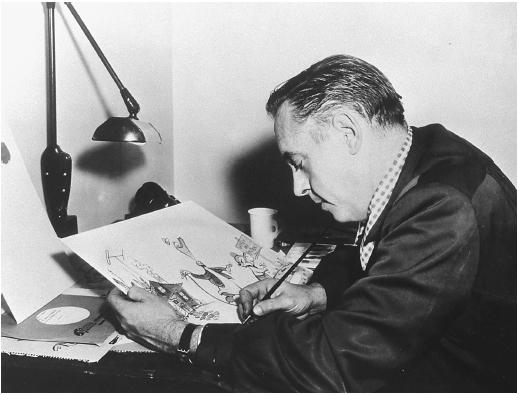
With a career spanning over three decades and four different mediums, Frank Tashlin’s influence on modern comedy is almost immeasurable. Getting his start in animation at
Warner Brothers Studios in 1932, he was one of the few animators in history to make the transition to live action feature filmmaking, where he worked with some of the most widely recognized comedic talent of the post-war era. He wrote sketches for Bob Hope, Lucille Ball and Red Skelton, directed some of Jerry Lewis’ funniest films, and helped shape the original Looney Tunes into the iconic characters we know today. As a feature filmmaker, Tashlin hit a stride of commercial successes beginning with the 1956 film The Girl Can't Help It, followed by the Martin and Lewis film Hollywood Or Bust that same year, Will Success Spoil Rock Hunter? in 1957, and four of Jerry Lewis' early solo films (Rock-A-Bye Baby, The Geisha Boy, Cinderfella, and It'$ Only Money.) New Wave filmmakers such as Jean-Luc Godard and François Truffaut praised these films, and cited Tashlin as a source of inspiration. As Peter Bogdanovich once wrote, Tashlin was “a tremendously able craftsman and one of the most inventive visual gag constructionists of the talkies” (12).

And yet, to this day, Frank Tashlin remains misunderstood – one of the forgotten greats of American comedy. In his essay Taking Tashlin Seriously, Robert Sklar surmises three reasons as to why Tashlin has been ignored by the American film community: “the reputation of comedy as a genre in the period after WWII; critical attitudes toward mass culture in context with the reflexivity in Tashlin’s films; and the aesthetics of the cartoon in relation to concepts of the “real” in the United States during the 1950’s and 60’s” (98). Sklar argues that Tashlin’s work remains pigeonholed as slapstick, and that, due to cultural shifts in the 1960’s towards favoring political comedy and the over-all dismissal of the 50’s as an era marked by triviality, the socio-political themes in his work went unrecognized. Most importantly, Sklar responds to accusations of “tastelessness” and “vulgarity” in Tashlin’s work, calling them “a revenge of discourse, to withdraw from Tashlin what was stereotyped and incomplete to begin with…Saying that he had failed the past was a way of avoiding a recognition of how he had confronted the present.” (101).


If sensitivity towards 50’s American culture, or lack thereof, is the primary reason for the dismissal of Tashlin as a filmmaker, perhaps now is as good a time as any to revisit his body of work. As it stands, Roger Garcia’s anthology of critical essays entitled Tashlin, published in 1994, remains the sole text on the subject. In it, Garcia writes: “[Tashlin is] a filmmaker who had largely vanished off the cinematic map, despite even his more obvious claims to auteurship – the extended gag, a pop art sensibility, the sardonic eye” (15). More recently, Manhattan’s Film Forum launched a two-week long retrospective of Tashlin’s work, prompting New York Times critic David Kehr to write “More than most of his contemporaries, Tashlin was attuned to the ways in which our own desire betrays us and how easily it can be manipulated to sell things…Frank Tashlin died in 1972, but the world he satirized 50 years ago is still with us, in some ways more than ever”.

These are fairly strong words for a filmmaker who has been dismissed for decades as being ‘vulgar’ and ‘tasteless’. In what ways can we reassess Tashlin’s work between these two polemics? Over the next few days, a selection of posts will attempt to re-evaluate Frank Tashlin under the title Garcia grants him – auteur.


The Auteur Theory & Tashlinesque

The auteur theory was originally coined in France in the late fifties, after the Liberation, when the ban on American cinema was lifted making it possible for foreign critics to absorb American cinema at great lengths with no preformed bias. Consequentially, it was established that the auteur need not be a member of the Hollywood elite, but often was an author whose work had previously been dismissed or devalued. Likewise, because the theory had never been laid down in concrete terms, it was commonly interpreted loosely to focus either on stylistic or thematic motifs (566).

In terms of the American understanding of the auteur theory, there is perhaps no more comprehensible framework than that presented by Andrew Sarris in his 1962 essay Notes on the Auteur Theory. In it, he defines the auteur as a director who can consistently exhibit recurrent characteristics of style and theme over a group of films. Sarris writes: “the three premises of the auteur theory may be visualized as three concentric circles: the outer circle as technique; the middle circle, personal style; and the inner circle, interior meaning” (563). Sarris argues that it is possible for a director to pass through all three of these circles at any given point in their career. Therefore it becomes important to note that this understanding of the theory “emphasizes the body of a director’s work rather than isolated masterpieces” (563).


In relation to the works of Frank Tashlin, the foundations for the claim of auteurship have already been laid down. As previously stated, Roger Garcia used the term in reference to Tashlin’s visual eye for comedy and satire. However, Jonathan Rosenbaum has laid the most extensive groundwork in his essay titled Tashlinesque. Rosenbaum sought to define Tashlin’s style in relation to other filmmakers, which he felt was represented by “a deliberately dehumanized form of expressionism in the cartoon-like demeanor of the major characters that had a bitter satirical overtone, loud primary colors that also suggested cartoons and comic books, and a spirited vulgarity that comprised a kind of bittersweet response to infantile American energies run amok” (25). Rosenbaum concludes his essay with five distinctly defined terms, which he claims as being “Tashlinesque”:

A) Graphic expression in shapes, colors, costumes, settings, and facial expressions derived from both animated and still cartoons and comic books
B) Sexual hysteria – usually (if not invariably) grounded in the combination of male adolescent lust and 1950’s notions of feminine voluptuousness
C) Vulgar modernism – ‘popular, ironic, somewhat dehumanized mode reflexivity concerned with the specific properties of its medium or conditions of its making’
D) Intertextual film references
E) Contemporary social satire: products, gadgets, fads, trends
(26-7)

These five terms, it would appear, make a template for claiming Tashlin as an auteur in relation to Andrew Sarris’ Venn-diagram approach. Term A would represent the outer circle, or technique; Terms C and D the middle circle, or personal style; and Terms B and E as the inner circle, or interior meaning. However Rosenbaum ends his essay without elaborating upon these terms, leaving them simply as a framework definition of Tashlin’s style. It becomes necessary, then, to look deeper into these terms, to surmise their origins and determine their consistency throughout Tashlin’s work in order to verify Tashlin’s status as an auteur...

TO BE CONTINUED...