Friday, November 14, 2008

Review: Repo! The Genetic Opera


A Lionsgate film 2008

Directed by Darren Lynn Bousman

Writing credits:
Darren Smith (screenplay)
Terrance Zdunich (screenplay)

A worldwide epidemic encourages a biotech company to launch an organ-financing program similar in nature to a standard car loan. The repossession clause is a killer, however.


This horror-musical directed by Darren Lynn Bousman (Saw II-IV) was a passion project, and it shows. Clearly made for the cult-niche market, Repo! is a mess of electronic music, goth imagery, pulp violence and slapstick humor. While by no means a good film, it will certainly find its place amongst those for whom it was made, as well as a few stragglers, like myself.

Why did I like this movie? I'm not sure. Maybe it's because I have a penchant for horror-musicals -- the audacity, the self-awareness, the silliness of it all was reminiscent of Phantom of the Paradise but for the digital age. Maybe because I've never quite seen anything like it before.

It has it's problems for sure -- comic book style title cards display the action before the film kicks in, revealing way too much information. The acting and singing are terrible. The music has no hooks and isn't memorable. The color palate is disgusting and terribly digital and overexposed. But that's the charm. You can tell so much heart and soul went into making it that eventually it just sucks you in. And the self-awareness that holds throughout adds a lot of humor. It's a pretty damn funny movie.

The film was released in a road show format earlier this year, and already had a sizable cult following before its first date. The showing I went to was completely sold out hours before the showing. I can't say I recommend it, but one look at the trailer, and you can immediately tell if this film is for you.

Man, I Wish It Were March


Every time a new Watchmen item is released I get more excited/worried about this film. Watchmen is my all time favorite comic book and one of my favorite books in general. It's a stunning psychological work, incredibly thought provoking and layered with meaning. Dark Knight proved that comic book movies don't have to be all action and silly costumes. Let's hope they get this one right as well.

Friday, November 07, 2008

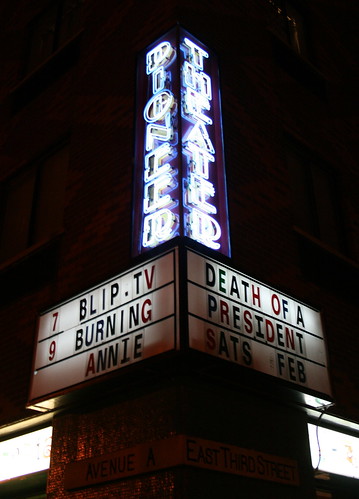
Remembering the Pioneer Theater


Dear Pioneer Friends, Filmmakers, & Film Lovers,

Ten years ago, when we began construction on The Pioneer, we were told we were crazy - that no single screen, indie-oriented, 99 seat theater, east of Avenue A, could possible survive. But for nine years, we did - showcasing the best of truly independent cinema, presenting restored classics (from The Last Picture Show to Ace in the Hole), curating special programs (from Luis Guzman Night to the 42nd Street Smut Show), hosting guest filmmakers (from Robert Altman and Robert Downey to Steve Buscemi and Richard Kelly) and partnering with local film organizations including the IFP, Filmmaker’s Co-op, Cinema Tropical, Fangoria, Women in Film and Television, Cinewomen, Third I, Slamdance, Docfest, and many more...

We’ve been blessed that The Earth Mother, Mel Cooley, The Dude, and the other Two Boots pizzas have been able to support our labor of love all these years, but now, with our lease ending and a rent hike looming, it’s no longer economically feasible to keep the theater going. Friday, October 31st at midnight, will be our last regular screening, appropriately: Night of the Living Dead.

We want to thank our amazing staff, past and present, and we want to thank you, our loyal audience, for your patronage over the years. Please, PLEASE, keep supporting independent films and independent theaters.

Finally, on Friday, November 7th, we’ll be having a goodbye party starting at 6pm - free movies, popcorn, and reminiscences. Please come by!


I used to live a few short blocks from this theater, one of the only true "independent" art houses left in New York City. These guys showed everything, from
classic Kubrick and Sam Fuller, to pop horror, splatter, and grind, to thought provoking documentaries. They often supported local artists, allowing patrons to rent screens and arranging one-off screenings of no-budget features and shorts. They also screened a lot of Gay/Lesbian themed works and were a great outlet for progressive film-making.

One of my fondest memories of that place was the night I met Bill Plympton there. He was screening his latest feature Hair High (which is an incredible film, by the way, if you're an animation junkie like myself). I arrived like an hour or so early and got to sit with Bill and chat about animation, John Kricfalusi, New York, Plymptoons and much more. He signed a bunch of DVD's for me and was a truly gracious guy. To get to meet one of my heroes - and then watch him introduce his latest work - I can only thank the Pioneer for that.

The Pioneer is/was probably the only theater in New York still brave enough to house low-brow and high-art under one roof. The fact that they're closing down - regardless the reason - is a tragedy for the current New York cinema scene. It will truly be missed.

Remake: Oldboy

Another tip for the bad idea file: /film is reporting Will Smith & Steven Speilberg plan on remaking Chan-Wook Park's Oldboy

Speilberg & Will Smith to remake Oldboy?

There is no reason to remake this movie, but Hollywood's going to do it eventually anyway. It's been in the pipeline since the original was released in the states in 2005. But Will Smith is a very odd choice for this -- I don't think he has the gritty sneer to be able to pull of the titular character. Spielberg is an odd choice as well, considering the dark tone and feel of the film. And how will the hyper-but purposeful-violence of the original translate in a senseless Hollywood version?

Who knows. Who cares. Here's the side-scrolling hammer fight sequence that made the original Oldboy famous. Go rent this flick if you haven't seen it.


Hollywood, you disappoint me.

Monday, November 03, 2008

Revisit: Bad Taste


A WingNut/New Zealand Film Commission release 1987

Written & Directed by Peter Jackson

A crackpot team of agents investigate a group of aliens that chase human flesh for their intergalactic fast-food chain.


Peter Jackson made this film over a series of weekends across four years, starting in 1983. Hard to believe that twenty years later he'd be picking up a trove of Oscars. Continuity errors and goofs abound, but Jackson's distinct sense of humor and visual language finds its footing here. Lots of crazy close-ups and meandering hand-held pans.

The plot is paper-thin and there's a lot of scenes with characters just running through the woods, but Jackson's effects are stellar and the sound design is unbelievable. One of the grossest sounding movies I've ever seen.

If you're a fan of splatter, you've already seen this. Worth a gander if you're a fan of Peter Jackson or just enjoy cheesy horror.

Review: Zack & Miri Make a Porno


A Weinstein Company release 2008

Written & Directed by Kevin Smith

Lifelong platonic friends Zack (Seth Rogan) and Miri (Elizabeth Banks) look to solve their respective cash-flow problems by making an adult film together.


You would think that crafting a painfully by-the-numbers romance story line would allow plenty of wiggle room for jokes. Not the case with Zack & Miri, which may go on record for being the most predictable romantic comedy disguised as raunch to come out in ages.

Zack and Miri are platonic best friends and are both broke. So when a video of Miri in some questionable attire becomes an internet sensation, of course it's only logical that they film a porno together to collect some quick cash.

Only, that doesn't make sense at all. And what follows is a trajectory of the most predictable kind: they have sex and realize they love each other, things get awkward for a moment, but it all works out.


Now a person could probably figure all that out from the trailer - it's called 'convention' for a reason. But assuming that is the template, what makes a movie standout is how it goes about utilizing that template. In this case, raunchy, disgusting, hilarious jokes.

Only there weren't many. There were lots of slow reaction shots of Seth Rogan and Elizabeth Banks. Lots of really awkward conversation scenes about whether they were/weren't in love. But very few jokes. The funniest parts of the film came from the performances - namely Craig Robinson & Justin Long - and weren't derived from the scenes or set pieces.

Say what you will about Kevin Smith - self-aggrandizing, talentless, fat - his films characterized my youth. Growing up in Jersey, they spoke to me and many others at a very young age, and showed us that all you needed to make a movie was a simple, clever set up and some good dialogue.

Well, Zack & Miri doesn't have any good dialogue. It's not witty, nor clever, nor does it even make much sense. The performances are mildly amusing, but none of the actors are in top form. I simply can't recommend seeing it.

Friday, October 31, 2008

Revisit: A Nightmare on Elm Street Part V: The Dream Child


A New Line Cinema release 1989

Directed by Stephen Hopkins

Writing credits:
Wes Craven (characters)
John Skipp (story)
Craig Spector (story)
Leslie Bohem (story & screenplay)

Alice, having survived the previous installment of the Nightmare series, finds the deadly dreams of Freddy Krueger starting once again. This time, the taunting murderer is striking through the sleeping mind of Alice's unborn child. His intention is to be "born again" into the real world. The only one who can stop Freddy is his dead mother, but can Alice free her spirit in time to save her own son?


A Nightmare on Elm Street is one of my favorite horror flicks of all time. Combining slasher scares with meta-physical reality, Wes Craven crafted an original and truly scary film that took advantage of the 80's gore effects boom. It also spawned a slew of knock-offs and an obsession with altered-reality/dreams/paranormal activity that dominated 80's horror.

The sequels all tinker with the nightmare formula a little bit - Freddy's abilities to haunt and scare and the definitions of the dream world are all a bit fluid - but one element always keep these films from being a predictable slasher flick: the kills. Freddy Krueger murders are always an excuse for outlandish, over-the-top effects, and the crazier the better.

In this film, the fifth in the series, Krueger returns in an attempt to inhabit the soul of Alice's unborn child. The precedence for Freddy's soul-stealing was set in the second film - which is universally hated, I believe, for having gone astray from the original formula - and is no less ridiculous here.

Neither are the kills, which range from a ridiculous comic book style slashing to Seven-style force feeding to the infamous "Freddybike". This film is all about the effects, which take a cue from the works of Rob Bottin (The Thing) and feature a lot of flesh mutation and slippery tendons.


By this point in the series, Freddy had developed a strong personality too, which also separates it from many other slasher flicks. He's given some hilarious quips and says the word "bitch" a lot.

Look out for a great scene that addresses the subject of abortion (if Alice just got rid of the damn baby, Freddy couldn't keep killing). The dialogue is priceless.

Thursday, October 30, 2008

Revisit: Friday the 13th Part VI: Jason Lives


A Paramount Pictures release 1986

Written & Directed by Tom McLoughlin

Tommy Jarvis battles the infamous Jason for a third time after returning to his grave and accidently bringing him back to life.


The original Friday the 13th is basically a Halloween rip off with Kevin Bacon and a few twists. This film, the sixth in the series, wears the whole slasher killing sexy teens formula on its sleeve so much that it doesn't even bother to explain Jason's return. His corpse just gets struck by lighting and suddenly the slaughter begins.

I guess it's good that they cut to the chase. And some of the slaughter is sweet. The scene where Jason punches straight through the dudes heart is pretty kick ass.


Overall though this shit pales in comparison to the effects heavy Nightmare on Elm Street stuff, or the works of John Carpenter & David Cronenberg several years earlier. Maybe it's not fair to compare, but I still think there's room in slasher flicks for some pretty hefty visceral gore.

Wednesday, October 29, 2008

Revisit: Blast of Silence


A Magla Production 1961

Directed by: Allen Baron

Written by: Allen Baron (writer), Waldo Salt (narration written by)

Having been 'away' for some time professional killer Frankie Bono returns to New York to do another job: assassinate some mid-level mobster. Although intending to avoid unnecessary 'contact' while carefully stalking his victim Bono is recognized by an old fellow from the orphanage, whose calm and unambitious citizen's life and happy marriage contrast heavily with Bono's solitary and haunted existence. Exhausted and distracted Bono makes another mistake, but his contract is not one to back out of.


Though film-noir was a relatively dead genre by 1960, this film by Allen Baron is often cited as a classic example of the genre. Not a revisionist work like, say, Cassavete's Killing of a Chinese Bookie, Blast of Silence relies on more traditional noir elements to resounding effect.

Voice-Over narration, written by then black-listed writer Waldo Salt (Midnight Cowboy), provides the meat of the story. While the film is famed for this narration, and it is a tradition of the genre, I found it particularly distracting. I'll admit there's a handful of lines in there that are absolute gold ("Pay for the woman, and take her to a dark corner -- where no one can see your face"), it's pretty unnecessary.


Why? Because Baron - a first time director - gets the most out of his camera and his actors. Baron himself plays the lead, the unraveling hitman, to startling effect. Larry Tucker (most well know as the writer partner of Paul Mazursky) gives a commanding and incredibly enjoyable performance as Big Ralph, an overweight seedy gun salesman. But most impressive is Baron's camera, which captures some amazing shots of New York City. The film is downright gorgeous. And it tells us everything we need to know - without the VO.

Criterion recently put out a great remastered version of this flick, which Martin Scorsese often cites as his favorite New York City film. If you're a fan of the genre, this is a must see. And at a mere 77 minutes, it's a swift, easy watch.

High & Low Remake


Mamet & Nichols to Remake Kurosawa's High & Low -- /film.com

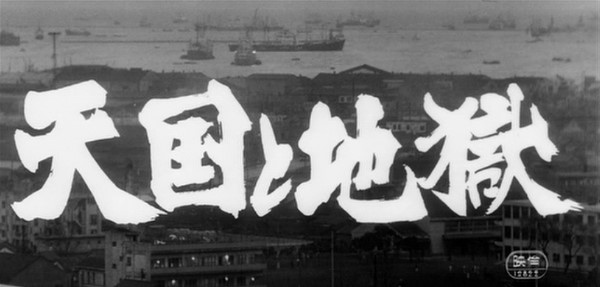
Been a while since I've posted on here, but this news item prompted me out of retirement. Mike Nichols (Closer, The Graduate) and David Mamet (Glengarry Glen Ross) plan on remaking Kurosawa's classic 1963 drama High & Low. The remake is supposedly going to be produced by Scott Rudin and Martin Scorsese.

This is probably my favorite Kurosawa film, one that's made with a lot of heart and technical skill. The film tells the story of a rich man who must pay ransom for the son of one of his employees. It explores the economic disparity between rich & poor in post-war Japan. Kurosawa's first film to be shot in widescreen, his staging is absolutely incredible. He knew just where to put his actors to maximize each shots impact. And the presentation of geography and the city landscape is also unbelievable.


Normally I'm flat out against remakes of perfect films (and this film is perfect), but my feelings are mixed on this one. While it could never hold a candle to the original, it could be very interesting thematically, considering the current political and economic climate.

Give the original film a look, if you haven't already. You won't be disappointed.

Also, expect more regular posts from here on out. I'm watching more movies and want to make a better record of what I've seen.

Friday, February 22, 2008

Monday, January 07, 2008

Monday, December 31, 2007

Top Movies of 2007

My favorite films of the year thus far:


And there are still many more I have to see... Things may change after voting for this year's Independent Spirit Awards begins.

Here's this year's NYC Screening Room dates

Saturday, December 29, 2007

Review: I Am Legend


A Warner Brothers picture 2007

Directed by Francis Lawrence

Writing credits:
Mark Protosevich (screenplay)
Akiva Goldsman (screenplay)
Richard Matheson (novel)

After a supposed miracle vaccine turns the world's population into undead mutants, one scientist (Will Smith) fights for a cure.


This apocalyptic effects extravaganza suffers from the worst of Hollywood flaws - a poor script. The idea itself is great: a man, perhaps the last alive in the entire world, struggles to find a cure for a devastating vaccine that was supposed to cure cancer. One man alone in the world... think of all the things you could do with that concept! Well, this movie doesn't do anything interesting, and is riddled with plot holes and hokey movie-science.

SPOILERS! WARNING!

Legend sets up some basic facts for the environment and the effects of the virus: 1) Manhattan is completed quarantined, as the bridges were all blown up. 2) The virus is spread both air-borne and through saliva. 3) The creatures effected by the virus show no signs of human behavior, social skills, or human intelligence.

The film then systematically debunks all of these rules through action.

Questions:

If Manhattan has no road access, how do Anna and her son Ethan, Smith's supposed saviors, drive their car onto the island? Where do the deer and lions roaming the streets come from?

How come 1% of the population is immune the virus? Why are some animals effected by the airborne virus, but others are not? At what point did the virus stop curing cancer and start killing people?

The film spends time setting up this arch-nemesis type creature who appears bigger than the other mutant humans and seems to exhibit some basic behavior skills. For example, he runs after the woman creature Smith catches; he sets up a trap for Smith; he leads the creatures in the attack on Smith's fortress. But the script doesn't elaborate on this idea any further, and goes out of its way to suggest that this character is merely a freak anomaly. So what's the point? Likewise, why did Smith kill himself at the end? There's no reason for it - he could have easily tossed the grenade and hid with the woman and things would have turned out the same.

There is also a lot of coincidence and repetition of scenes. Smith's character just so happens to find the cure as the creatures are breaking into his fortress - just like how Anna just so happens to show up right as Smith is about to kill himself. Smith hunts deer at least twice. Why do we need to see this more than once? Why is he hunting deer in the first place? It's not like he needs them for food. Repetition is a tall tell sign of poor screen writing.

The landscape scenes look gorgeous - especially on IMAX - but the creature effects are extremely second rate. They could have easily just dressed up a bunch of people as zombies but for some reason they used this incredibly fake looking CGI.

Millions of people have already seen this movie and it blows my mind that no one has taken the time to just think about what the film presents. Two minutes of meditation on the story reveals that it's a pretty incoherent, illogical pile of crap - not even in a nit-picky sense, but on a basic transitional level. See it on IMAX, if you must see it at all.

Friday, December 21, 2007

Macho Feminism pt I

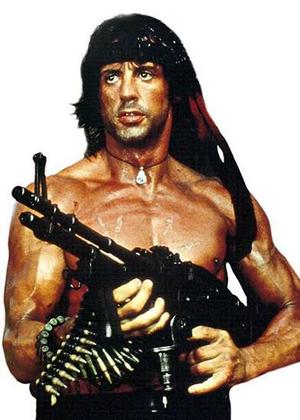
Macho Feminism, or What Your Girlfriend Could Get Out of Watching Rambo

A Look at Female Spectatorship & Genre


The role of the female in cinema as both screen presence and spectator exists as a highly debated struggle between filmic representation and psychological theory. In her essay Visual Pleasure in Narrative Cinema, Luara Mulvey explores the power of the female image in relation to cinema and psychoanalysis. Early in this essay, she writes: "Woman then stands in patriarchal culture as signifier for the male other, bound by a symbolic order in which man can live out his fantasies and obsessions through linguistic command by imposing them on the silent image of a woman still tied to her place as bearer of meaning, not maker of meaning" (Mulvey 838). In simpler terms, Mulvey describes the woman as an object of fantastic lust trapped in a male-oriented society. She furthers this concept by discussing Freud's notions of scopophilia and the voyeuristic gaze. According to Freud, it is natural human instinct to regard other people as objects, often subjecting them to controlling, curious, or erotic gazes. Mulvey aligns this with the cinema, considering film a stimulant of the voyeuristic instinct and separating it into a contradition between the libido and ego. Out of this contradiction, she surmises, forms identification processes and elicits sexual desire. From there she continues to outline the cinematic functions of the female: "as erotic object for the characters within the screen story, and as erotic object for the spectator" (Mulvey 841-42). She describes the current Hollywood narrative format as supportive of the male role in accelerating story, and thus controlling fantasy and gaze. She writes: "the male protagonist is free to command the stage, a stage of spatial illusion in which he articulates the look and creates the action" (Mulvey 842). Consequentially, spectatorss can identify with male protagonists, and indrectly possess the sexualized female. Mulvey broadens these ideas with more psychoanalysis; the threat of sexual castration, represented by the female screen presence, forces the male to escape this anxiety via the destruction or fetishizing of the female.

Mary Ann Doane's essay Film & the Masquerade: Theorizing the Female Spectator takes these concepts one step further, allowing room for the female audience. Like Mulvey, Doane channels her theories through Freud and psychoanalysis. She writes that the voyeur must maintain distance between objects and self in order to create desire, and that the female spectator can never form this distance because of a "claustrophobic closeness" to the female body present on screen (Doane 24). Too easily related to the objectified, female spectators must therefore readily accept a masculinized form of spectatorship. Doane likens this to the transvestite; mobile in their sexual identity, females can steal masculine traits, and often compensate for this masculinity by excessively flaunting femininity. This explains the creation of the femme fatale character, a sort of sexually empowered distinctly feminine mask. Doane fuels her article with cinematic examples of desirous, gaze controlling females - all of whom are punished or meet untimely deaths. She concludes by almost dismissing the feminine spectral gaze entirely.

My interest in these theories lies not in general assessments of feminine spectatorship, but rather as they apply to specific film genres. Though it is fair to characterize the female role in cinema, both as spectator and image, according to current pyschological practices, I do not feel it is worthwhile to apply these theories to cinema as a whole. Rather, it is of great necessity to study the feminine gaze in relation to genre and the evolving trends of cinematic practice. Genre, defined as the categorical division of artistic works based on specific criterion, shapes a great deal of cinematic traditions and representations. How an object appears and functions on screen depends significantly on the genre or genres in which a film is based. For example, a gun in a horror film might signify death or fear to the spectator, while at the same time affirming safety or security in an action thriller. This does not stand to negate Mulvey or Doane's claim that women are assigned certain (often surface or erotic) positions in cinema, but rather calls for the further exploration of these positions as they are related to distinct filmic types.

Other film critics seem to agree with me. Linda Williams writes: "this [feminine] victimization is very different in each type of film and cannot be accounted for simply by pointing to the sadistic power and pleasure of masculine subject positions punishing or dominating feminine objects" (Williams 732). In her essay Film Bodies: Gender, Genre & Excess, Williams complicates Doane's assertions about the female spectator by raising questions specific to genre. For example, Williams discusses Horror, a genre referred to by Doane as an example of defeating feminie gaze, claiming that even in the most violent of feminine suffering, there must always remain a component of either power or pleasure for the woman victim. Similarly, Williams argues that while melodrama might seem to drown female viewers in an excess of forced emotion, it also suggests and alignment with powerful matriarchal figures. Ultimately, she concludes: "the subject positions that appear to be constructed by each of the genres are not as gender-lionked and gender-fixed as has often been supposed" (Willaims 735).

But what happens when we remove the sexualized woman from the screen entirely? What if she is replaced by glorified male figures? What, if anything, shifts in gendered spectral gaze? In order to address these questions, we must find a film genre in which the female screen presence is rendered obsolete. The Macho Action film may fit this description.


Developed out of Hollywood's displacement of art to action in the 1980's, the Macho film places and emphasis on a sort of surreal masculinity where the male body occupies the main narrative focus. Fueled by a sort of weightless politics, these hyper-male heroes obliterate their way through thinly outlined, special-effects-laden espionage scenarios. Starring buff body-builders such as Arnold Schwartzenegger, Sylvester Stallone, and Chuck Norris, the Macho film glorifies the sculpted male figure, often focusing on the charm and sex appeal of the Macho while still remaining action packed. Camera use in these films general accents physical size, featuring extreme close-ups of biceps, triceps, pecks and other impressive physical attributes. These male bodies can also withstand extreme physical pain, as if they posses superhuman tolerance and can refocus their agony towards eliminating the enemy. And, interestingly enough, sexualized female presence in these films appears almost non-existent (Vincente).


Look out for Macho Feminism Part II coming soon!

Tuesday, November 20, 2007

WGA Strike


Screenwriter Irv Brecher (Meet Me In St. Louis, Shadow of the Thin Man, Marx Bros' At The Circus) offers his perspective on current WGA strike.

Friday, November 16, 2007

The Western Heroes Dual Part III


Starring two of the genre’s biggest names – John Wayne and Jimmy Stewart – The Man Who Shot Liberty Valance strips the Western of its window dressing, providing a reflection on the motifs and common themes that only a director as experienced in the genre as John Ford could produce. However, perhaps most striking are its competing protagonists who, through their dual natures, become a commentary on the Western hero and on the power of mythmaking, the film’s central theme.

Liberty Valance makes its dual protagonist structure quite clear from the very beginning. Stewart’s character, an established politician named Ransom Stoddard, heads to the small town of Shinbone for a funeral. Acting as narrator, he recounts the story of the deceased – John Wayne as Tom Doniphan – through flashback. This structure, coupled with the billing of two top stars, immediately implies dual protagonists.

Doniphan, “the toughest man south of the Picketwire”, is pragmatic and bound to nothing. Like Shane, he represents the savage side of the West: he lives in a house well outside of town, is nomadic and authoritative, and, most importantly, believes in the power of a gun. Doniphan doesn’t see much use for the law books and school teaching that Stoddard brings to the town of Shinbone. Stewart’s character represents civilization in its most pure, democratic, idealized form. A young lawyer from the East headed west to strike it big, Stoddard’s knowledge of the law, ability to read and write, and sheer idealism prove to be quite useful. However, over the course of the film, Stoddard finds that he needs to adapt to Doniphan’s more savage ways to survive. In the end, he comes out on top, remembered forever as “the man who shot Liberty Valance.”


This myth is the central point of the film: while Stoddard is memorialized for ending Valance’s reign, it was Doniphan who actually did the deed. Liberty Valance pits these two characters in direct competition and uses this structure to comment upon the myth-making abilities of the West. The fact that Stoddard is remembered for Valance’s death, and not Doniphan, shows how the West as an open frontier was rife with possibility for a man to prove himself – and how rumors could easily become truths by way of the press. As Maxwell Scott, editor of a now civilized Shinbone Star says, “When the legend becomes fact, print the legend.”

Doniphan is forgotten by nearly everyone at the end of the film. Unlike Shane, his valiant efforts and self-sacrifice are not lauded or memorialized, but hidden, rejected by those who control the myth-making process for the sake of civil progress. However, Stoddard’s civility is not portrayed as cut-and-dry as that in Shane either. Stoddard lapses into savage ways, and finds his well-intended career built on a myth. It is in such a way that the themes of Liberty Valance differs from that of Shane; whereas one films finds honor in the Western Hero, the other exposes a bittersweet reality.

Check out The Western Heroes Dual Part I & Part II!

Tuesday, November 06, 2007

The Western Heroes Dual Part II


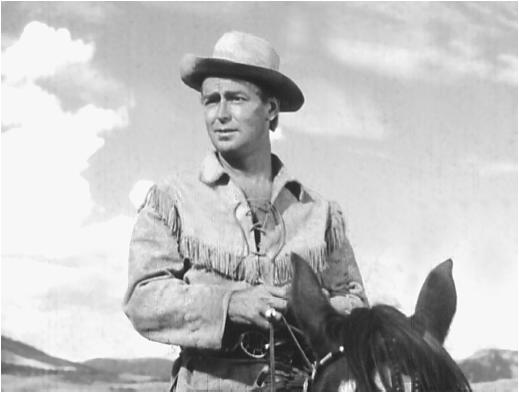
Directed by George Stevens and featuring Alan Ladd in the title role, Shane tells the story of a mysterious gunfighter who comes to the aid of an oppressed group of homesteaders. The film maintains much of the traditional iconography of the genre, from vast, sweeping landscapes to a sinister, gun-slinging villain. While consciously working within this set of images, Shane produces a vision of the West in which savage means are necessary for civil progress. The title implies that Shane, the almost miraculous gunfighter, is the main protagonist, but there are in fact two: Joe Starrett (Van Heflin), leader of the homesteaders, is equally important. These two protagonists are inexplicably linked, but embody certain opposing semantics of the West.


Shane is portrayed as a weary gunfighter, a wanderer with no place to hang his hat. He literally rides in from nowhere, his past a mystery never discussed. From the first shot of him riding on his horse, it is clear that Shane represents a dying breed of cowboy. Conversely, Joe Starrett is a family man who believes in the notion of private property and democratic organization. He represents civility, a new order of prosperity. Much of the narrative structure of the film relies on their relationship, their strengths and their weaknesses, to shape meaning.

Though wary of each other at first, the two are quickly presented as a team, working together to mutually improve quality of life. Joe hires Shane as an extra hand on the farm, providing him a temporary home, and the film shows how Shane’s cowboy qualities come in use. One scene boils it down into an easy metaphor: a tree stump too heavy for Joe to move by himself is lifted, with some strain, when he works with Shane. This scene could be interpreted as a summation of the movie; Joe can’t seem to shake the ranchers that want him off the land, but together with Shane, the two manage to put up a fight.


The oppression from the ranchers is much greater than that of a stump, however, and develops a much more complex relationship between the two protagonists. Both Shane and Starrett can fight physically – an extended fight sequence in the saloon exhibits this fact – but Shane’s quick-shot skills are necessary in keeping the film’s ultimate villain, a gun-for-hire named Jack Wilson (Jack Palance), at bay. Conversely, Shane’s presence irks some of the homesteaders, some of which feel they “don’t need no bodyguard” while others simply want to pack up and quit. Starrett’s unending optimism and oratory skills, coupled with his American ideals of individualized prosperity, manage to keep the homesteaders aligned even in the darkest of times, something Shane could not do. In turn, Shane and Starrett bridge together traits from both the savage and civil West that are necessary in accomplishing the plots ultimate goal – winning the land for the homesteaders.

However the narrative also pits the two characters in competition with one another, especially in relation to the Starrett family. Joe’s young son is constantly sizing his father up in comparison to Shane. He asks Joe many questions – “Could you shoot better than Shane? Could you whip him?” – that elaborate upon why Shane’s presence is so necessary for the homesteaders. Likewise, Joe’s wife, precautious but intrigued by the gunfighter, develops a flirting infatuation for Shane, which Starrett comes to recognize towards the end, admitting that if something were to happen to him, he’d at least know she’d be “taken care of and in good hands”.


This competition elaborates upon why the savage Westerner was so crucial, and helps glorify his nature, but the film remains conscious that he is a dying breed. Shane’s gun-toting way of life, though helpful in the circumstances, cannot work in the civil setting. He is conscious of this: “There's no living with a killing. There's no goin' back from one,” he says. “Right or wrong, it's a brand... a brand sticks. There's no goin' back... And there aren't any more guns in the valley.” The film ends with Shane riding back into the wilderness, but the shouts from Starrett’s son are a reminder that he is one cowboy that will not be forgotten.

Such is not the case for The Man Who Shot Liberty Valance...

Check out Part I
The Western Heroes Dual Part III coming soon!
Friday, November 02, 2007

The Western Heroes Dual, Part I


As a film genre deeply rooted in the transposition of civilized and savage elements, the Western inherently allows for the exploration and establishment of specific, individualized moral codes. In turn, the Western offers a variety of protagonist archetypes: the outstandingly upright Ladds, the forthright and masculine Waynes, the morally ambiguous Eastwoods, the slightly on edge Stewarts. These Western Heroes may have spurs and a sense of ruggedness in common, but it’s their distinct moral personalities that made them legends. Perhaps this is why it is most interesting when a film places two protagonist types in a dual narrative structure. Aside from adding layers of tension to melodrama, dual protagonists allow for a tiered representation of the civilizing process; a kaleidoscope that refracts concepts of a blossoming America.


However that is not to say all Westerns with dual protagonist structures reach the same conclusions. Both Shane (1953) and The Man Who Shot Liberty Valance (1962) feature dual protagonists, but their reflections on the civilized West are much different. Each film contains a ‘savage’ and ‘civil’ protagonist, and both favor the prospect of democratic growth. But where Shane shows clear praise for it’s savage hero, Liberty Valance paints a storybook West in which one myth is exchanged for another. The next few posts will be dedicated to exploring dual protagonists as they exist in these two films.

The Western Heroes Dual Part II coming soon!