Showing posts with label Warner Brothers. Show all posts

Tuesday, April 07, 2009

Revisit: Altered States


A Warner Brothers film 1980

Directed by Ken Russell

Written by Paddy Chayefsky

A Harvard scientist conducts experiments on himself with a hallucinatory drug and an isolation chamber that may be causing him to regress genetically.


William Hurt makes his film debut in this 1980 sci-fi/horror thriller that poises itself as an intellectual dissertation on consciousness and slowly descends into absurdity by its last act. Directed by British filmmaker Ken Russell, the film meshes video art style with practical makeup and special effects. The film is sort of a cross between Cronenberg's The Fly and something like A Beautiful Mind. At the start it appears to be a drama revolving around post-radical 70's academic elites, but slowly it regresses (quite literally) as Hurt devolves into an ape like creature, and then some.

Russell is often criticized as being overly obsessed with sexuality and the church, and Altered States is no exception. Hurt's scientist is obsessed with restoring his faith and externalizing his past lives, and his hallucinations are often riddled with religious and allegorical imagery, from depictions of hell to himself on the cross. As he genetically retrogrades, the idea of man's progression from nothing becomes literal, and downright bizarre. Russell's direction treats these events so matter-of-factly that it's hard to take serious; the whole thing almost feels facetious, just short of camp. But the film's strangeness is its greatest asset; each twist and turn leads down an unexpected path until the ultimate WTF? climax is revealed.

Of course the films final message is that humanity is the ultimate truth - outside existence is merely a vast, impersonal nothingness. The film really strains to bring this idea to the forefront, and a lot of questions/absurdisms linger at the end. But if you're into so-heady-its-campy sci-fi or simply bizarre films, this one won't disappoint.

Monday, March 30, 2009

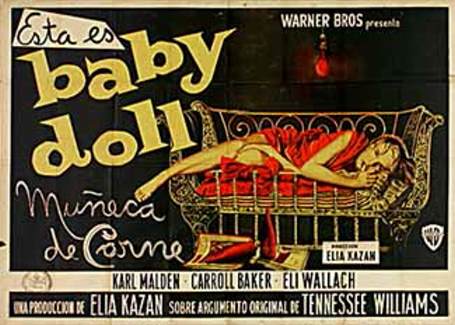
Revisit: Baby Doll


A Warner Brother's film 1956

Directed by Elia Kazan

Written by Tennessee Williams

Steamy tale of two Southern rivals and a sensuous 19-year-old virgin.


The second film pairing director Kazan with writer Tennessee Williams brought much controversy upon its release in 1956. Francis Cardinal Spellman condemned the film in a stunning attack from the pulpit of St. Patrick's Cathedral two days before the film opened, saying that the film had been "responsibly judged to be evil in concept" and was certain that it would "exert an immoral and corrupting influence on those who see it", and exhorted all Catholics to refrain from patronizing the film "under pain of sin". Cardinal Spellman's condemnation of the film led to the Legion of Decency's first-ever nationwide boycott of an American-made film produced by a major studio. All over the country, almost 20 million Catholics protested the film and picketed theaters that showed it. The Catholic boycott nearly killed the film; it was cancelled by 77% of theaters scheduled to show it, and it only made a meager $600,000 at the box office. The film was also condemned by Time Magazine, which called it the dirtiest American-made motion picture that had ever been legally exhibited.

Despite all the fuss, the Production Code Administration gave it a seal of approval, (which in many ways led to the PCA drifting farther and farther away from its traditional guidelines until it was replaced by the MPAA ratings system in 1968), and Baby Doll was nominated for four Oscars, included Best Adapted Screenplay and Best Actress for Carroll Baker.

By today's standards the film is a little less shocking, but its straight-forward approach to sex and violence still stings. Miss Baker struts around in a slip while Karl Malden's ineffectual male dishes innuendo after innuendo before Eli Wallach (in his first screen role) can swoop in and squeeze himself uncomfortably between the two. The acting is top-notch, and the tension starts on high and simply mounts with each progressive scene. A surprising amount of humor is wrung out as well; for all the seriousness going on, the film ultimately shapes itself as a sexual farce. The delta setting, including a dilapidated mansion, is gorgeously portrayed in detailed black and white.

Baby Doll is one of Kazan's forgotten masterpieces, a sort of sick sibling of Streetcar. Worth hunting down.

Monday, March 09, 2009

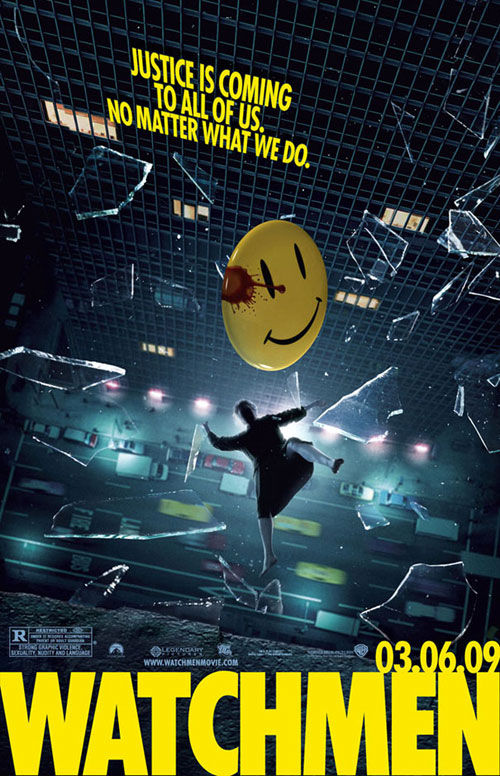
Review: Watchmen


A Warner Brothers film 2009

Directed by Zack Snyder

Written by David Hayter & Alex Tse

When an ex-superhero is murdered, a vigilante named Rorschach begins an investigation into the murder, which begins to lead to a much more terrifying conclusion.


Long considered 'unfilmable', Watchmen is one of the most celebrated graphic novels of all time, and often credited for ushering in an era of more serious, cerebral, adult-themed comic books. Hollywood took stabs at bringing Alan Moore & Dave Gibbon's time-altering, mind-bending grit fest to the screen for nearly 3 decades, with everyone from Paul Greengrass to Terry Gilliam to Michael Bay set to direct. Zack Snyder finally succeeded in producing the film, which finally hit theaters this week after much fanboy anticipation.

Fanboys like myself, who fell in the love with the graphic novel's sharp thematic and formal critique of the medium, as well as it's intense philosophical and political exploration, engrossing characters and wonderfully rich universe. Watchmen the novel is as complete a package as one could ever expect or want; a vast and detailed world with no stone unturned tenderly committed to the page.

Which begs the question -- why make it into a movie at all? Particularly one that adheres so faithfully to it's source?

Of course, that's the question I asked myself before the movie was released, and after having seen it, I'm not sure I have a full answer. From a business standpoint, I could understand why the movie was made -- large built-in fan base, a film that paves the way for grittier, more difficult graphic novel adaptations, and lots of fanboy cred for the distributors. But artistically, what are the merits? It seems there are some, but mainly the film exists as a celebration of Moore & Gibbon's work.

To their credit, Warner Brothers and Mr. Snyder have delivered one balls to the walls, full-force, hard R, uncompromising vision of Watchmen. Like the comic's creators, they left no stone unturned in bringing this epic to the big screen, inserting as much possible detail with extra care. For those unfamiliar with Watchmen's source, the film must be a dizzying experience with many WTF? moments, but fanboys rejoice: never has there been such a detailed adaptation in the history of the medium.

Snyder's visual flair and special effects prowess certainly help bring the panels to exacting life. Some sequences, particularly the Dr. Manhattan chapter, the back-peddling opening credits and almost anything involving Rorschach, are undeniably brilliant. Others, such as the Silk Spectre father reveal and the tweaked ending, lack some of the emotional punch delivered in the novel, but are nonetheless visually arresting.

Perhaps my biggest problem with the film is that it could never replicate all that the novel contains. Much of the climate of the Watchmen universe -- the nuclear war paranoia, the aggression towards authority figures, the degrading of social moral -- is reduced to blanket statements and quick set ups. The majority of the second and third tier characters present in the novel, many of which establish and elaborate these themes to flesh out the temporal backdrop, are absent here. Likewise, many details surrounding the characters origins are trimmed down, making their screen counterparts feel somewhat incomplete.

The music, too, felt jarring to me. The film deserves it's own original score, not some smattering of pop songs that vaguely adhere thematically to the action. I think Warner Brothers were a tad afraid of mainstream audience reactions, and figured if they put some huge pop hits behind some of the more audacious sequences it would make them more palatable. Maybe -- but it also severely undermined the tone. I highly doubt Hendrix would be blasting while Rorcshach and Nite Owl scourge Antarctica for Ozymandias's hideaway.

But with that said, it's amazing how much Synder and his team managed to cram into this two and a half hour epic, and it's even more amazing that Warner Brothers was willing to see through on his vision. This is one bloody disgusting, gut-wrenching, depressing, dark as hell film. It's views on humanity and social decency make Dark Knight look like kiddie play time. As does the on-screen sex and violence.

Watching the origins of Dr. Manhattan unfold on screen will remain one of my favorite cinematic moments for a long time. Billy Crudup does an amazing job and really nails the character to the T. But seeing it come alive, watching it unfold in real time -- nothing will ever compare. It's breathtaking. And that alone makes Watchmen worthy of repeat viewings.

And I definitely think I need to see it again, now that the fanboy giddiness is out of my system. It's hard to really critically assess Snyder's formal elements in that malaise. There is too much immediate beauty in the imagery to really look deep into what Snyder uses to shape the story. Regardless, Watchmen remains a unique ride, one that will (probably) never be duplicated.

Tuesday, February 17, 2009

Review: Friday the 13th


A Warner Brothers release 2009

Directed by Marcus Nispel

Written by Damian Shannon & Mark Swift

A group of young adults discover a boarded up Camp Crystal Lake, where they soon encounter Jason Voorhees and his deadly intentions.


Not so much a reboot or remake as it is a sequel of sorts, the new Friday the 13th amalgamizes elements from the first three Jason movies to create a 'fresh start' for the series. Continuing where the original Friday the 13th left off -- with Jason's mother being brutally beheaded whilst her son watches in the darkness -- the film quickly dispenses its ludicrous plot involving a weed heist and starts the killing almost right away.

While Jason and his victims may have never looked as stylish or sexy as they do in this entry to the series, they've also never been so damn boring. The strength of a slasher always rests on the creativity of its kills, something this entry severely lacks. Most of the death scenes rely on run of the mill pop up/jump 'look out behind you!' scare tactics, or even blatantly rehash kills from early Jason flicks (ie: the famous jump through the window scene from Part II). Several key story elements, such as the manipulation of Jason's mommy complex, are all lifted from earlier Jason flicks. As a result the whole flick has a been there/done that, I-saw-that-coming-from-a-mile-away type feel.

Rather than amping the creativity of the kills and the omnipresent nature of Jason's character, the film relies on and retools the worst slasher cliches: annoying, bratty, stupid teens and their sick vices. While I commend the filmmakers for managing to get Willa Ford naked and showing an ample amount of breasts, it's hard to sit through a flick where the main characters keep saying "bro" and pound beers till they vomit. Truly they are better off dead. The stupidity and immorality of the victims has always been a major thematic point for these kind of flicks, but I'm not sure if they've ever been quite as vapid or abhorrent.

It would be nice, for a change, to see some relatively decent people go up against the monster that is Jason. Or, perhaps even better, some actual camp counselors. Why does the series always move away from the camp idea? Wouldn't it be more terrifying to see some teenagers dealing with young children as well as a masked psycho killer? Balancing responsibility with survival? Camp Crystal Lake is barely present in these films anymore (at least beyond an overgrown forest/murder scene), and it would be nice to see it return.

Ultimately this reboot/rehash/whatever was all about streamlining the inconic killer and making a version that adhered to our modern technical standards. On that level it succeeds. But as entertainment it's completely inept. Amping all the intolerable cliches and lacking any real creativity, Friday the 13th is a truly awful representation of the slasher genre. Hearing that the guys responsible for this are planning a Nightmare on Elm Street reboot sends shudders through my spine...

Thursday, January 22, 2009

2008 Oscar Nominations


The 2008 Oscar Nominations were released today, and while there were a few surprises, mostly I think this list stinks of mediocrity. What a bad year for movies, 2008! Dark Knight got snubbed (as we all expected) for... The Reader? Really?... while Slumdog & Benjamin Button lead the pack with 10 & 13 nominations respectively.

Slumdog isn't my kind of fare but I can see why people liked it -- uplifting, exotic, moving, and contrived, it's definitely a romanticized viewpoint of the world and a treatise on fate, love, & destiny, which is a subject people tend to cling to. Outside of the technical achievements, I have no idea what anyone liked about Benjamin Button. A crapfest in every sense of the word, it was by far the most snooze-inducing, mind-numbingly vacant film I'd seen all year.

That said, I'm really glad to see Michael Shannon get his due for Revolutionary Road. The man slays in the picture, and is a fantastic actor all around that elevates basically every project I've ever seen him in, so kudos to that. Likewise for Josh Brolin in Milk, which was a fantastic and understated performance from a man who's had one hell of a track record as of late. Of course they'll both lose to Dead Ledger, but that's fine -- Dark Knight was my favorite film of the year and he was incredible.

The only other surprise was the snubbing of both Bruce Springsteen & Clint Eastwood in the Best Original Song category. The academy must really love that westernized India shit; I didn't even realize Slumdog had 'original songs'.

Otherwise this list just sort of stands to show how boring boring boring boring 2008 was for movies. None of the top films are that memorable, nor would I bother to watch any again (except maybe Milk). Truly this is one of the lousiest Oscar nomination lists I've ever seen.

Oh well. What's done is done. I guess I'll have to check out the Animated Shorts soon as they make the theater rounds. Here's the full list of nominees:

Best Motion Picture of the Year

*The Curious Case of Benjamin Button (2008): Ceán Chaffin, Kathleen Kennedy, Frank Marshall
*Frost/Nixon (2008): Brian Grazer, Ron Howard, Eric Fellner
*Milk (2008): Bruce Cohen, Dan Jinks
*The Reader (2008): Nominees to be determined
*Slumdog Millionaire (2008): Christian Colson

Performance by an actor in a leading role

* Richard Jenkins in “The Visitor” (Overture Films)
* Frank Langella in “Frost/Nixon” (Universal)
* Sean Penn in “Milk” (Focus Features)
* Brad Pitt in “The Curious Case of Benjamin Button” (Paramount and Warner Bros.)
* Mickey Rourke in “The Wrestler” (Fox Searchlight)

Performance by an actor in a supporting role

* Josh Brolin in “Milk” (Focus Features)
* Robert Downey Jr. in “Tropic Thunder” (DreamWorks, Distributed by DreamWorks/Paramount)
* Philip Seymour Hoffman in “Doubt” (Miramax)
* Heath Ledger in “The Dark Knight” (Warner Bros.)
* Michael Shannon in “Revolutionary Road” (DreamWorks, Distributed by Paramount Vantage)

Performance by an actress in a leading role

* Anne Hathaway in “Rachel Getting Married” (Sony Pictures Classics)
* Angelina Jolie in “Changeling” (Universal)
* Melissa Leo in “Frozen River” (Sony Pictures Classics)
* Meryl Streep in “Doubt” (Miramax)
* Kate Winslet in “The Reader” (The Weinstein Company)

Performance by an actress in a supporting role

* Amy Adams in “Doubt” (Miramax)
* Penélope Cruz in “Vicky Cristina Barcelona” (The Weinstein Company)
* Viola Davis in “Doubt” (Miramax)
* Taraji P. Henson in “The Curious Case of Benjamin Button” (Paramount and Warner Bros.)
* Marisa Tomei in “The Wrestler” (Fox Searchlight)

Best animated feature film of the year

* “Bolt” (Walt Disney), Chris Williams and Byron Howard
* “Kung Fu Panda” (DreamWorks Animation, Distributed by Paramount), John Stevenson and Mark Osborne
* “WALL-E” (Walt Disney), Andrew Stanton

Achievement in art direction

* “Changeling” (Universal), Art Direction: James J. Murakami, Set Decoration: Gary Fettis
* “The Curious Case of Benjamin Button” (Paramount and Warner Bros.), Art Direction: Donald Graham Burt, Set Decoration: Victor J. Zolfo
* “The Dark Knight” (Warner Bros.), Art Direction: Nathan Crowley, Set Decoration: Peter Lando
* “The Duchess” (Paramount Vantage, Pathé and BBC Films), Art Direction: Michael Carlin, Set Decoration: Rebecca Alleway
* “Revolutionary Road” (DreamWorks, Distributed by Paramount Vantage), Art Direction: Kristi Zea, Set Decoration: Debra Schutt

Achievement in cinematography

* “Changeling” (Universal), Tom Stern
* “The Curious Case of Benjamin Button” (Paramount and Warner Bros.), Claudio Miranda
* “The Dark Knight” (Warner Bros.), Wally Pfister
* “The Reader” (The Weinstein Company), Chris Menges and Roger Deakins
* “Slumdog Millionaire” (Fox Searchlight), Anthony Dod Mantle

Achievement in costume design

* “Australia” (20th Century Fox), Catherine Martin
* “The Curious Case of Benjamin Button” (Paramount and Warner Bros.), Jacqueline West
* “The Duchess” (Paramount Vantage, Pathé and BBC Films), Michael O’Connor
* “Milk” (Focus Features), Danny Glicker
* “Revolutionary Road” (DreamWorks, Distributed by Paramount Vantage), Albert Wolsky

Achievement in directing

* “The Curious Case of Benjamin Button” (Paramount and Warner Bros.), David Fincher
* “Frost/Nixon” (Universal), Ron Howard
* “Milk” (Focus Features), Gus Van Sant
* “The Reader” (The Weinstein Company), Stephen Daldry
* “Slumdog Millionaire” (Fox Searchlight), Danny Boyle

Best documentary feature

* “The Betrayal (Nerakhoon)” (Cinema Guild), A Pandinlao Films Production, Ellen Kuras and Thavisouk Phrasavath
* “Encounters at the End of the World” (THINKFilm and Image Entertainment), A Creative Differences Production, Werner Herzog and Henry Kaiser
* “The Garden” A Black Valley Films Production, Scott Hamilton Kennedy
* “Man on Wire” (Magnolia Pictures), A Wall to Wall Production, James Marsh and Simon Chinn
* “Trouble the Water” (Zeitgeist Films), An Elsewhere Films Production, Tia Lessin and Carl Deal

Best documentary short subject

* “The Conscience of Nhem En” A Farallon Films Production, Steven Okazaki
* “The Final Inch” A Vermilion Films Production, Irene Taylor Brodsky and Tom Grant
* “Smile Pinki” A Principe Production, Megan Mylan
* “The Witness - From the Balcony of Room 306” A Rock Paper Scissors Production, Adam Pertofsky and Margaret Hyde

Achievement in film editing

* “The Curious Case of Benjamin Button” (Paramount and Warner Bros.), Kirk Baxter and Angus Wall
* “The Dark Knight” (Warner Bros.), Lee Smith
* “Frost/Nixon” (Universal), Mike Hill and Dan Hanley
* “Milk” (Focus Features), Elliot Graham
* “Slumdog Millionaire” (Fox Searchlight), Chris Dickens

Best foreign language film of the year

* “The Baader Meinhof Complex” A Constantin Film Production, Germany
* “The Class” (Sony Pictures Classics), A Haut et Court Production, France
* “Departures” (Regent Releasing), A Departures Film Partners Production, Japan
* “Revanche” (Janus Films), A Prisma Film/Fernseh Production, Austria
* “Waltz with Bashir” (Sony Pictures Classics), A Bridgit Folman Film Gang Production, Israel

Achievement in makeup

* “The Curious Case of Benjamin Button” (Paramount and Warner Bros.), Greg Cannom
* “The Dark Knight” (Warner Bros.), John Caglione, Jr. and Conor O’Sullivan
* “Hellboy II: The Golden Army” (Universal), Mike Elizalde and Thom Floutz

Achievement in music written for motion pictures (Original score)

* “The Curious Case of Benjamin Button” (Paramount and Warner Bros.),Alexandre Desplat
* “Defiance” (Paramount Vantage), James Newton Howard
* “Milk” (Focus Features), Danny Elfman
* “Slumdog Millionaire” (Fox Searchlight), A.R. Rahman
* “WALL-E” (Walt Disney), Thomas Newman

Achievement in music written for motion pictures (Original song)

* “Down to Earth” from “WALL-E” (Walt Disney), Music by Peter Gabriel and Thomas Newman, Lyric by Peter Gabriel
* “Jai Ho” from “Slumdog Millionaire” (Fox Searchlight), Music by A.R. Rahman, Lyric by Gulzar
* “O Saya” from “Slumdog Millionaire” (Fox Searchlight), Music and Lyric by A.R. Rahman andMaya Arulpragasam

Best motion picture of the year

* “The Curious Case of Benjamin Button” (Paramount and Warner Bros.), A Kennedy/Marshall Production, Kathleen Kennedy, Frank Marshall and Ceán Chaffin, Producers
* “Frost/Nixon” (Universal), A Universal Pictures, Imagine Entertainment and Working Title Production,Brian Grazer, Ron Howard and Eric Fellner, Producers
* “Milk” (Focus Features), A Groundswell and Jinks/Cohen Company Production, Dan Jinks and Bruce Cohen, Producers
* “The Reader” (The Weinstein Company), A Mirage Enterprises and Neunte Babelsberg Film GmbH Production, Nominees to be determined
* “Slumdog Millionaire” (Fox Searchlight), A Celador Films Production,Christian Colson, Producer

Best animated short film

* “La Maison en Petits Cubes” A Robot Communications Production, Kunio Kato
* “Lavatory - Lovestory” A Melnitsa Animation Studio and CTB Film Company Production, Konstantin Bronzit
* “Oktapodi” (Talantis Films) A Gobelins, L’école de l’image Production, Emud Mokhberi and Thierry Marchand
* “Presto” (Walt Disney) A Pixar Animation Studios Production, Doug Sweetland
* “This Way Up”, A Nexus Production, Alan Smith and Adam Foulkes

Best live action short film

* “Auf der Strecke (On the Line)” (Hamburg Shortfilmagency), An Academy of Media Arts Cologne Production, Reto Caffi
* “Manon on the Asphalt” (La Luna Productions), A La Luna Production, Elizabeth Marre and Olivier Pont
* “New Boy” (Network Ireland Television), A Zanzibar Films Production, Steph Green and Tamara Anghie
* “The Pig” An M & M Production, Tivi Magnusson and Dorte Høgh
* “Spielzeugland (Toyland)” A Mephisto Film Production, Jochen Alexander Freydank

Achievement in sound editing

* “The Dark Knight” (Warner Bros.), Richard King
* “Iron Man” (Paramount and Marvel Entertainment), Frank Eulner and Christopher Boyes
* “Slumdog Millionaire” (Fox Searchlight), Tom Sayers
* “WALL-E” (Walt Disney), Ben Burtt and Matthew Wood
* “Wanted” (Universal),Wylie Stateman

Achievement in sound mixing

* “The Curious Case of Benjamin Button” (Paramount and Warner Bros.), David Parker, Michael Semanick, Ren Klyce and Mark Weingarten
* “The Dark Knight” (Warner Bros.), Lora Hirschberg, Gary Rizzo and Ed Novick
* “Slumdog Millionaire” (Fox Searchlight), Ian Tapp, Richard Pryke and Resul Pookutty
* “WALL-E” (Walt Disney),Tom Myers, Michael Semanick and Ben Burtt
* “Wanted” (Universal), Chris Jenkins, Frank A. Montaño and Petr Forejt

Achievement in visual effects

* “The Curious Case of Benjamin Button” (Paramount and Warner Bros.), Eric Barba, Steve Preeg, Burt Dalton and Craig Barron
* “The Dark Knight” (Warner Bros.), Nick Davis, Chris Corbould, Tim Webber and Paul Franklin
* “Iron Man” (Paramount and Marvel Entertainment), John Nelson, Ben Snow, Dan Sudick and Shane Mahan

Adapted screenplay

* “The Curious Case of Benjamin Button” (Paramount and Warner Bros.), Screenplay by Eric Roth, Screen story by Eric Roth and Robin Swicord
* “Doubt” (Miramax), Written by John Patrick Shanley
* “Frost/Nixon” (Universal), Screenplay by Peter Morgan
* “The Reader” (The Weinstein Company), Screenplay by David Hare
* “Slumdog Millionaire” (Fox Searchlight), Screenplay by Simon Beaufoy

Original screenplay

* “Frozen River” (Sony Pictures Classics), Written by Courtney Hunt
* “Happy-Go-Lucky” (Miramax), Written by Mike Leigh
* “In Bruges” (Focus Features), Written by Martin McDonagh
* “Milk” (Focus Features), Written by Dustin Lance Black
* “WALL-E” (Walt Disney), Screenplay by And

Tuesday, January 20, 2009

Revisit: The Neverending Story


A Warner Brothers film 1980

Directed by Wolfgang Petersen

Written by Wolfgang Petersen & Herman Weigel
Based on the novel by Michael Ende

A troubled boy dives into a wonderous fantasy world through the pages of a mysterious book.


This effects-ridden fantasy film by German filmmaker Wolfgang Peterson, best known for action set pieces like Air Force One and Das Boot, was a failure at the box office when it was released, but quickly garnered a large cult following, and in turn a bevy of sequels, as well as an animated series. Based (somewhat) on the book of the same name, it follows the usual fantasy epic trajectory -- a vague evil is plaguing the land, and some young buck hero is fabled to stop it. The effects aren't quite as impressive as The Dark Crystal, nor is the land littered with as many quirks and quips to really bring it to life. But the story is simple and engaging enough that I could see why children would enjoy it.

This Family Guy spoofs sums up the best parts of the film pretty well:

Wednesday, January 14, 2009

Review: The Curious Case of Benjamin Button


A Paramount Pictures release 2008

Directed by David Fincher

Written by Eric Roth

A man is stricken with a bizarre condition and forced to go through life aging backwards.


The Curious Case of Benjamin Button is really long. And boring. And nothing like the book at all.

It's a shame too, because I really like Dave Fincher. Fight Club and Se7en are both wildly entertaining, and Zodiac is one of the most criminally under-appreciated masterpieces of all time. He's got a sharp, distinct visual style and a gritty sense of story. None of which serve this film in any real way.

Oh sure, Benjamin Button is pretty. The cinematography is gorgeous, lighting incredible, effects are grand, and Cate Blanchett looks damn fine in that leotard. But the film is all gloss and no depth; it's so vacant it makes Postal seem like an honest treatise on the sociological effects of 9-11 on American Imperialism and suburban violence.

NOTHING happens in this movie. Nothing worth noting at least. Benjamin ages backwards, but it doesn't seem to matter -- when he's old (young), people just make cracks about how spry he is, and when he's young (old), people just seem to want to sleep with him. Brad Pitt provides his pretty face but not much more in terms of emotions; he seems to just waltz through the movie as if nothing is even happening.

Part of the reason for that is the terrible, terrible script. The whole "aging backwards" thing is basically treated like a special effect -- if you took it out, you'd lose nothing but a few quips, a handful of jokes, and some cool special effects. Eric Roth took a fantastically funny short story, ran it through a shredder, mixed it up with some scenes that got cut from Forrest Gump, put it together with some duck tape and handed it to execs with the pretense that it's some big "meditation on life and death". What a crock of horse shit -- really it's a meandering mess that has absolutely no focus with a dash of pretension and a butt load of basic Hollywood romance.

None of which services Fincher's abilities. The guy can piggy back of most 70's era filmmakers, but Button is clearly old Hollywood, and Fincher flounders. The film doesn't know if it wants be a somber tale of woe, a fantasy epic, or a comedy, and it fails at all three. Fincher's dark color palate and brooding camera doesn't make it any more clear.

My advice: don't waste your time with this one. It commits the worst of movie crimes -- it's over 3 hours long and boring as hell. You're seriously better off watching Postal. Not joking.

Tuesday, January 13, 2009

Revisit: Super Fly


A Warner Brothers Picture 1972

Directed by Gordon Parks Jr.

Written by Phillip Fenty

A cocaine dealer who begins to realize that his life will soon end with either prison or death decides to build an escape by making his biggest deal yet.


Super Fly is not a good movie. It's a trashy, poorly shot, sloppy, boring, silly, incoherent mess. There's little to no action, tons of slow, extended sequences, terrible acting, and still image montages galore. That said, there are two redeeming factors to this film. One is Curtis Mayfield's soundtrack, which made him super-famous and stands today as one of the best soundtracks of all time. Mental Defective's Tim Slowikowski recently compiled a list of the best music moments in film and how this one is not included is beyond me. It's one of the major centerpieces, and the song appears at least 12 times throughout the film, which would be annoying if it weren't so damn good.


The second redeeming aspect is the long takes, which make for some of the most boring yet bizarrely engrossing moments in the film. The best example of this is an extended sex scene, which I can't seem to find online, but it's unmissable if you catch the film. It goes on for like 10 minutes and there are so many close ups it's almost obscene.

Super Fly was director Gordon Parks Jr.'s follow up to his debut film Shaft, a classic blaxploitation film. According to legend, the script for Super Fly was only 45 pages long, hence all the still images, cut aways and extended slow motion sequences. If you're a fan of blaxploitation, you've probably already seen this film, but if you're new to the genre, I wouldn't recommend this as the place to start.

Friday, November 14, 2008

Man, I Wish It Were March


Every time a new Watchmen item is released I get more excited/worried about this film. Watchmen is my all time favorite comic book and one of my favorite books in general. It's a stunning psychological work, incredibly thought provoking and layered with meaning. Dark Knight proved that comic book movies don't have to be all action and silly costumes. Let's hope they get this one right as well.

Saturday, December 29, 2007

Review: I Am Legend


A Warner Brothers picture 2007

Directed by Francis Lawrence

Writing credits:
Mark Protosevich (screenplay)
Akiva Goldsman (screenplay)
Richard Matheson (novel)

After a supposed miracle vaccine turns the world's population into undead mutants, one scientist (Will Smith) fights for a cure.


This apocalyptic effects extravaganza suffers from the worst of Hollywood flaws - a poor script. The idea itself is great: a man, perhaps the last alive in the entire world, struggles to find a cure for a devastating vaccine that was supposed to cure cancer. One man alone in the world... think of all the things you could do with that concept! Well, this movie doesn't do anything interesting, and is riddled with plot holes and hokey movie-science.

SPOILERS! WARNING!

Legend sets up some basic facts for the environment and the effects of the virus: 1) Manhattan is completed quarantined, as the bridges were all blown up. 2) The virus is spread both air-borne and through saliva. 3) The creatures effected by the virus show no signs of human behavior, social skills, or human intelligence.

The film then systematically debunks all of these rules through action.

Questions:

If Manhattan has no road access, how do Anna and her son Ethan, Smith's supposed saviors, drive their car onto the island? Where do the deer and lions roaming the streets come from?

How come 1% of the population is immune the virus? Why are some animals effected by the airborne virus, but others are not? At what point did the virus stop curing cancer and start killing people?

The film spends time setting up this arch-nemesis type creature who appears bigger than the other mutant humans and seems to exhibit some basic behavior skills. For example, he runs after the woman creature Smith catches; he sets up a trap for Smith; he leads the creatures in the attack on Smith's fortress. But the script doesn't elaborate on this idea any further, and goes out of its way to suggest that this character is merely a freak anomaly. So what's the point? Likewise, why did Smith kill himself at the end? There's no reason for it - he could have easily tossed the grenade and hid with the woman and things would have turned out the same.

There is also a lot of coincidence and repetition of scenes. Smith's character just so happens to find the cure as the creatures are breaking into his fortress - just like how Anna just so happens to show up right as Smith is about to kill himself. Smith hunts deer at least twice. Why do we need to see this more than once? Why is he hunting deer in the first place? It's not like he needs them for food. Repetition is a tall tell sign of poor screen writing.

The landscape scenes look gorgeous - especially on IMAX - but the creature effects are extremely second rate. They could have easily just dressed up a bunch of people as zombies but for some reason they used this incredibly fake looking CGI.

Millions of people have already seen this movie and it blows my mind that no one has taken the time to just think about what the film presents. Two minutes of meditation on the story reveals that it's a pretty incoherent, illogical pile of crap - not even in a nit-picky sense, but on a basic transitional level. See it on IMAX, if you must see it at all.

Sunday, July 22, 2007

Revisit: High Sierra


A Warner Brothers picture 1941

Directed by Raoul Walsh

Writing credits:
W.R. Burnett (novel & screenplay)
John Huston (screenplay)

Roy 'Mad Dog' Earle (Humphrey Bogart) is broken out of prison by an old associate who wants him to help with an upcoming robbery.


The film that made Humphrey Bogart a star, High Sierra also put film-noir on the top of Hollywood's to do list. A tense crime caper with a dark, bloody ending, it's no surprise that Dillinger is mentioned in the trailer - Sierra was loosely based on his life, despite his name being high on the blacklist of topics too taboo for mainstream cinema. The film also features Ida Lupino, who despite being one of the first female directors in Hollywood doesn't quite get the recognition she deserves. She's a great actress, and a fine director to boot. The picture is pretty straight forward, but it's great to see a pre-Casablanca Bogie perfecting his hard-ass image.

Saturday, April 14, 2007

Revisit: Mad Max Beyond Thunderdome


A Warner Brothers picture 1985

Directed by:
George Miller
George Ogilvie

Writing Credits:
Terry Hayes &
George Miller


Mad Max (Mel Gibson) is a former cop who finds himself in a post-apocolyptic desert town called Bartertown. He is hired by the leader of the city to fight in a gladiator like arena called Thunderdome, so he can kill Auntie's (Tina Turner) rival Master Mlaster. Later banished, Max finds a group of children that survived a plane crash during the war. Some of the children leave to find their fabled tomorrowmorrow land, so Mad Max has to save them from the desert and from Auntie's Bartertown.


Absurdity abounds in this third installment in Mel Gibson's post-apocalyptic Mad Max series. The Thunderdome sequence is cool as hell, and the car chases are sweet, but this thing starts sucking whenever it tries to go "Beyond Thunderdome". Coherence and logic are not one of the film's friends. And another thing - why do women find Mel Gibson attractive? The man grunts and groans his way through this flick looking like the missing link. I mean, I guess if you like illiterate drunk Australian douchebags you'd find him attractive. But at least its got some strange ideas (Tina Turner as the evil queen?!) and funny moments (Mel Gibson almost kills a retard!). They don't really make ridiculous action flicks like this anymore - insincere and totally insane - so the humor and spunk are definitely something to cherish.

Friday, April 06, 2007

Revisit: Yankee Doodle Dandy


A Warner Brothers picture 1942

Directed by Michael Curtiz

Writing credits:
Robert Buckner
Edmund Joseph

The life and times of American song and dance man George M. Cohan (James Cagney)


Everyone knew Cagney made an excellent gangster, but who knew he could sing? Jimmy won an Oscar for his role as American broadway staple George M. Cohan, an award which was more than deserved; Cagney invests himself completely in the part, displaying his full range of talent. With all the flag-touting, it's surprising this isn't a Busby Berkeley musical. Perhaps only beat by the lessor known Footlight Parade.


Revisit: Now, Voyager


A Warner Brothers picture 1942

Directed by Irving Rapper

Writing Credits:
Olive Higgins Prouty (novel)
Casey Robinson (screenplay)

A Boston spinster blossoms under therapy and finds impossible romance.


Bette Davis successfully transforms from ugly duckling to socialite in this Hollywood equivalent of a Kate Chopin novel. The film capitolizes on Davis' ability to look homely, as well as her acting chops, which were second to none. At the time it was a revelation - how could someone so ugly become so beautiful? - but I can't help but think that this film is directly responsible for standard cinema cliche of the 'glasses' phenomenon that feminist theorist Laura Mulvey once outlined. Happiness is directly linked to beauty, and then male gaze, but can a woman not be happy on her own? Regardless, the film has a superb cast - including Claude Rains, Paul Henreid, and Gladys Cooper - and will probably be remembered as the quintessential woman's picture. Look for the scene in which Paul Henreid places two cigarettes in his mouth, lights them, and then passes one to Bette Davis - truly classic.

Sunday, March 25, 2007

Review: Buffy Sing-A-Long


A Warner Brothers release 2002
Written & Directed by Joss Whedon


I've probably only seen about five episodes of Buffy the Vampire Slayer. While the whole WB teenspolision ravaged the rest of our country's impressionable youth, I lay idle, content watching cartoons. Teen dramas never interested me; they all seemed so superfluous, so forced, so melodramatic. I wanted bright colors and absurdity, not bumbling, awkward adoloescents like myself.

But I have to admit, there's something about the Buffy Sing-A-Long that finally makes me interested to see more. The Sing-A-Long features the musical episode, "One More with Feeling", in which the characters break into song and dance at the will of a musical demon, along with a suprise additional episode and, in the tradition of Rocky Horror, performances and goodie bags filled with tools for audience participation.

If you're too shy to participate or aren't a dedicated Buffy fan, the episode is still worth checking out. It's one of the better musical-based moments made for television. Creator Joss Whedon wrote and composed all the songs, each one catered to the cast and character’s strengths, and even shot it in theatrical widescreen to emulate old Hollywood Cinemascope musicals. The result is a surprisingly effective and fun episode that doesn't disrupt the story arch of the show.

Buffy Sing-A-Long plays once a month at the IFC Center. It's also going on a national tour, so check out the dates here.

Saturday, March 17, 2007

Revisit: Beerfest


A Warner Brothers release 2006

Directed by Jay Chandrasekhar

Written by Broken Lizard

Two brothers travel to Germany for Oktoberfest, only to stumble upon secret, centuries-old competition described as a "Fight Club" with beer games.


Broken Lizard are kind of funny, I guess. Super Troopers was kind of funny. Beerfest was kind of funny. Mostly it's funny that these movies even get made.

Thursday, March 01, 2007

Revisit: Day for Night


A Warner Brothers Picture 1973

Directed by François Truffaut

Writing credits:
Jean-Louis Richard
Suzanne Schiffman
François Truffaut

Tension builds as lives collide during the making of a film titled "Je vous presente Pamela"


Truffaut's cinema du cinema reminds me a lot of an Altman picture - huge ensemble cast, lots of over-lapping dialogue, short snippets of plot dragged across small scenes of character interaction. Truffaut generally works better with a smaller cast and more focused narrative, however; his cinematic tricks are few and far inbetween here, and most of what is unique about the film gets lost between moments that feel highly scripted. It's interesting, but only sustains momentum for an act or so.

Tuesday, February 13, 2007

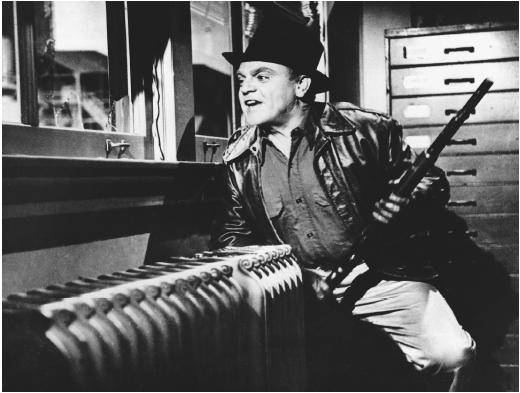
Revisit: White Heat


A Warner Brothers release 1949

Directed by
Raoul Walsh

Writing credits
Virginia Kellogg (story)
Ivan Goff (screenplay)
Ben Roberts (screenplay)

Cody Jarrett (James Cagney) is a sadistic gang leader afflicted by terrible headaches and fiercely devoted to his 'Ma'(Margaret Wycherly). When his top henchman attempts to have him killed while in jail, Cody is saved by an undercover cop (Edmond O'Brien), who befriends him and infiltrates his gang.


In his last gangster flick, James Cagney gives one of the greatest performances of his career as a crime boss who is double-crossed by basically everyone he knows. White Heat is a genuinely exciting caper-film, one that is carried not only by the strength of it's lead actor, but by it's pacing and script. While perhaps not as brutual and linguistically clever as something like Pickup on South Street, the film casts a great dynamic between Cagney's psychologically deranged gangster and O'Brien's nervous wreck of an undercover agent. The last scene, involving large gas tanks and Cagney screaming "Made it, Ma! Top of the world!" is an absolute classic. Worth a look.

Saturday, January 27, 2007

Revisit: Rio Bravo


A Warner Brothers release 1959
Directed by Howard Hawks
Writing Credits:
B.H. McCampbell (short story)
Jules Furthman (screenplay)
Leigh Brackett (screenplay)

The sheriff (John Wayne) of a small town in southwest Texas must keep custody of a murderer whose brother, a powerful rancher, is trying to help him escape. After a friend is killed trying to muster support for him, he and his deputies - a disgraced drunk (Dean Martin) and a cantankerous old cripple (Walter Brennan) - must find a way to hold out against the rancher's hired guns until the marshal arrives. In the meantime, matters are complicated by the presence of a young gunslinger (Ricky Nelson) - and a mysterious beauty (Angie Dickinson) who just came in on the last stagecoach.


One of the quintessential westerns, Rio Bravo is a textbook example of Hawks versatility as a director. His eye for storytelling and technical mastery is evident in most every genre he tackles, westerns included. He works through the western without missing a beat, providing a full show, while adding his own distinct, right-wing politics. The characters in the film are rich and fully-rounded, their behavior and psychology focused. John Wayne plays the curt, upstanding sheriff with usual excellence. Personally, I think Walter Brennan's Stumpy steals the show. Must see for fans of the genre.