Showing posts with label Universal. Show all posts

Monday, March 09, 2009

Revisit: Kindergarten Cop


A Universal Pictures release 1990

Directed by Ivan Reitman

Written by Murray Salem, Herschel Weingrod & Timothy Harris

A police officer goes undercover as a kindergarten teacher to track down the wife and child of a ruthless drug lord.


This 1990 comedy is endlessly quotable, thanks to counter-programming Arnold Schwarzenegger's over-the-top action persona with a group of sharp-tongued little kids. Like many of Arnold's films the plot verges on completely ridiculous, and serves a fine helping of subverted genre cliches, including a crazed mother/son crime combo that make the Bates family look normal. A mild diversion, with the kind of dirty jokes involving kids that don't really make it into movies much anymore.

Thursday, January 22, 2009

2008 Oscar Nominations


The 2008 Oscar Nominations were released today, and while there were a few surprises, mostly I think this list stinks of mediocrity. What a bad year for movies, 2008! Dark Knight got snubbed (as we all expected) for... The Reader? Really?... while Slumdog & Benjamin Button lead the pack with 10 & 13 nominations respectively.

Slumdog isn't my kind of fare but I can see why people liked it -- uplifting, exotic, moving, and contrived, it's definitely a romanticized viewpoint of the world and a treatise on fate, love, & destiny, which is a subject people tend to cling to. Outside of the technical achievements, I have no idea what anyone liked about Benjamin Button. A crapfest in every sense of the word, it was by far the most snooze-inducing, mind-numbingly vacant film I'd seen all year.

That said, I'm really glad to see Michael Shannon get his due for Revolutionary Road. The man slays in the picture, and is a fantastic actor all around that elevates basically every project I've ever seen him in, so kudos to that. Likewise for Josh Brolin in Milk, which was a fantastic and understated performance from a man who's had one hell of a track record as of late. Of course they'll both lose to Dead Ledger, but that's fine -- Dark Knight was my favorite film of the year and he was incredible.

The only other surprise was the snubbing of both Bruce Springsteen & Clint Eastwood in the Best Original Song category. The academy must really love that westernized India shit; I didn't even realize Slumdog had 'original songs'.

Otherwise this list just sort of stands to show how boring boring boring boring 2008 was for movies. None of the top films are that memorable, nor would I bother to watch any again (except maybe Milk). Truly this is one of the lousiest Oscar nomination lists I've ever seen.

Oh well. What's done is done. I guess I'll have to check out the Animated Shorts soon as they make the theater rounds. Here's the full list of nominees:

Best Motion Picture of the Year

*The Curious Case of Benjamin Button (2008): Ceán Chaffin, Kathleen Kennedy, Frank Marshall
*Frost/Nixon (2008): Brian Grazer, Ron Howard, Eric Fellner
*Milk (2008): Bruce Cohen, Dan Jinks
*The Reader (2008): Nominees to be determined
*Slumdog Millionaire (2008): Christian Colson

Performance by an actor in a leading role

* Richard Jenkins in “The Visitor” (Overture Films)
* Frank Langella in “Frost/Nixon” (Universal)
* Sean Penn in “Milk” (Focus Features)
* Brad Pitt in “The Curious Case of Benjamin Button” (Paramount and Warner Bros.)
* Mickey Rourke in “The Wrestler” (Fox Searchlight)

Performance by an actor in a supporting role

* Josh Brolin in “Milk” (Focus Features)
* Robert Downey Jr. in “Tropic Thunder” (DreamWorks, Distributed by DreamWorks/Paramount)
* Philip Seymour Hoffman in “Doubt” (Miramax)
* Heath Ledger in “The Dark Knight” (Warner Bros.)
* Michael Shannon in “Revolutionary Road” (DreamWorks, Distributed by Paramount Vantage)

Performance by an actress in a leading role

* Anne Hathaway in “Rachel Getting Married” (Sony Pictures Classics)
* Angelina Jolie in “Changeling” (Universal)
* Melissa Leo in “Frozen River” (Sony Pictures Classics)
* Meryl Streep in “Doubt” (Miramax)
* Kate Winslet in “The Reader” (The Weinstein Company)

Performance by an actress in a supporting role

* Amy Adams in “Doubt” (Miramax)
* Penélope Cruz in “Vicky Cristina Barcelona” (The Weinstein Company)
* Viola Davis in “Doubt” (Miramax)
* Taraji P. Henson in “The Curious Case of Benjamin Button” (Paramount and Warner Bros.)
* Marisa Tomei in “The Wrestler” (Fox Searchlight)

Best animated feature film of the year

* “Bolt” (Walt Disney), Chris Williams and Byron Howard
* “Kung Fu Panda” (DreamWorks Animation, Distributed by Paramount), John Stevenson and Mark Osborne
* “WALL-E” (Walt Disney), Andrew Stanton

Achievement in art direction

* “Changeling” (Universal), Art Direction: James J. Murakami, Set Decoration: Gary Fettis
* “The Curious Case of Benjamin Button” (Paramount and Warner Bros.), Art Direction: Donald Graham Burt, Set Decoration: Victor J. Zolfo
* “The Dark Knight” (Warner Bros.), Art Direction: Nathan Crowley, Set Decoration: Peter Lando
* “The Duchess” (Paramount Vantage, Pathé and BBC Films), Art Direction: Michael Carlin, Set Decoration: Rebecca Alleway
* “Revolutionary Road” (DreamWorks, Distributed by Paramount Vantage), Art Direction: Kristi Zea, Set Decoration: Debra Schutt

Achievement in cinematography

* “Changeling” (Universal), Tom Stern
* “The Curious Case of Benjamin Button” (Paramount and Warner Bros.), Claudio Miranda
* “The Dark Knight” (Warner Bros.), Wally Pfister
* “The Reader” (The Weinstein Company), Chris Menges and Roger Deakins
* “Slumdog Millionaire” (Fox Searchlight), Anthony Dod Mantle

Achievement in costume design

* “Australia” (20th Century Fox), Catherine Martin
* “The Curious Case of Benjamin Button” (Paramount and Warner Bros.), Jacqueline West
* “The Duchess” (Paramount Vantage, Pathé and BBC Films), Michael O’Connor
* “Milk” (Focus Features), Danny Glicker
* “Revolutionary Road” (DreamWorks, Distributed by Paramount Vantage), Albert Wolsky

Achievement in directing

* “The Curious Case of Benjamin Button” (Paramount and Warner Bros.), David Fincher
* “Frost/Nixon” (Universal), Ron Howard
* “Milk” (Focus Features), Gus Van Sant
* “The Reader” (The Weinstein Company), Stephen Daldry
* “Slumdog Millionaire” (Fox Searchlight), Danny Boyle

Best documentary feature

* “The Betrayal (Nerakhoon)” (Cinema Guild), A Pandinlao Films Production, Ellen Kuras and Thavisouk Phrasavath
* “Encounters at the End of the World” (THINKFilm and Image Entertainment), A Creative Differences Production, Werner Herzog and Henry Kaiser
* “The Garden” A Black Valley Films Production, Scott Hamilton Kennedy
* “Man on Wire” (Magnolia Pictures), A Wall to Wall Production, James Marsh and Simon Chinn
* “Trouble the Water” (Zeitgeist Films), An Elsewhere Films Production, Tia Lessin and Carl Deal

Best documentary short subject

* “The Conscience of Nhem En” A Farallon Films Production, Steven Okazaki
* “The Final Inch” A Vermilion Films Production, Irene Taylor Brodsky and Tom Grant
* “Smile Pinki” A Principe Production, Megan Mylan
* “The Witness - From the Balcony of Room 306” A Rock Paper Scissors Production, Adam Pertofsky and Margaret Hyde

Achievement in film editing

* “The Curious Case of Benjamin Button” (Paramount and Warner Bros.), Kirk Baxter and Angus Wall
* “The Dark Knight” (Warner Bros.), Lee Smith
* “Frost/Nixon” (Universal), Mike Hill and Dan Hanley
* “Milk” (Focus Features), Elliot Graham
* “Slumdog Millionaire” (Fox Searchlight), Chris Dickens

Best foreign language film of the year

* “The Baader Meinhof Complex” A Constantin Film Production, Germany
* “The Class” (Sony Pictures Classics), A Haut et Court Production, France
* “Departures” (Regent Releasing), A Departures Film Partners Production, Japan
* “Revanche” (Janus Films), A Prisma Film/Fernseh Production, Austria
* “Waltz with Bashir” (Sony Pictures Classics), A Bridgit Folman Film Gang Production, Israel

Achievement in makeup

* “The Curious Case of Benjamin Button” (Paramount and Warner Bros.), Greg Cannom
* “The Dark Knight” (Warner Bros.), John Caglione, Jr. and Conor O’Sullivan
* “Hellboy II: The Golden Army” (Universal), Mike Elizalde and Thom Floutz

Achievement in music written for motion pictures (Original score)

* “The Curious Case of Benjamin Button” (Paramount and Warner Bros.),Alexandre Desplat
* “Defiance” (Paramount Vantage), James Newton Howard
* “Milk” (Focus Features), Danny Elfman
* “Slumdog Millionaire” (Fox Searchlight), A.R. Rahman
* “WALL-E” (Walt Disney), Thomas Newman

Achievement in music written for motion pictures (Original song)

* “Down to Earth” from “WALL-E” (Walt Disney), Music by Peter Gabriel and Thomas Newman, Lyric by Peter Gabriel
* “Jai Ho” from “Slumdog Millionaire” (Fox Searchlight), Music by A.R. Rahman, Lyric by Gulzar
* “O Saya” from “Slumdog Millionaire” (Fox Searchlight), Music and Lyric by A.R. Rahman andMaya Arulpragasam

Best motion picture of the year

* “The Curious Case of Benjamin Button” (Paramount and Warner Bros.), A Kennedy/Marshall Production, Kathleen Kennedy, Frank Marshall and Ceán Chaffin, Producers
* “Frost/Nixon” (Universal), A Universal Pictures, Imagine Entertainment and Working Title Production,Brian Grazer, Ron Howard and Eric Fellner, Producers
* “Milk” (Focus Features), A Groundswell and Jinks/Cohen Company Production, Dan Jinks and Bruce Cohen, Producers
* “The Reader” (The Weinstein Company), A Mirage Enterprises and Neunte Babelsberg Film GmbH Production, Nominees to be determined
* “Slumdog Millionaire” (Fox Searchlight), A Celador Films Production,Christian Colson, Producer

Best animated short film

* “La Maison en Petits Cubes” A Robot Communications Production, Kunio Kato
* “Lavatory - Lovestory” A Melnitsa Animation Studio and CTB Film Company Production, Konstantin Bronzit
* “Oktapodi” (Talantis Films) A Gobelins, L’école de l’image Production, Emud Mokhberi and Thierry Marchand
* “Presto” (Walt Disney) A Pixar Animation Studios Production, Doug Sweetland
* “This Way Up”, A Nexus Production, Alan Smith and Adam Foulkes

Best live action short film

* “Auf der Strecke (On the Line)” (Hamburg Shortfilmagency), An Academy of Media Arts Cologne Production, Reto Caffi
* “Manon on the Asphalt” (La Luna Productions), A La Luna Production, Elizabeth Marre and Olivier Pont
* “New Boy” (Network Ireland Television), A Zanzibar Films Production, Steph Green and Tamara Anghie
* “The Pig” An M & M Production, Tivi Magnusson and Dorte Høgh
* “Spielzeugland (Toyland)” A Mephisto Film Production, Jochen Alexander Freydank

Achievement in sound editing

* “The Dark Knight” (Warner Bros.), Richard King
* “Iron Man” (Paramount and Marvel Entertainment), Frank Eulner and Christopher Boyes
* “Slumdog Millionaire” (Fox Searchlight), Tom Sayers
* “WALL-E” (Walt Disney), Ben Burtt and Matthew Wood
* “Wanted” (Universal),Wylie Stateman

Achievement in sound mixing

* “The Curious Case of Benjamin Button” (Paramount and Warner Bros.), David Parker, Michael Semanick, Ren Klyce and Mark Weingarten
* “The Dark Knight” (Warner Bros.), Lora Hirschberg, Gary Rizzo and Ed Novick
* “Slumdog Millionaire” (Fox Searchlight), Ian Tapp, Richard Pryke and Resul Pookutty
* “WALL-E” (Walt Disney),Tom Myers, Michael Semanick and Ben Burtt
* “Wanted” (Universal), Chris Jenkins, Frank A. Montaño and Petr Forejt

Achievement in visual effects

* “The Curious Case of Benjamin Button” (Paramount and Warner Bros.), Eric Barba, Steve Preeg, Burt Dalton and Craig Barron
* “The Dark Knight” (Warner Bros.), Nick Davis, Chris Corbould, Tim Webber and Paul Franklin
* “Iron Man” (Paramount and Marvel Entertainment), John Nelson, Ben Snow, Dan Sudick and Shane Mahan

Adapted screenplay

* “The Curious Case of Benjamin Button” (Paramount and Warner Bros.), Screenplay by Eric Roth, Screen story by Eric Roth and Robin Swicord
* “Doubt” (Miramax), Written by John Patrick Shanley
* “Frost/Nixon” (Universal), Screenplay by Peter Morgan
* “The Reader” (The Weinstein Company), Screenplay by David Hare
* “Slumdog Millionaire” (Fox Searchlight), Screenplay by Simon Beaufoy

Original screenplay

* “Frozen River” (Sony Pictures Classics), Written by Courtney Hunt
* “Happy-Go-Lucky” (Miramax), Written by Mike Leigh
* “In Bruges” (Focus Features), Written by Martin McDonagh
* “Milk” (Focus Features), Written by Dustin Lance Black
* “WALL-E” (Walt Disney), Screenplay by And

Thursday, April 26, 2007

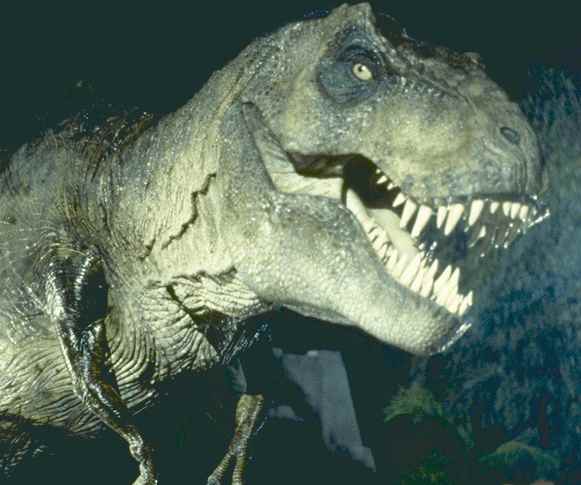
The Gates of Jurassic Park


One of the most successful films in box-office history, Jurassic Park represents a milestone in big-budget filmmaking. Seamlessly blending science with adventure, humor, horror, and suspense, the film utilizes puppetry and computer generated images to bring one of nature's oldest mysteries—the dinosaurs—to life. Upon its release, Jurassic Park boasted the most innovative and breath-taking onscreen effect sequences, particularly in regards to CGI, a new medium at that time. Since then, the film has stood as a model for special effects filmmaking, a landmark moment in blockbuster history.

To attribute this success solely to the film's groundbreaking effects, however, would be unsound. Though the effects do serve as the ultimate spectacle for the audience, Jurassic Park exhibits a true understanding of timing and build-up, of how to construct a cinematic sequence in order to wring out the greatest amount of tension. This can be accredited to Steven Spielberg, the acclaimed director of other smash hits such as Jaws and Raiders of the Lost Ark. Spielberg acts almost as a guide through Jurassic Park, expertly building conflict while ultimately adding a sense of representational duality through editing, framing, and iconography. As an example of such multi-dimensional representation, the gated entrance in Jurassic Park serves not only as a symbolic introduction to the spectacle of the film, but acts as a conscious product of the standard Hollywood blockbuster.


The gated entrance of Jurassic Park is, quite literally, a giant gate. It appears approximately one third of the way into the film, just as the characters begin the motorized tour. Before this moment, Spielberg develops escalating levels of excitement, briefly exhibiting a dinosaur and using time to verbally explain the mystery and wonder of the park. However, the tour marks the point at which the characters (and audience) will finally receive visual confirmation of what they've been waiting to see, and consequentially the tone of the scene reflects this ripe anticipation. It is only appropriate that the gate is introduced by a guiding verbal announcement: “Hey, look!” This statement identifies and defines the gate foremost as an object to look at, a spectacle—a direct convention of the blockbuster genre, if defined as such. Following this dialogue is the first shot of the entranceway, a lengthy long-distance tracking shot in which the gate appears to grow in size as the camera approaches it. This slow build-up both mirrors and accelerates the tone of the scene; the slowly decreasing distance between the audience and the gate, coupled with its seeming rise in size and stature, affirms and builds audience anticipation.


As the cars move along the track, we see awe and enthusiasm among the characters faces. Spielberg's next shot brings the audience into the cars, eye-level with the characters in the film. This direct association between audience and character strengthens the sincerity of the visuals, placing the audience inside the adventure, promoting a shift from passive to active view. It also allows Spielberg to contort the size of the entranceway yet again; now it fills the entire front window of the car, spilling out past the frame. The camera pans upward, using the open sunroof to capture the rest of the image. At this view the gate appears huge, towering over the motorized cars with its immense presence. Spielberg continues this theme with his next two gate shots—a canted angle crane shot, followed by a medium distance shot of the entrance doors closing, both of which give the appearance of the gate dwarfing the tour group.

This concept of size, particularly at the introduction of the park tour, signifies the spectacle that waits within. Spielberg's construction of the gate through edits creates a towering force, producing a physical representation of the powerful visual display present throughout the film. However, elements of mis-en-scene other than editing aid in this interpretation. John William's score pervades the scene, bombastically celebrating the arrival at the park gate. Characterized by ecstatic blasts of trumpet and the epic rise and fall of strings, William's theme for the film not only narrates emotions felt by the characters, but guides the audience disposition as well. The swelling of the music, particularly as the gate closes, toys with the audience's anticipation, portraying sonically what Spielberg had previously conveyed visually.


Similarly, dialogue acts to reiterate the theme of magnitude. As the cars move through the entrance, Dr. Ian Malcolm (Jeff Goldblum) quips “What do they got in there, King Kong?” This direct reference to the 1933 classic about a colossal ape amok in New York City—a special effects extravaganza that remains a large influence on blockbuster filmmaking to this day—creates a link between the films in terms of graphic scale in relation to the presence of a giant gate. Like in Jurassic Park, the gate in King Kong appears approximately one-third of the way into the film. Unsurprisingly, it looks almost exactly like the one in JP—a towering wooden structure studded with torches. Introductory dialogue (“Colossal!” “I want to know what's on the other side!”) establishes the spectacle of the gate, while a thunderous aboriginal ceremony at its front signifies a certain larger symbolic significance. As the ceremony moves forward, we see the gate open to unveil a religious altar; the natives scale the top of the gate to watch as Kong, the gigantic ape, completes the sacrifice.

At this point, the gate serves three cinematic purposes: a self-referential object realizing the grandiosity of the film, a diegetic object of protection and religious importance for the indigenous peoples within the story, and a barrier between the civilized world and the world of Kong, a dangerous territory where spectacle and special effects reign. Before the display of the gate, King Kong builds anticipation through dialogue: “Money! Adventure! Fame! It's the thrill of a lifetime!” exclaims Carl Denham, the punchy, persistent coordinator of the fateful trip. However, once the characters pass through the gate, they are overwhelmed by effects, turned into pawns for puppets and claymation figures. Later in the film, as Kong busts through the gate, the two worlds collide, and the final spectacle of the film is realized—the blending of chaos and civilization.


Ultimately, what purpose does the gate in Jurassic Park serve? In relation to the diegetic world of the film, the gate offers no protective use, disconnected from the electrified fences used to pen the dinosaurs. In fact, the gate is never shown in the film again! And though it presents the point at which the action bleeds into chaos, marked moments of effects before this point in the film separate Spielberg's building-block approach to tension from that of King Kong's distinct filmic binary. In the end, the gates of Jurassic Park represent a hypocritical sort of necessary excess, both within the world of the film and as part of the spectacle of modern blockbuster filmmaking. Constructed through multiple elements of mis-en-scene, the gate as an entity alludes to the important of size and showmanship without serving any other real function. It maintains the film's thematic narrative criticism of gluttonous entertainment-business practices (Represented, for example, by the lawyer, the JP products, “spared no expense,” etc), while at the same time succumbing to Hollywood's own brand of profligacy. Perhaps this complexity results from Spielberg's deft direction, but it seems more likely a product of Hollywood blockbuster tradition, where spectacle overrules necessity, even in this most minute scene.


Originally published on Metaphilm.com December 4th, 2005.

Tuesday, February 27, 2007

Spielberg: 30 Years of Blockbusters part IV


Special effects play a large role in both War of the Worlds and Jaws. They reinforce the fear of the ‘other’ by revealing its physical characteristics in a spectacular fashion. In the case of War of the Worlds, these effects dominate the screen right from the beginning. From earth-shattering explosions to enormous alien ‘tripods’ to the Martians themselves, Worlds is an onslaught of big budget, state of the art wizardry. In fact, most of the excitement and thrills in War of the Worlds rely on the fantastic visuals. On the other hand, the special effects in Jaws appear sparingly, substituting shark POV shots for the actual beast. Part of this is due to budget restrictions (Jaws cost $10 mil., which even by today’s dollar would be significantly less than Worlds $132 mil.) and part to technical complications; according to Peter Biskind’s book Easy Riders, Raging Bulls mechanical malfunctions forced Spielberg to scale down some of the intense shark scenes he had originally planned (Biskind 265). Regardless, the use special effects mark a severe difference in rhythm between the two films. War of the Worlds moves at breakneck speed, hardly stopping the effects extravaganza, while Jaws is punctuated, building the image of the shark piece by piece until the beast is revealed in the climactic final act.


Ultimately, these posts might come off as a bit biased. They talk a lot about the ways in which Jaws succeeds as a film and War of the Worlds fails. It’s crucial to keep in mind that, in terms of Spielberg’s career, Jaws remains the template for many of his subsequent films. The structural similarities between Jaws and his other movies are certainly present and, after all, Jaws was a tremendous hit, so it would only make sense for Spielberg to retain its mold. Clearly, differences influenced by budget cost, social issues, source text, and technology have effected the ways in which Spielberg makes movies. His increased use of special effects also reflects the current movie market, in which audiences look for new thrills in the form of new technology. However, one element strings all of Spielberg’s works together: excitement.

Monday, February 26, 2007

Spielberg: 30 Years of Blockbusters part III


Politics play a large role in motivating the characters and events that occur in Jaws. Brody’s decision to leave the beach open after the first attack goes against his morals. Rather, he is motivated by pressure from the Mayor, who fears the town will “be on welfare the whole winter” if they close the beach. This results in a second attack involving a young child. However, the Mayor and local business owners yet again force Brody to keep the beach open. By the Forth of July, beach goers refuse to enter the water. An interesting scene unfolds between the Mayor and a local: worried about the fear stricken tourists, the Mayor assertively tells the man, “No one is going in! Please, go in the water!” The Mayor holds significant pull within the town, and though his plea sparks a rush of tourists into the ocean, his denial of the shark also results in another death, and endangers the life of Brody’s son. This vilification of the Mayor presents a post-Watergate assessment of corrupt authority, disdain towards the elected official, and reinforces the approval of the average American.


Politics are present throughout War of the Worlds as well; however, they do not function as character motivation. Rather, Spielberg uses the backdrop of an alien invasion to create a post-911 allegory. Images throughout the film recall the 2001 terrorist attacks on the World Trade Center: mass destruction of buildings, raining clothing, people in large groups running down city streets, a destructive plane crash, clouds of dust comprised of human remains. In once scene, Ray Ferrier actually gets covered in thick layers of this dust, quite like those who witnessed the real attacks first hand. Later, a fence is erected with photos and memorials, signs searching for missing people, just like the ones established at Ground Zero. Blunt dialogue works to reinforce the post-911 themes as well:

Rachel Ferrier: Is it the terrorists?

Robbie Ferrier: What is it? Is it terrorists?


Perhaps Spielberg is attempting to counter balance the lack of audience alignment with the film’s characters by paralleling the effects of the invasion with 9-11. Following this logic, a sort of direct, “this could happen to you” form of horror similar to that of Jaws could be argued, particularly regarding the progression of imagery. As the characters move outward from city to suburbs to farmland, the violence and carnage of the attacks grows increasingly more graphic. For example, people simply burst into dust when attacked in Jersey City, while bloody dismembered bodies litter the rivers and farmland. This could be interpreted as an attack on the comfort of Middle America, dispelling the misconception that only cities are in danger by showing that even the heartland is not safe from destruction. However, these overt references to 9-11 do not add depth to the story or motivate characters, but rather justify the extravagant special effects that overrun the duration of the film.

Part IV Coming Soon!
Check out the rest of the article!

Saturday, February 24, 2007

Spielberg: 30 Years of Blockbusters part II

Both Jaws and War of the Worlds revolve around the concept of an ‘other’ invading and threatening the American way of life. Spielberg uses this ‘other’ in two ways: 1) to outline a political hierarchy, focusing specifically on the everyman in relation to familial themes, and 2) to generate escalating amounts of excitement with the aid of special effects. Essentially, if one were to boil the Spielberg blockbuster down to a formula, this use of the ‘other’ would stand as the crux of his films. In the case of Jaws and War of the Worlds, it acts as the template for plot design.


Jaws centers on the small beachside community of Amity, a town that relies on summer tourism to create revenue. When a Great White shark threatens the town’s shorelines, Police Chief Martin Brody (Roy Scheider) is faced with a dilemma – pressured to keep the beaches open by local businessmen and politicians, he must decide between jeopardizing public safety or destroying community income. Without ever drawing our attention away from the problem of the shark, Spielberg hints at the generic Americanization of Amity through the use of a non-star cast, subtle visuals and dialogue. Visually, Amity is characterized by white-wash buildings, wooden docks and picket fences. It is no mistaking that one scene takes place in front of a parade, another at town hall. And when we hear locals complain to Chief Brody about “kids’ karate chopping my fence”, “sick vandalism”, and “parking violations”, it only serves to remind us of the nonspecific American setting. Similarly, the destiny of those who ultimately take on the shark reflects Spielberg’s affinity for the average man; Quint (Robert Shaw), the right-winged macho shark hunter, is killed, while Hooper (Richard Dreyfuss), the intellectual left, is impaired, leaving Brody, the everyman cop, to successfully destroy the shark (Biskind 279). Ultimately, this works to effectively produce the true ‘horror’ aspect of the film. Spielberg’s assertion of the main protagonist as the generic everyman creates a direct connection with the spectator. When audiences see the Great White tear apart a young child near the beach, they realize that the people on screen are easily substituted: we place ourselves within the film.


War of the Worlds attempts to establish a similar sense of blue collar ambiguity, but ultimately fails to do so for several reasons. The film begins on the Jersey City docks, introducing protagonist Ray Ferrier (Tom Cruise). Like a modern Fred Flintstone, Ferrier operates a large crane, stacking loading boxes near the water. He looks grungy in a pair of jeans, a flannel shirt, and workman gloves. Dialogue establishes that Ferrier works long hours, and that he belongs to a workers union. This scene lasts about two minutes until a cut shifts to Ferrier’s small ranch style home, where he meets his kids, products of a failed marriage. This is followed by about seven minutes worth of character development which demonstrate that 1) Ray neglects his kids and 2) the kids do not like Ray. Spielberg isn’t working very subtlety here; unlike in Jaws, where the blue collar-ness weaves in and out of the story, War of the Worlds very bluntly places its small-town emphasis right at the beginning, failing to resonate throughout the rest of the film, resulting in a lack of connection between the film’s characters and its audience. In addition, the presence of megastar Tom Cruise detracts from the believability of the story. One of the highest paid actors in the world, Cruise generally portrays upper-class aggressors (Eyes Wide Shut) or pretty boy action heroes (Mission Impossible, Top Gun). With this iconic connection already firmly planted in the audience’s mind, it makes it difficult to see Cruise as a dead beat union worker, negating the effect audience alignment with characters in the film.


Part III Coming Soon!
Check out Spielberg Part I!

Thursday, February 22, 2007

Spielberg: 30 Years of Blockbusters part I


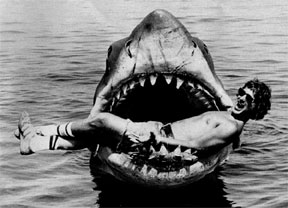
The 1975 release of Steven Spielberg’s Jaws coincided with the arrival of the New Hollywood, a golden age of American film production in which creative power transferred from studio heads to film directors. Despite being a product of this artistic flourish, Jaws represents several milestones in Hollywood business practices. By twisting its now legendary shooting fiascos into hype, saturating theaters through wide release, and expanding promotional advertising beyond traditional print and radio into television – an advertising medium still in its infancy – as well as commercial tie-ins, Universal Studios formed the archetype of blockbuster advertising out of Spielberg’s action/horror hybrid (Schatz 24). The resulting success not only set the precedent for current modes of movie marketing, but launched the career of director Steven Spielberg.

Thirty years later, Spielberg released War of the Worlds, a high octane special effects extravaganza based on the classic novel by H.G. Wells. LikeJaws before it, War of the Worlds served as summer popcorn fare, escapist cinema functioning solely to entertain, excite, and encompass audiences in the wizardry of special effects. Unlike Jaws, however, which was generally praised for being an effective thriller, War of the World met several detractors, dismissing it as one of Spielberg’s lesser films, a soul-less “exploitation of tragic iconography” (Stephen Whitty, Newark Star Ledger). What, if anything, about Spielberg’s cinematic approach differs between these two films? In analyzing the thematic and stylistic content of both Jaws and War of the Worlds, one notices that, though the formula remains the same, subtle disparities make a World of difference .


Before I begin to closely examine these films, it is necessary to explore the circumstances surrounding their individual productions. The production of Jaws revolved around a novice director, a cast of unknowns, and unreliable, untested special effects. Spielberg resisted casting any star power, acquiring actors whom he felt reinforced the realism of the story. According to a quote attributed to Spielberg in Peter Biskind’s Easy Riders, Raging Bulls, he “wanted somewhat anonymous actors to be in it so you would believe this was happening to people like you and me” (Biskind 265). Similarly, Spielberg’s visual aesthetic reinforced this idea of realism. Refusing to work within a studio, production moved to the open sea, where technical problems and production delays pushed the budget well beyond the initial projected $3.5 million. Ultimately, shooting went 104 days over schedule and nearly $7 million over budget (Biskind 267). Alternately, War of the Worlds quick production reflects a confident, assured director. Initially set for a 2007 release date, the film was abruptly green-lit in August 2004, and released summer 2005. Unlike with Jaws, the presence of megastar Tom Cruise was crucial to getting Worlds off the ground. Spielberg shot the film within four months on a gargantuan budget of over $132 million. Pre-publicity for the film focused on the large budget – an August 18th 2004 article on IMDB.com reported “Steven Spielberg's upcoming movie War of the Worlds is poised to make history in Hollywood as the most expensive film ever made - surpassing Titanic's $198 million budget... No expense will be sparred” – as well as the large profit Spielberg, Cruise, and the studios stood to make from the film’s success (imdb.com).

These two radically different productions reflect a director refocusing his priorities despite making similar movies. Spielberg’s budget problems and production delays onJaws rose out of the need to tell the story realistically and effectively. His choice to use unknown actors and real sets reinforced the blue-collar, everyman feel of the movie. Contrarily, Spielberg used budget and star power to the extreme while producing War of the Worlds. He ignored the stigma surrounding actor Tom Cruise, and focused his attention on the extravagance of effects, producing aesthetically different results.


Spielberg Part II Coming Soon!

Thursday, February 15, 2007

Revist: Coal Miner's Daughter


A Universal Pictures release 1980

Directed by
Michael Apted

Writing credits:
Loretta Lynn (autobiography)
George Vecsey (autobiography)
Tom Rickman (screenplay)

At only thirteen years of age, Loretta Webb (Sissy Spacek) marries Doolittle Lynn (Tommy Lee Jones) and soon becomes country sensation Loretta Lynn.


Over two decades before Ray, Coal Miner's Daughter presents the same tride and true Oscar-baiting form of musical biopic, only this time it's a country star. These movies never go out of style, apparently; never have and never will. Nominated for six Oscars, with one win for Sissy Spacek as Mrs. Lynn, Coal Miner's Daughter is exactly what you expect from Hollywood. Sure the performances are great, and it's cool that they sang their own songs, but haven't I seen this before? Thanks for making the template for a ton of crap films, Apted. I guess you get some credit for being first.

Wednesday, February 07, 2007

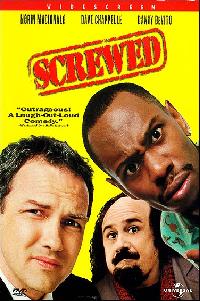
Revisit: Screwed


A Universal Pictures release 2000
Written and Directed by
Scott Alexander
Larry Karaszewski

A chauffeur (Norm MacDonald) and his friend (Dave Chappelle) kidnap his rich boss's (Elaine Stritch) dog to hold it for ransom, but when she accidentally gets the dog back, she thinks that it's the chauffeur who's been kidnapped.


It's amazing what channels like USA or TNT will air at four in the morning. Considering the amount of comedic talent in this picture, including Dave Chappelle, Norm MacDonald, Sara Silverman and Danny DeVito, it's surprising that someone could have a made a movie as unfunny as this. The innane plot harkens back to screwball comedies of the thirties, but the humor is surprisingly bland and gives its stars, who are all known for having original timing and delivery, absolutely nothing to work with. Poorly handled on all accounts, this movie should be remembered for only one thing: a textbook example of how not to make a comedy. Watch only if you're high and it's 4AM.

Friday, January 26, 2007

Revisit: The Hunchback of Notre Dame (1923)


A Universal Pictures release 1923
Directed by Wallace Worsley
Writing credits:
Victor Hugo (novel)
Edward T. Lowe Jr.
Perley Poore Sheehan

Gypsy dancer Esmerelda (Patsy Ruth Miller) is the object of offection for both Phoebus (Norman Kerry), the loyal Captain of the Guards, and Jehan (Brandon Hurst), the evil brother of the archdeacon. When Jehan stabs Phoebus in the back, Esmerelda is blamed, but the hunchback Quasimoto (Lon Chaney) comes to her rescue, as she was the only person ever to treat the deformed man kindly.


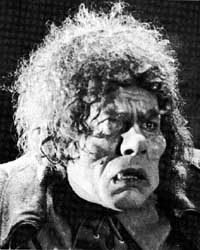
Chaney’s performance, paired with a striking and innovative use of make-up, evoked both terror and pity in its original release, and it remains the best reason to see this film. He really gets into it, and it's a pretty stunning transformation, considering the period. In fact, a lot about this movie is pretty stunning for the time; while the camera movement is flat, the images contained are striking, with a beautiful, realistic looking medieval set and many large crane shots that cram hundreds of people onto the screen at once. From what I gather, it is the more accurate version of Hugo's story, as well. People often have trouble watching silent films today, but this was one that definitely kept me engaged on a basic story level. I'm interested to see how it compares to the 1939 Charles Laughton version.

Sunday, January 21, 2007

Revisit: That Touch of Mink


A Universal Pictures release 1962
Directed by Delbert Mann
Writing credits:
Stanley Shapiro
Nate Monaster

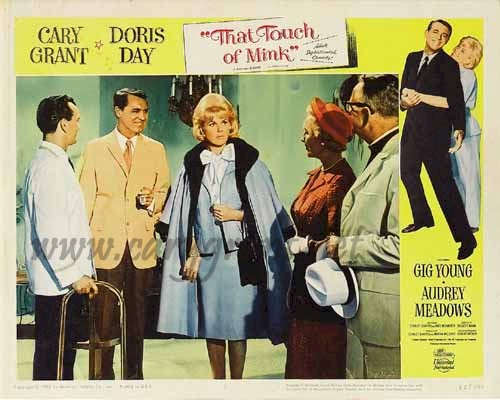
A rich businessman (Cary Grant) and a young woman (Doris Day) are attracted to each other, but he only wants an affair while she wants to save her virginity for marriage.


Cary Grant is in so many movies. In this one, he plays a crusty millionaire whose lofty bribes can't seem to get him access to Doris Day's pants. Director Mann has taken a couple of cues from Tashlin here: a palate of bright solid colors, with strong purple and yellow backgrounds, slapstick-style gags, the use of double entendre. The film also has a uniquely American aesthetic. Cathy's desire for the stability of marriage and her fear of sex are a reflection of rural christian attitudes. It's interesting to see how sex is visualized in this film - they never outright say the word, but use double entendres and visual metaphors (the bed, for example) to represent it. Far different from today's physically oriented depictions. Cary Grant in the 60's is so much funnier than Grant in the 30's - he's got that whole likeable prickness thing going, it's great. Check Father Goose for a better example. As a romantic comedy, it's highly watchable and entertaining.

Saturday, January 20, 2007

Revisit: High Plains Drifter


A Universal Pictures release 1973
Directed by Clint Eastwood
Written by Ernest Tidyman

A stranger (Clint Eastwood) rides out of the hot desert into the small western town of Lago. The towns people are scared of him, and 3 gunmen try unsuccessfully to kill him. He takes a room and decides to stay. Meanwhile, a group of outlaws are about to return to town and take their revenge. Can the town convince the mysterious man to help?


I miss the old days of Clint's westerns. The colors were already washed out - none of that digital tinting bullshit.
This is your pretty standard post-goldern western, lots of gunplay and bloody as hell. While Fistfull of Dollars may remain the offical Yojimbo adaptation, Eastwood seems to have piggy-backed a lot of the samurai saga's basic structure, while reverting the conflict from an inner struggle to an outside figure (the two gangs in Yojimbo vs. the roaming bandits in Drifter). Though it may not be the most original of westerns, it's a pretty fun movie.

Thursday, January 11, 2007

Review: Children of Men


A Universal Pictures release 2006
Directed by Alfonso Cuarón
Writing credits:
Alfonso Cuarón (screenplay)
Timothy J. Sexton (screenplay)
David Arata (screenplay)
Mark Fergus (screenplay)
Hawk Ostby (screenplay)
P.D. James (novel The Children of Men)

In 2027, as humankind faces the likelihood of its own extinction, a disillusioned government agent (Clive Owen) agrees to help transport and protect a miraculously pregnant woman (Claire-Hope Ashitey) to a sanctuary at sea where her child's birth may help scientists to save the future of mankind.


Children of Men is easily the best science fiction film of the past year. As director Cuarón's follow up to Harry Potter 3, the film is expertly handled, convincingly portraying a dying world some twenty years into the future. What makes this film work is the use of a 3rd person style hand-held camera - it follows the characters around, immersing the viewer in the world as if they were running with Clive Owen. Quick pans and sweeping camera moves allow for a rich, realized atmosphere that is grounded in realism. That said, the story has some holes and could have been stronger, particularly in terms of characterization. While none of the performances are bad here, the characters simply feel like sci-fi stock. But if you're looking for the cinematic equivalent of a roller coaster ride, this may be as good as it gets.

Friday, January 05, 2007

Revisit: All That Heaven Allows

Cary Scott (Jane Wyman), a wealthy widow, falls in love with the much younger nurseryman, Ron Kirby (Rock Hudson). This provides gossip for the country club set, and her children are ashamed that she plans to remarry below her station. Ron is an independent man who can ignore the petty conventions of society, but can Cary ignore them as well?

A Universal-International release 1955
Directed by Douglas Sirk
Writing Credits:
Peg Fenwick (screenplay)
Edna Lee (story)
Harry Lee (story)

Another classic Sirk melodrama from the fifties, also starring the incomparable Rock Hudson. The subject here is taboo love and the American bourgeoisie; Wyman's love for Hudson is scorned by the local socialites, providing most of the conflict for the film. Sirk turns this into a damning portrayal of fifities upper-middle class suburban society and liesure time. He offers Therou's Walden as a superior alternative way of living as compared to the gossipy rumormill that is country club life. Likewise, there is a strong anti-television discourse throughout the film. While perhaps not as sweepingly melodramatic as Written in the Wind, it remains a textbook example of the genre.

Thursday, January 04, 2007

Revisit: Written on the Wind, The Killers (1964)


A Universal-International Pictures release 1956
Directed by Douglas Sirk
Writing Credits:
Robert Wilder (novel)
George Zuckerman (screenplay)

Mitch Wayne (Rock Hudson), the son of a farmhand, and self-pitying playboy millionaire Kyle Hadley (Robert Stack) have always been best friends. Hadley tries to cure his alcoholic ills by marrying the virtuous Lucy Moore (Lauren Bacall), whom Mitch loves but cannot express his feelings towards. Kyle's wild sister, Marylee, hopes to marry Mitch, but he treats her as a brother. Kyle stops drinking until he discovers that he may be sterile. Slyly, Marylee suggests to Kyle that Lucy and Mitch are lovers, and when Lucy finds that she is pregnant, a drunken Kyle accuses Mitch of being the father. What follows is a whirlpool of searing emotionalism that results in disaster.


A Universal Pictures release 1964
Directed by Don Siegel
Writing Credits:
Ernest Hemingway (story)
Gene L. Coon (screenplay)

Based on the short story by Ernest Hemingway, this crime caper follows two hitmen (Lee Marvin, Claude Akins) as they discover why their latest victim, race car driver Johnny North (John Cassavettes) "just stood there and took it" when they came to kill him. Ronald Reagan plays the rich, double-crossing bad guy who ordered the hit, and a young Angie Dickinson plays the femme fatale.*

*Please note that this is different from the 1946 noir version of the same Hemigway story


Though these films are inherently different, there are several undercurrents, both narrative and form based, that tie them together. Each feature themes of masculine sexual displacement, with a strong-willed, conniving woman at the center of the story responsible for the creation of conflict. Both Angie Dickinson's and Dorothy Malone's characters manipulate other characters within the films to get what they desire. Likewise, there is a strong emphasis on the reflected male gaze in each film. In The Killers, there are reflection shots in the bounty hunters' glasses; in Written on the Wind, reflection shots in mirrors are used heavily, particularly of Robert Stack's character. Both films have a sort of cheesy emotional resonance as well.

That being said, the films represent two very different genres (crime and melodrama respectively) with very different visual aesthetics. The Killers features a lot of quick, jarring cuts with sharp dialogue to match. (A lot of the lines from this film seem to have been reused in many of Tarrantino's films, further proving him the hack of the century). Written on the Wind is spacious, with a sort of classical, seemless editing style. The performances here are more natural, with emphasis on emotion.

Regardless, both films present directors working in their prime and should be seen by anyone who has interest in the cinema.

Wednesday, January 03, 2007

Revisit: Phantasm II

A Universal Pictures release 1989
Written & Directed by Don Coscarelli

Mike (James LeGros) is released from the psychiatric ward where he was supposed to come to terms with the terrible happenings in his past. A beautiful but strange girl starts to appear in his dreams, and Mike fears that the Tall Man (Angus Scrimm), who plunders graveyards and kidnaps victims in their sleep with help of his terrible gnomes, may be back. Mike contacts his old pal Reggie (Reggie Bannister) and they team up to hunt down and eliminate the Tall Man. But can they find the girl before the Tall Man gets to her first?

This sequel to the 1979 horror flick of the same name improves upon it's original in almost all respects. The plot line is more coherent, more interesting, and the film is filled with sweet gore effects. I mean, look at this stuff:


That last picture shows the Tall Man being attacked by one of his own 'floating spheres'. Those sphere things are absolutely terrifying - tiny silver balls that chase their victims down at full speed, ramming a pair of prongs into their head, then drilling through their skull and draining their brains. There's pretty much no escaping them. Horrifying.
While not the most intelligent filmmaking, Phantasm II does have some interesting interplay between the real world and the world of dreams. Thankfully the whole psychic/dream thing isn't just a gimmick here - the concept is used to motivate the characters, rather than just connect scenes. Those of you who are fans of the cult film Bubba Ho-Tep may recognize writer/director Coscarelli. Although many might disagree, I would say this film is better than Ho-Tep. A must see for fans of 80's horror.