Showing posts with label Spielberg. Show all posts

Friday, November 07, 2008

Remake: Oldboy

Another tip for the bad idea file: /film is reporting Will Smith & Steven Speilberg plan on remaking Chan-Wook Park's Oldboy

Speilberg & Will Smith to remake Oldboy?

There is no reason to remake this movie, but Hollywood's going to do it eventually anyway. It's been in the pipeline since the original was released in the states in 2005. But Will Smith is a very odd choice for this -- I don't think he has the gritty sneer to be able to pull of the titular character. Spielberg is an odd choice as well, considering the dark tone and feel of the film. And how will the hyper-but purposeful-violence of the original translate in a senseless Hollywood version?

Who knows. Who cares. Here's the side-scrolling hammer fight sequence that made the original Oldboy famous. Go rent this flick if you haven't seen it.


Hollywood, you disappoint me.

Thursday, April 26, 2007

The Gates of Jurassic Park


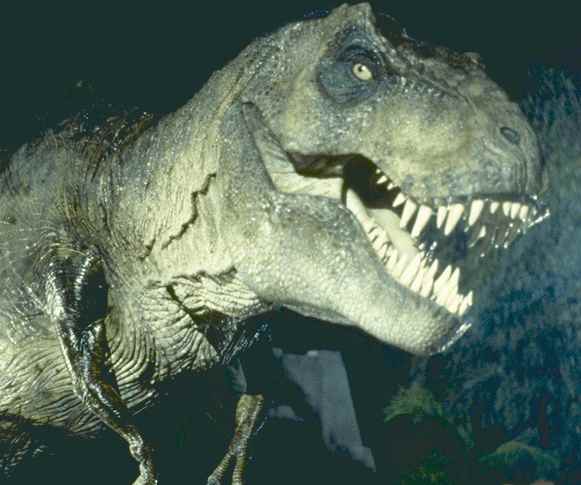
One of the most successful films in box-office history, Jurassic Park represents a milestone in big-budget filmmaking. Seamlessly blending science with adventure, humor, horror, and suspense, the film utilizes puppetry and computer generated images to bring one of nature's oldest mysteries—the dinosaurs—to life. Upon its release, Jurassic Park boasted the most innovative and breath-taking onscreen effect sequences, particularly in regards to CGI, a new medium at that time. Since then, the film has stood as a model for special effects filmmaking, a landmark moment in blockbuster history.

To attribute this success solely to the film's groundbreaking effects, however, would be unsound. Though the effects do serve as the ultimate spectacle for the audience, Jurassic Park exhibits a true understanding of timing and build-up, of how to construct a cinematic sequence in order to wring out the greatest amount of tension. This can be accredited to Steven Spielberg, the acclaimed director of other smash hits such as Jaws and Raiders of the Lost Ark. Spielberg acts almost as a guide through Jurassic Park, expertly building conflict while ultimately adding a sense of representational duality through editing, framing, and iconography. As an example of such multi-dimensional representation, the gated entrance in Jurassic Park serves not only as a symbolic introduction to the spectacle of the film, but acts as a conscious product of the standard Hollywood blockbuster.


The gated entrance of Jurassic Park is, quite literally, a giant gate. It appears approximately one third of the way into the film, just as the characters begin the motorized tour. Before this moment, Spielberg develops escalating levels of excitement, briefly exhibiting a dinosaur and using time to verbally explain the mystery and wonder of the park. However, the tour marks the point at which the characters (and audience) will finally receive visual confirmation of what they've been waiting to see, and consequentially the tone of the scene reflects this ripe anticipation. It is only appropriate that the gate is introduced by a guiding verbal announcement: “Hey, look!” This statement identifies and defines the gate foremost as an object to look at, a spectacle—a direct convention of the blockbuster genre, if defined as such. Following this dialogue is the first shot of the entranceway, a lengthy long-distance tracking shot in which the gate appears to grow in size as the camera approaches it. This slow build-up both mirrors and accelerates the tone of the scene; the slowly decreasing distance between the audience and the gate, coupled with its seeming rise in size and stature, affirms and builds audience anticipation.


As the cars move along the track, we see awe and enthusiasm among the characters faces. Spielberg's next shot brings the audience into the cars, eye-level with the characters in the film. This direct association between audience and character strengthens the sincerity of the visuals, placing the audience inside the adventure, promoting a shift from passive to active view. It also allows Spielberg to contort the size of the entranceway yet again; now it fills the entire front window of the car, spilling out past the frame. The camera pans upward, using the open sunroof to capture the rest of the image. At this view the gate appears huge, towering over the motorized cars with its immense presence. Spielberg continues this theme with his next two gate shots—a canted angle crane shot, followed by a medium distance shot of the entrance doors closing, both of which give the appearance of the gate dwarfing the tour group.

This concept of size, particularly at the introduction of the park tour, signifies the spectacle that waits within. Spielberg's construction of the gate through edits creates a towering force, producing a physical representation of the powerful visual display present throughout the film. However, elements of mis-en-scene other than editing aid in this interpretation. John William's score pervades the scene, bombastically celebrating the arrival at the park gate. Characterized by ecstatic blasts of trumpet and the epic rise and fall of strings, William's theme for the film not only narrates emotions felt by the characters, but guides the audience disposition as well. The swelling of the music, particularly as the gate closes, toys with the audience's anticipation, portraying sonically what Spielberg had previously conveyed visually.


Similarly, dialogue acts to reiterate the theme of magnitude. As the cars move through the entrance, Dr. Ian Malcolm (Jeff Goldblum) quips “What do they got in there, King Kong?” This direct reference to the 1933 classic about a colossal ape amok in New York City—a special effects extravaganza that remains a large influence on blockbuster filmmaking to this day—creates a link between the films in terms of graphic scale in relation to the presence of a giant gate. Like in Jurassic Park, the gate in King Kong appears approximately one-third of the way into the film. Unsurprisingly, it looks almost exactly like the one in JP—a towering wooden structure studded with torches. Introductory dialogue (“Colossal!” “I want to know what's on the other side!”) establishes the spectacle of the gate, while a thunderous aboriginal ceremony at its front signifies a certain larger symbolic significance. As the ceremony moves forward, we see the gate open to unveil a religious altar; the natives scale the top of the gate to watch as Kong, the gigantic ape, completes the sacrifice.

At this point, the gate serves three cinematic purposes: a self-referential object realizing the grandiosity of the film, a diegetic object of protection and religious importance for the indigenous peoples within the story, and a barrier between the civilized world and the world of Kong, a dangerous territory where spectacle and special effects reign. Before the display of the gate, King Kong builds anticipation through dialogue: “Money! Adventure! Fame! It's the thrill of a lifetime!” exclaims Carl Denham, the punchy, persistent coordinator of the fateful trip. However, once the characters pass through the gate, they are overwhelmed by effects, turned into pawns for puppets and claymation figures. Later in the film, as Kong busts through the gate, the two worlds collide, and the final spectacle of the film is realized—the blending of chaos and civilization.


Ultimately, what purpose does the gate in Jurassic Park serve? In relation to the diegetic world of the film, the gate offers no protective use, disconnected from the electrified fences used to pen the dinosaurs. In fact, the gate is never shown in the film again! And though it presents the point at which the action bleeds into chaos, marked moments of effects before this point in the film separate Spielberg's building-block approach to tension from that of King Kong's distinct filmic binary. In the end, the gates of Jurassic Park represent a hypocritical sort of necessary excess, both within the world of the film and as part of the spectacle of modern blockbuster filmmaking. Constructed through multiple elements of mis-en-scene, the gate as an entity alludes to the important of size and showmanship without serving any other real function. It maintains the film's thematic narrative criticism of gluttonous entertainment-business practices (Represented, for example, by the lawyer, the JP products, “spared no expense,” etc), while at the same time succumbing to Hollywood's own brand of profligacy. Perhaps this complexity results from Spielberg's deft direction, but it seems more likely a product of Hollywood blockbuster tradition, where spectacle overrules necessity, even in this most minute scene.


Originally published on Metaphilm.com December 4th, 2005.

Tuesday, February 27, 2007

Spielberg: 30 Years of Blockbusters part IV


Special effects play a large role in both War of the Worlds and Jaws. They reinforce the fear of the ‘other’ by revealing its physical characteristics in a spectacular fashion. In the case of War of the Worlds, these effects dominate the screen right from the beginning. From earth-shattering explosions to enormous alien ‘tripods’ to the Martians themselves, Worlds is an onslaught of big budget, state of the art wizardry. In fact, most of the excitement and thrills in War of the Worlds rely on the fantastic visuals. On the other hand, the special effects in Jaws appear sparingly, substituting shark POV shots for the actual beast. Part of this is due to budget restrictions (Jaws cost $10 mil., which even by today’s dollar would be significantly less than Worlds $132 mil.) and part to technical complications; according to Peter Biskind’s book Easy Riders, Raging Bulls mechanical malfunctions forced Spielberg to scale down some of the intense shark scenes he had originally planned (Biskind 265). Regardless, the use special effects mark a severe difference in rhythm between the two films. War of the Worlds moves at breakneck speed, hardly stopping the effects extravaganza, while Jaws is punctuated, building the image of the shark piece by piece until the beast is revealed in the climactic final act.


Ultimately, these posts might come off as a bit biased. They talk a lot about the ways in which Jaws succeeds as a film and War of the Worlds fails. It’s crucial to keep in mind that, in terms of Spielberg’s career, Jaws remains the template for many of his subsequent films. The structural similarities between Jaws and his other movies are certainly present and, after all, Jaws was a tremendous hit, so it would only make sense for Spielberg to retain its mold. Clearly, differences influenced by budget cost, social issues, source text, and technology have effected the ways in which Spielberg makes movies. His increased use of special effects also reflects the current movie market, in which audiences look for new thrills in the form of new technology. However, one element strings all of Spielberg’s works together: excitement.

Monday, February 26, 2007

Spielberg: 30 Years of Blockbusters part III


Politics play a large role in motivating the characters and events that occur in Jaws. Brody’s decision to leave the beach open after the first attack goes against his morals. Rather, he is motivated by pressure from the Mayor, who fears the town will “be on welfare the whole winter” if they close the beach. This results in a second attack involving a young child. However, the Mayor and local business owners yet again force Brody to keep the beach open. By the Forth of July, beach goers refuse to enter the water. An interesting scene unfolds between the Mayor and a local: worried about the fear stricken tourists, the Mayor assertively tells the man, “No one is going in! Please, go in the water!” The Mayor holds significant pull within the town, and though his plea sparks a rush of tourists into the ocean, his denial of the shark also results in another death, and endangers the life of Brody’s son. This vilification of the Mayor presents a post-Watergate assessment of corrupt authority, disdain towards the elected official, and reinforces the approval of the average American.


Politics are present throughout War of the Worlds as well; however, they do not function as character motivation. Rather, Spielberg uses the backdrop of an alien invasion to create a post-911 allegory. Images throughout the film recall the 2001 terrorist attacks on the World Trade Center: mass destruction of buildings, raining clothing, people in large groups running down city streets, a destructive plane crash, clouds of dust comprised of human remains. In once scene, Ray Ferrier actually gets covered in thick layers of this dust, quite like those who witnessed the real attacks first hand. Later, a fence is erected with photos and memorials, signs searching for missing people, just like the ones established at Ground Zero. Blunt dialogue works to reinforce the post-911 themes as well:

Rachel Ferrier: Is it the terrorists?

Robbie Ferrier: What is it? Is it terrorists?


Perhaps Spielberg is attempting to counter balance the lack of audience alignment with the film’s characters by paralleling the effects of the invasion with 9-11. Following this logic, a sort of direct, “this could happen to you” form of horror similar to that of Jaws could be argued, particularly regarding the progression of imagery. As the characters move outward from city to suburbs to farmland, the violence and carnage of the attacks grows increasingly more graphic. For example, people simply burst into dust when attacked in Jersey City, while bloody dismembered bodies litter the rivers and farmland. This could be interpreted as an attack on the comfort of Middle America, dispelling the misconception that only cities are in danger by showing that even the heartland is not safe from destruction. However, these overt references to 9-11 do not add depth to the story or motivate characters, but rather justify the extravagant special effects that overrun the duration of the film.

Part IV Coming Soon!
Check out the rest of the article!

Saturday, February 24, 2007

Spielberg: 30 Years of Blockbusters part II

Both Jaws and War of the Worlds revolve around the concept of an ‘other’ invading and threatening the American way of life. Spielberg uses this ‘other’ in two ways: 1) to outline a political hierarchy, focusing specifically on the everyman in relation to familial themes, and 2) to generate escalating amounts of excitement with the aid of special effects. Essentially, if one were to boil the Spielberg blockbuster down to a formula, this use of the ‘other’ would stand as the crux of his films. In the case of Jaws and War of the Worlds, it acts as the template for plot design.


Jaws centers on the small beachside community of Amity, a town that relies on summer tourism to create revenue. When a Great White shark threatens the town’s shorelines, Police Chief Martin Brody (Roy Scheider) is faced with a dilemma – pressured to keep the beaches open by local businessmen and politicians, he must decide between jeopardizing public safety or destroying community income. Without ever drawing our attention away from the problem of the shark, Spielberg hints at the generic Americanization of Amity through the use of a non-star cast, subtle visuals and dialogue. Visually, Amity is characterized by white-wash buildings, wooden docks and picket fences. It is no mistaking that one scene takes place in front of a parade, another at town hall. And when we hear locals complain to Chief Brody about “kids’ karate chopping my fence”, “sick vandalism”, and “parking violations”, it only serves to remind us of the nonspecific American setting. Similarly, the destiny of those who ultimately take on the shark reflects Spielberg’s affinity for the average man; Quint (Robert Shaw), the right-winged macho shark hunter, is killed, while Hooper (Richard Dreyfuss), the intellectual left, is impaired, leaving Brody, the everyman cop, to successfully destroy the shark (Biskind 279). Ultimately, this works to effectively produce the true ‘horror’ aspect of the film. Spielberg’s assertion of the main protagonist as the generic everyman creates a direct connection with the spectator. When audiences see the Great White tear apart a young child near the beach, they realize that the people on screen are easily substituted: we place ourselves within the film.


War of the Worlds attempts to establish a similar sense of blue collar ambiguity, but ultimately fails to do so for several reasons. The film begins on the Jersey City docks, introducing protagonist Ray Ferrier (Tom Cruise). Like a modern Fred Flintstone, Ferrier operates a large crane, stacking loading boxes near the water. He looks grungy in a pair of jeans, a flannel shirt, and workman gloves. Dialogue establishes that Ferrier works long hours, and that he belongs to a workers union. This scene lasts about two minutes until a cut shifts to Ferrier’s small ranch style home, where he meets his kids, products of a failed marriage. This is followed by about seven minutes worth of character development which demonstrate that 1) Ray neglects his kids and 2) the kids do not like Ray. Spielberg isn’t working very subtlety here; unlike in Jaws, where the blue collar-ness weaves in and out of the story, War of the Worlds very bluntly places its small-town emphasis right at the beginning, failing to resonate throughout the rest of the film, resulting in a lack of connection between the film’s characters and its audience. In addition, the presence of megastar Tom Cruise detracts from the believability of the story. One of the highest paid actors in the world, Cruise generally portrays upper-class aggressors (Eyes Wide Shut) or pretty boy action heroes (Mission Impossible, Top Gun). With this iconic connection already firmly planted in the audience’s mind, it makes it difficult to see Cruise as a dead beat union worker, negating the effect audience alignment with characters in the film.


Part III Coming Soon!
Check out Spielberg Part I!

Thursday, February 22, 2007

Spielberg: 30 Years of Blockbusters part I


The 1975 release of Steven Spielberg’s Jaws coincided with the arrival of the New Hollywood, a golden age of American film production in which creative power transferred from studio heads to film directors. Despite being a product of this artistic flourish, Jaws represents several milestones in Hollywood business practices. By twisting its now legendary shooting fiascos into hype, saturating theaters through wide release, and expanding promotional advertising beyond traditional print and radio into television – an advertising medium still in its infancy – as well as commercial tie-ins, Universal Studios formed the archetype of blockbuster advertising out of Spielberg’s action/horror hybrid (Schatz 24). The resulting success not only set the precedent for current modes of movie marketing, but launched the career of director Steven Spielberg.

Thirty years later, Spielberg released War of the Worlds, a high octane special effects extravaganza based on the classic novel by H.G. Wells. LikeJaws before it, War of the Worlds served as summer popcorn fare, escapist cinema functioning solely to entertain, excite, and encompass audiences in the wizardry of special effects. Unlike Jaws, however, which was generally praised for being an effective thriller, War of the World met several detractors, dismissing it as one of Spielberg’s lesser films, a soul-less “exploitation of tragic iconography” (Stephen Whitty, Newark Star Ledger). What, if anything, about Spielberg’s cinematic approach differs between these two films? In analyzing the thematic and stylistic content of both Jaws and War of the Worlds, one notices that, though the formula remains the same, subtle disparities make a World of difference .


Before I begin to closely examine these films, it is necessary to explore the circumstances surrounding their individual productions. The production of Jaws revolved around a novice director, a cast of unknowns, and unreliable, untested special effects. Spielberg resisted casting any star power, acquiring actors whom he felt reinforced the realism of the story. According to a quote attributed to Spielberg in Peter Biskind’s Easy Riders, Raging Bulls, he “wanted somewhat anonymous actors to be in it so you would believe this was happening to people like you and me” (Biskind 265). Similarly, Spielberg’s visual aesthetic reinforced this idea of realism. Refusing to work within a studio, production moved to the open sea, where technical problems and production delays pushed the budget well beyond the initial projected $3.5 million. Ultimately, shooting went 104 days over schedule and nearly $7 million over budget (Biskind 267). Alternately, War of the Worlds quick production reflects a confident, assured director. Initially set for a 2007 release date, the film was abruptly green-lit in August 2004, and released summer 2005. Unlike with Jaws, the presence of megastar Tom Cruise was crucial to getting Worlds off the ground. Spielberg shot the film within four months on a gargantuan budget of over $132 million. Pre-publicity for the film focused on the large budget – an August 18th 2004 article on IMDB.com reported “Steven Spielberg's upcoming movie War of the Worlds is poised to make history in Hollywood as the most expensive film ever made - surpassing Titanic's $198 million budget... No expense will be sparred” – as well as the large profit Spielberg, Cruise, and the studios stood to make from the film’s success (imdb.com).

These two radically different productions reflect a director refocusing his priorities despite making similar movies. Spielberg’s budget problems and production delays onJaws rose out of the need to tell the story realistically and effectively. His choice to use unknown actors and real sets reinforced the blue-collar, everyman feel of the movie. Contrarily, Spielberg used budget and star power to the extreme while producing War of the Worlds. He ignored the stigma surrounding actor Tom Cruise, and focused his attention on the extravagance of effects, producing aesthetically different results.


Spielberg Part II Coming Soon!