Showing posts with label action. Show all posts

Tuesday, March 24, 2009

Revisit: Transformers


A Dreamworks film 2007

Directed by Michael Bay

Written by Roberto Orci & Alex Kurtzman

An ancient struggle re-erupts on Earth between two extraterrestrial clans, the heroic Autobots and the evil Decepticons, with a clue to the ultimate power held by a young teenager.


Transformers is a big, loud, dumb movie. That would be fine - I'd expect nothing less, especially from Michael Bay - if it were fun. But it isn't. It's just big, loud, and dumb.

What's wrong with it? Two things, namely: the script, and the action. Writers Roberto Orci & Alex Kurtzman spend a lot of time dilly-dallying, wasting our time with corny jokes, backstory and general B.S. before getting to the action. When it finally comes, the robots move too quickly, with their 'transformations' so visually complex, that it's difficult to follow. The result: boring boring boring.

How hard is it to make giant robots fun? Get 'em smashing shit and we've got a movie! You would think pairing Michael Bay and giant friggin' robots would be a match made in heaven. Hopefully they up the ante with the sequel, due this summer, cause this first installment was quite the snoozefest.

Monday, March 09, 2009

Revisit: Kindergarten Cop


A Universal Pictures release 1990

Directed by Ivan Reitman

Written by Murray Salem, Herschel Weingrod & Timothy Harris

A police officer goes undercover as a kindergarten teacher to track down the wife and child of a ruthless drug lord.


This 1990 comedy is endlessly quotable, thanks to counter-programming Arnold Schwarzenegger's over-the-top action persona with a group of sharp-tongued little kids. Like many of Arnold's films the plot verges on completely ridiculous, and serves a fine helping of subverted genre cliches, including a crazed mother/son crime combo that make the Bates family look normal. A mild diversion, with the kind of dirty jokes involving kids that don't really make it into movies much anymore.

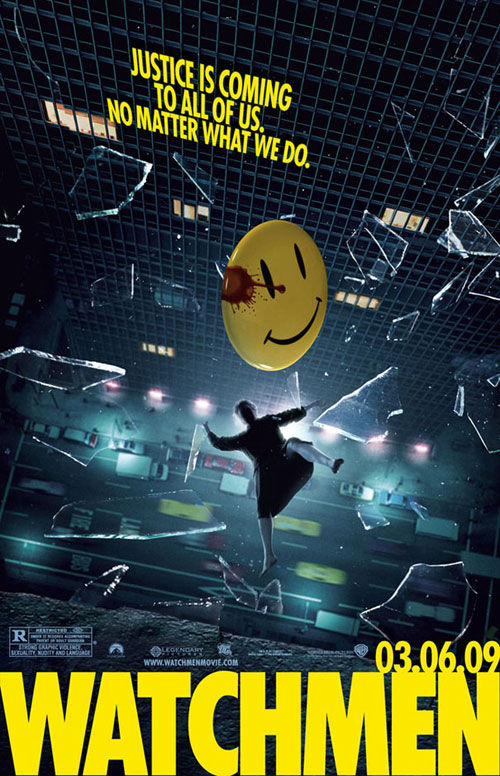
Review: Watchmen


A Warner Brothers film 2009

Directed by Zack Snyder

Written by David Hayter & Alex Tse

When an ex-superhero is murdered, a vigilante named Rorschach begins an investigation into the murder, which begins to lead to a much more terrifying conclusion.


Long considered 'unfilmable', Watchmen is one of the most celebrated graphic novels of all time, and often credited for ushering in an era of more serious, cerebral, adult-themed comic books. Hollywood took stabs at bringing Alan Moore & Dave Gibbon's time-altering, mind-bending grit fest to the screen for nearly 3 decades, with everyone from Paul Greengrass to Terry Gilliam to Michael Bay set to direct. Zack Snyder finally succeeded in producing the film, which finally hit theaters this week after much fanboy anticipation.

Fanboys like myself, who fell in the love with the graphic novel's sharp thematic and formal critique of the medium, as well as it's intense philosophical and political exploration, engrossing characters and wonderfully rich universe. Watchmen the novel is as complete a package as one could ever expect or want; a vast and detailed world with no stone unturned tenderly committed to the page.

Which begs the question -- why make it into a movie at all? Particularly one that adheres so faithfully to it's source?

Of course, that's the question I asked myself before the movie was released, and after having seen it, I'm not sure I have a full answer. From a business standpoint, I could understand why the movie was made -- large built-in fan base, a film that paves the way for grittier, more difficult graphic novel adaptations, and lots of fanboy cred for the distributors. But artistically, what are the merits? It seems there are some, but mainly the film exists as a celebration of Moore & Gibbon's work.

To their credit, Warner Brothers and Mr. Snyder have delivered one balls to the walls, full-force, hard R, uncompromising vision of Watchmen. Like the comic's creators, they left no stone unturned in bringing this epic to the big screen, inserting as much possible detail with extra care. For those unfamiliar with Watchmen's source, the film must be a dizzying experience with many WTF? moments, but fanboys rejoice: never has there been such a detailed adaptation in the history of the medium.

Snyder's visual flair and special effects prowess certainly help bring the panels to exacting life. Some sequences, particularly the Dr. Manhattan chapter, the back-peddling opening credits and almost anything involving Rorschach, are undeniably brilliant. Others, such as the Silk Spectre father reveal and the tweaked ending, lack some of the emotional punch delivered in the novel, but are nonetheless visually arresting.

Perhaps my biggest problem with the film is that it could never replicate all that the novel contains. Much of the climate of the Watchmen universe -- the nuclear war paranoia, the aggression towards authority figures, the degrading of social moral -- is reduced to blanket statements and quick set ups. The majority of the second and third tier characters present in the novel, many of which establish and elaborate these themes to flesh out the temporal backdrop, are absent here. Likewise, many details surrounding the characters origins are trimmed down, making their screen counterparts feel somewhat incomplete.

The music, too, felt jarring to me. The film deserves it's own original score, not some smattering of pop songs that vaguely adhere thematically to the action. I think Warner Brothers were a tad afraid of mainstream audience reactions, and figured if they put some huge pop hits behind some of the more audacious sequences it would make them more palatable. Maybe -- but it also severely undermined the tone. I highly doubt Hendrix would be blasting while Rorcshach and Nite Owl scourge Antarctica for Ozymandias's hideaway.

But with that said, it's amazing how much Synder and his team managed to cram into this two and a half hour epic, and it's even more amazing that Warner Brothers was willing to see through on his vision. This is one bloody disgusting, gut-wrenching, depressing, dark as hell film. It's views on humanity and social decency make Dark Knight look like kiddie play time. As does the on-screen sex and violence.

Watching the origins of Dr. Manhattan unfold on screen will remain one of my favorite cinematic moments for a long time. Billy Crudup does an amazing job and really nails the character to the T. But seeing it come alive, watching it unfold in real time -- nothing will ever compare. It's breathtaking. And that alone makes Watchmen worthy of repeat viewings.

And I definitely think I need to see it again, now that the fanboy giddiness is out of my system. It's hard to really critically assess Snyder's formal elements in that malaise. There is too much immediate beauty in the imagery to really look deep into what Snyder uses to shape the story. Regardless, Watchmen remains a unique ride, one that will (probably) never be duplicated.

Wednesday, January 14, 2009

Revisit: Heavy Metal


A Columbia Pictures release 1981

Directed by Gerald Potterton

Written by Daniel Goldberg & Len Blum, based on the short stories of various authors

A glowing orb terrorizes a young girl with a collection of stories of dark fantasy, eroticism and horror.


A sci-fi snuff film wrapped in colorful kid's clothing, Heavy Metal is about as silly as pulp stories can get. Crossing film noir with science fiction, erotica, action thriller, fantasy and grunt war genres, it's a hodge-podge of adolescent testosterone with a kick ass soundtrack.

The animation is circa 80's Bakshi style, back when studios still believed (somewhat) that there was an adult audience for such things. Crude but colorful, I actually prefer this style to the current CGI kick. I don't think I've seen so much animated sex in my life -- it actually gets kind of awkward -- and a lot of the stories are complete schlock, but it's pretty entertaining nonetheless. No doubt aided by the awesome soundtrack, which features some killer tunes by Black Sabbath, Blue Oyster Cult, Devo, Nazareth, among others.

Interesting production note: Ivan Reitman produced, with Harold Ramis, Eugene Levy & John Candy doing multiple character voices.

Revisit: Uwe Boll's Postal


A Vivendi Entertainment release 2008

Directed by Uwe Boll

Written by Uwe Boll & Bryan C. Knight

In the ironically named city of Paradise, a recently laid-off loser teams up with his cult-leading uncle to steal a peculiar bounty of riches from their local amusement park; somehow, the recently arrived Taliban have a similar focus, but a far more sinister intent.


Postal is easily one of the most crass, vile, despicable, idiotic, offensive, piece of shit movies I have ever seen. Written & directed by the über-awful Uwe Boll (unanimously considered and self-proclaimed worst filmmaker alive today), the film aims for every bottom barrel, low-blow, everything-but-the-kitchen-sink kind of joke imaginable, punctuated by random outbursts of extreme violence. Targets of comedy include terrorists, obese women, blacks, Jews, President Bush, welfare recipients, hippies, 9-11, Osama Bin Ladin, movie executives, conspiracy theorists, American corporations -- you name it, if it can somehow be twisted into something offensive or violent, it's in there.

To give you a sense of what I mean, here's the opening sequence:


For some reason Dave Foley gives a pretty damn good performance in the film and shows his cock for at least five minutes. Poor Dave Foley.

While the movie is pretty goddamn awful, it's much more well made than any of Boll's previous efforts -- the lighting is well done, edits relatively smooth, and effects surprisingly... effective. All in all I didn't mind watching it because: 1) it didn't hurt my eyes and 2) I was pretty damn stoned. I even chuckled a bit at some parts. After all, I'm a crass man, and I like crass humor. But still, it amazes me that this film even made it past the scripting level. It's really that vile and tactless.

I'm sure this film will slowly but surely develop a small cult following and one day be considered by a select group to be a work of idle genius. Some people just like really stupid shit. To be fair, it does have the trimmings of a cult film. But it also lacks any sort of dignity or redeeming value, short of its tasteless jokes. For the overly curious only.


Yeah, fuck you too, buddy...

Tuesday, January 13, 2009

Revisit: Super Fly


A Warner Brothers Picture 1972

Directed by Gordon Parks Jr.

Written by Phillip Fenty

A cocaine dealer who begins to realize that his life will soon end with either prison or death decides to build an escape by making his biggest deal yet.


Super Fly is not a good movie. It's a trashy, poorly shot, sloppy, boring, silly, incoherent mess. There's little to no action, tons of slow, extended sequences, terrible acting, and still image montages galore. That said, there are two redeeming factors to this film. One is Curtis Mayfield's soundtrack, which made him super-famous and stands today as one of the best soundtracks of all time. Mental Defective's Tim Slowikowski recently compiled a list of the best music moments in film and how this one is not included is beyond me. It's one of the major centerpieces, and the song appears at least 12 times throughout the film, which would be annoying if it weren't so damn good.


The second redeeming aspect is the long takes, which make for some of the most boring yet bizarrely engrossing moments in the film. The best example of this is an extended sex scene, which I can't seem to find online, but it's unmissable if you catch the film. It goes on for like 10 minutes and there are so many close ups it's almost obscene.

Super Fly was director Gordon Parks Jr.'s follow up to his debut film Shaft, a classic blaxploitation film. According to legend, the script for Super Fly was only 45 pages long, hence all the still images, cut aways and extended slow motion sequences. If you're a fan of blaxploitation, you've probably already seen this film, but if you're new to the genre, I wouldn't recommend this as the place to start.

Friday, November 14, 2008

Man, I Wish It Were March


Every time a new Watchmen item is released I get more excited/worried about this film. Watchmen is my all time favorite comic book and one of my favorite books in general. It's a stunning psychological work, incredibly thought provoking and layered with meaning. Dark Knight proved that comic book movies don't have to be all action and silly costumes. Let's hope they get this one right as well.

Friday, November 07, 2008

Remake: Oldboy

Another tip for the bad idea file: /film is reporting Will Smith & Steven Speilberg plan on remaking Chan-Wook Park's Oldboy

Speilberg & Will Smith to remake Oldboy?

There is no reason to remake this movie, but Hollywood's going to do it eventually anyway. It's been in the pipeline since the original was released in the states in 2005. But Will Smith is a very odd choice for this -- I don't think he has the gritty sneer to be able to pull of the titular character. Spielberg is an odd choice as well, considering the dark tone and feel of the film. And how will the hyper-but purposeful-violence of the original translate in a senseless Hollywood version?

Who knows. Who cares. Here's the side-scrolling hammer fight sequence that made the original Oldboy famous. Go rent this flick if you haven't seen it.


Hollywood, you disappoint me.

Friday, December 21, 2007

Macho Feminism pt I

Macho Feminism, or What Your Girlfriend Could Get Out of Watching Rambo

A Look at Female Spectatorship & Genre


The role of the female in cinema as both screen presence and spectator exists as a highly debated struggle between filmic representation and psychological theory. In her essay Visual Pleasure in Narrative Cinema, Luara Mulvey explores the power of the female image in relation to cinema and psychoanalysis. Early in this essay, she writes: "Woman then stands in patriarchal culture as signifier for the male other, bound by a symbolic order in which man can live out his fantasies and obsessions through linguistic command by imposing them on the silent image of a woman still tied to her place as bearer of meaning, not maker of meaning" (Mulvey 838). In simpler terms, Mulvey describes the woman as an object of fantastic lust trapped in a male-oriented society. She furthers this concept by discussing Freud's notions of scopophilia and the voyeuristic gaze. According to Freud, it is natural human instinct to regard other people as objects, often subjecting them to controlling, curious, or erotic gazes. Mulvey aligns this with the cinema, considering film a stimulant of the voyeuristic instinct and separating it into a contradition between the libido and ego. Out of this contradiction, she surmises, forms identification processes and elicits sexual desire. From there she continues to outline the cinematic functions of the female: "as erotic object for the characters within the screen story, and as erotic object for the spectator" (Mulvey 841-42). She describes the current Hollywood narrative format as supportive of the male role in accelerating story, and thus controlling fantasy and gaze. She writes: "the male protagonist is free to command the stage, a stage of spatial illusion in which he articulates the look and creates the action" (Mulvey 842). Consequentially, spectatorss can identify with male protagonists, and indrectly possess the sexualized female. Mulvey broadens these ideas with more psychoanalysis; the threat of sexual castration, represented by the female screen presence, forces the male to escape this anxiety via the destruction or fetishizing of the female.

Mary Ann Doane's essay Film & the Masquerade: Theorizing the Female Spectator takes these concepts one step further, allowing room for the female audience. Like Mulvey, Doane channels her theories through Freud and psychoanalysis. She writes that the voyeur must maintain distance between objects and self in order to create desire, and that the female spectator can never form this distance because of a "claustrophobic closeness" to the female body present on screen (Doane 24). Too easily related to the objectified, female spectators must therefore readily accept a masculinized form of spectatorship. Doane likens this to the transvestite; mobile in their sexual identity, females can steal masculine traits, and often compensate for this masculinity by excessively flaunting femininity. This explains the creation of the femme fatale character, a sort of sexually empowered distinctly feminine mask. Doane fuels her article with cinematic examples of desirous, gaze controlling females - all of whom are punished or meet untimely deaths. She concludes by almost dismissing the feminine spectral gaze entirely.

My interest in these theories lies not in general assessments of feminine spectatorship, but rather as they apply to specific film genres. Though it is fair to characterize the female role in cinema, both as spectator and image, according to current pyschological practices, I do not feel it is worthwhile to apply these theories to cinema as a whole. Rather, it is of great necessity to study the feminine gaze in relation to genre and the evolving trends of cinematic practice. Genre, defined as the categorical division of artistic works based on specific criterion, shapes a great deal of cinematic traditions and representations. How an object appears and functions on screen depends significantly on the genre or genres in which a film is based. For example, a gun in a horror film might signify death or fear to the spectator, while at the same time affirming safety or security in an action thriller. This does not stand to negate Mulvey or Doane's claim that women are assigned certain (often surface or erotic) positions in cinema, but rather calls for the further exploration of these positions as they are related to distinct filmic types.

Other film critics seem to agree with me. Linda Williams writes: "this [feminine] victimization is very different in each type of film and cannot be accounted for simply by pointing to the sadistic power and pleasure of masculine subject positions punishing or dominating feminine objects" (Williams 732). In her essay Film Bodies: Gender, Genre & Excess, Williams complicates Doane's assertions about the female spectator by raising questions specific to genre. For example, Williams discusses Horror, a genre referred to by Doane as an example of defeating feminie gaze, claiming that even in the most violent of feminine suffering, there must always remain a component of either power or pleasure for the woman victim. Similarly, Williams argues that while melodrama might seem to drown female viewers in an excess of forced emotion, it also suggests and alignment with powerful matriarchal figures. Ultimately, she concludes: "the subject positions that appear to be constructed by each of the genres are not as gender-lionked and gender-fixed as has often been supposed" (Willaims 735).

But what happens when we remove the sexualized woman from the screen entirely? What if she is replaced by glorified male figures? What, if anything, shifts in gendered spectral gaze? In order to address these questions, we must find a film genre in which the female screen presence is rendered obsolete. The Macho Action film may fit this description.


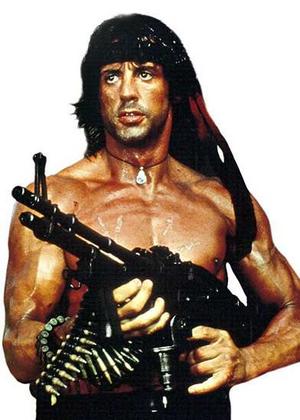
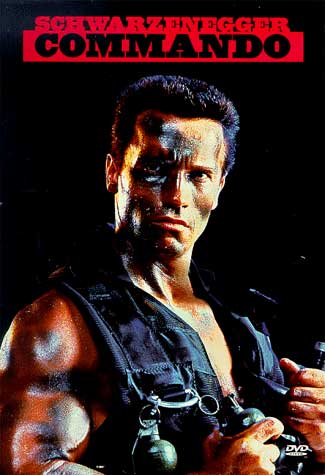
Developed out of Hollywood's displacement of art to action in the 1980's, the Macho film places and emphasis on a sort of surreal masculinity where the male body occupies the main narrative focus. Fueled by a sort of weightless politics, these hyper-male heroes obliterate their way through thinly outlined, special-effects-laden espionage scenarios. Starring buff body-builders such as Arnold Schwartzenegger, Sylvester Stallone, and Chuck Norris, the Macho film glorifies the sculpted male figure, often focusing on the charm and sex appeal of the Macho while still remaining action packed. Camera use in these films general accents physical size, featuring extreme close-ups of biceps, triceps, pecks and other impressive physical attributes. These male bodies can also withstand extreme physical pain, as if they posses superhuman tolerance and can refocus their agony towards eliminating the enemy. And, interestingly enough, sexualized female presence in these films appears almost non-existent (Vincente).


Look out for Macho Feminism Part II coming soon!

Wednesday, July 18, 2007

To Bay or Not To Bay?

Here's a recent article written by Johnathan Foster discussing the two differing schools on Michael Bay: explosions vs art. Foster's makes a pretty simple argument

I gave up on Michael Bay movies having great stories or strong characters long ago, and yet, I find that he continually fails to deliver thrills. He wields explosions around as gracelessly as bad comedies do jokes, and yet his pyrotechnic fervor has wrongly come to symbolize the entire genre: the bigger the fireworks, the better the film.


but I think Bay's validity in cinema is a bit more complex. Bay's films are so overtly pro-American, patriotic in the truest sense of the word, that it's almost hard to ignore. Take Armaggeddon, for example, in which some variation of red white and blue can be found in every frame. While he may not have 'style', his aesthetic is so well defined that it alone can distinguish a film. Maybe its similar to the way people appreciate Ed Wood - bad, but so distinctly bad.

I haven't seen Transformers yet (or any of the other major blockbusters this season, they're all so crummy!) but I am definitely interested. I figure, if Hollywood can't get gigantic fucking fighting robots right, then they should really just stop making movies. Just stop.

Wednesday, June 06, 2007

Revisit: Straw Dogs

An ABC Pictures Release 1971

Directed by: Sam Peckinpah

Writing Credits:

Gordon Williams: (novel "The Siege of Trencher's Farm") (as Gordon M. Williams)

Sreenplay by: David Zelag Goodman and Sam Peckinpah

Plot description: A young American and his English wife come to rural England and face increasingly vicious local harassment.


Upon its release in 1971, director Sam Peckinpah was engulfed by a storm of controversy (what else is new?) surrounding his latest film, Straw Dogs. Peckinpah and his crew were attacked for the vicious and sick scenes of violence and rape that occur in the film. While many claime the scenes were too extreme for audiences, the film is not merely violent without purpose. Straw Dogs centers on David and Amy Sumner (played by Dustin Hoffman and Susan George), and their life in a small rural village in the UK. Sumner is an American mathematician who was given a grant to work in the film's setting, where he has recently overtook his wife's farm and where the couple now lives. In conducting renovations on the house the two are incessantly harassed by a violent collection of brutes who were commissioned to repair their home. Ultimately, the provocations turn to violent action and Amy Sumner is raped by the workers and their home assaulted by the men. David Sumner, ever the reluctant pacifist, is forced to defend his home and the lengths to which he goes are partly what give the film its gritty, extreme violence.

In Straw Dogs, Peckinpah (forever remembered for his unflinching and gruesome depictions of violence) is at the top of his game. What separates the film from his other works such as The Wild Bunch or Bring Me The Head of Alfredo Garcia is that in addition to jarring, blood-soaked physical violence (as expected), the film presents equally disturbing forms of psychological, and psycho-sexual torment. Hoffman plays David Sumner perfectly, summoning his then famous Benjamin Braddock persona from The Graduate, except adding a vicious, demented, and downright schizophrenic twist. Sumner is a reclusive, shy scholar whose reticence to engage in action is clearly established from his very first appearence. However, as the film progresses we see that he and his wife torment each other frequently, generally through verbal stabs and sexualized exchanges. In these exchanges we notice a peculiar agency on both their parts, as though David's shyness is not always sincere - it is in part an act, an attempt to outsmart others by allowing them the ease of assumption. Similarly, Susan George plays Amy with a double-face: In one sense she is the naive sexbot who never graduated from the lecherous gazes she no doubt received as a youngster/to this day. In other scenes, such as one in which she taunts the construction workers by walking topless in her bedroom as a form of revenge on David, she clearly possesses the agency and intelligence that her appearances before David obscure.

The film manages to provide both of these characters, each with seemingly split personalities all while using a setting in which every local townsperson is downright nasty, hateful and violent. What Peckinpah is suggesting with the stereotypical scholar David and the deviant, sexy wife have the capacity for all types of behavior, and as the film progresses David proves that he is in fact no different than the menacing lunatics trying to murder him and his family.

Overall, Straw Dogs is an extremely provocative and compelling film, and careful viewing proves that the criticisms that it is a one dimensional, blood-fest are unfounded. Peckinpah's strengths are in his ability to convey the potential darkness of man, and contextualizing this darkness within an appropriately familiar and quotidian setting. Much like Cronenberg's A History of Violence (only 35 years prior), Peckinpah's film deconstructs audience identification and their notions of "justifiable violence" in a meta-discursive fashion while within the narrative he explores the intricate sexual tensions that exist between man and woman. Straw Dogs is a primal and damn near bestial film both in its story and Peckinpah's signature film aesthetic of harshness and brutality. Peckinpah's shots (filthy and drained of all pleasantness the countryside could provide), disorienting edits and movements (perfectly embodied during Amy's rape flashbacks at a church gathering as well as the break-in scene), and ability to generate both seemingly obvious exploitation and ambiguity in the same breath make this flick a must-see.

- Paul Walker

Saturday, May 05, 2007

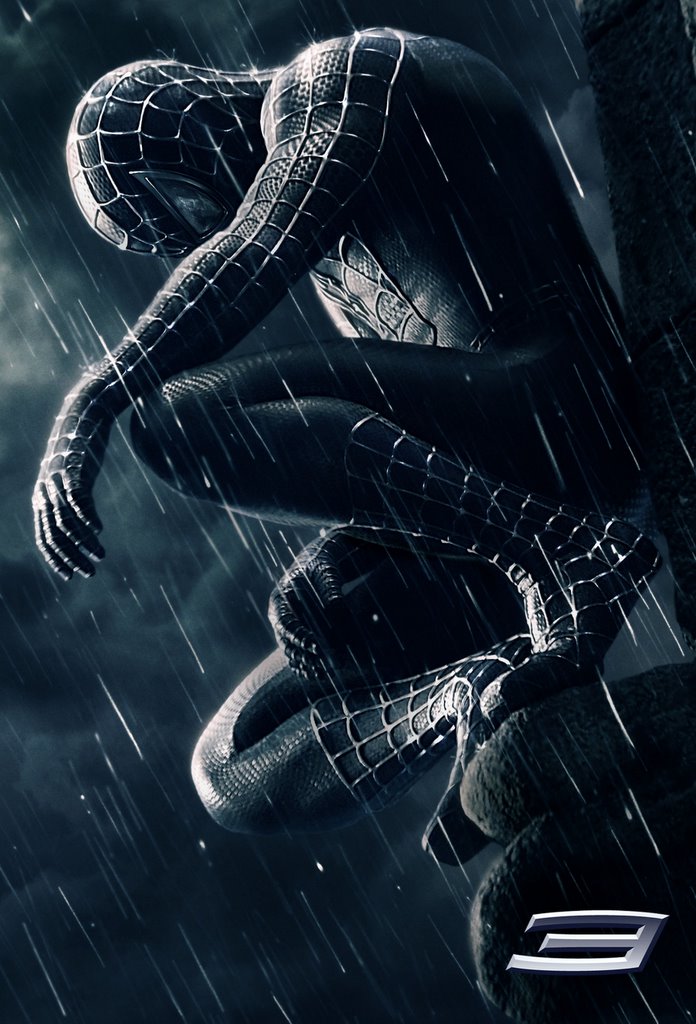
Review: Spiderman 3


A Sony Pictures release 2007

Directed by Sam Raimi

Writing credits:
Sam Raimi (screenplay)
Ivan Raimi (screenplay)
Alvin Sargent (screenplay)
Stan Lee (Marvel comic book)
Steve Ditko (Marvel comic book)


Six years after 9/11, Spiderman continues to swing on the big screen, keeping New York safe from a slew of spiteful evil-doers. The original Spiderman film, released in May of 2002, was the first true post-9/11 movie. While critics debated whether director Raimi should have kept shots of the fallen towers in the film, audiences connected to Spidey's every-man-with-the-odds-against-him charm, the anti-hero that, like our own country, just wanted to do good for his friendly neighbors but couldn't seem to get the respect he deserved.

Well, now Spiderman has that respect and more - and it seems to have gone to his head. Spiderman 3 is all about Peter Parker's inability to see past the suit, to deal with the 'fame' of being a local hero and the dark forces that drive him to revenge. The film boasts three villians - a feat not since seen in a comic book movie since Batman & Robin - but really it has four, with Parker himself perhaps being the greatest of them all. As he continually pushes the people he loves away, Parker becomes consumed by his own hubris, and that internal struggle is brought to the forefront.


While this may be the logical progression for a franchise that roots itself in the struggles of herodom, unfortunately the film lacks any subtlety that would make this transformation interesting. The characters flail around, guided by that most magical of forces: the hand of the writer. Each moment feels painfully obvious, and fails to take us to any new or spectacular height. It doesn't help that much of the dialogue is stilted in that George Lucas sort of way; look for a trying love scene between Parker and MJ on a bridge that actually brought some of the audience at my screening to hysterics.

But most people don't see these films for the dialogue anyway; its all about watching the webslingler shoot his way across the New York skyline. While some of the CGI moments are momentarily breathtaking, much of the action feels claustrophobic, with shots that are too close up or moving too fast to really even see what's going on. In their most evil form, the villians look overly cartoony and at times it's hard to believe that anything on the screen is even being presented with the illusion of reality at all. I really wish they had waited ten years or so for the technology to improve - it certainly would have helped the Sandman, who looks like a giant clump of digital dust.

My suggestion? See this film on IMAX. It's probably the only way to get the full effect of the action sequences, and it might make the rest of the film seem a bit more palatable as well.

Thursday, April 26, 2007

The Gates of Jurassic Park


One of the most successful films in box-office history, Jurassic Park represents a milestone in big-budget filmmaking. Seamlessly blending science with adventure, humor, horror, and suspense, the film utilizes puppetry and computer generated images to bring one of nature's oldest mysteries—the dinosaurs—to life. Upon its release, Jurassic Park boasted the most innovative and breath-taking onscreen effect sequences, particularly in regards to CGI, a new medium at that time. Since then, the film has stood as a model for special effects filmmaking, a landmark moment in blockbuster history.

To attribute this success solely to the film's groundbreaking effects, however, would be unsound. Though the effects do serve as the ultimate spectacle for the audience, Jurassic Park exhibits a true understanding of timing and build-up, of how to construct a cinematic sequence in order to wring out the greatest amount of tension. This can be accredited to Steven Spielberg, the acclaimed director of other smash hits such as Jaws and Raiders of the Lost Ark. Spielberg acts almost as a guide through Jurassic Park, expertly building conflict while ultimately adding a sense of representational duality through editing, framing, and iconography. As an example of such multi-dimensional representation, the gated entrance in Jurassic Park serves not only as a symbolic introduction to the spectacle of the film, but acts as a conscious product of the standard Hollywood blockbuster.


The gated entrance of Jurassic Park is, quite literally, a giant gate. It appears approximately one third of the way into the film, just as the characters begin the motorized tour. Before this moment, Spielberg develops escalating levels of excitement, briefly exhibiting a dinosaur and using time to verbally explain the mystery and wonder of the park. However, the tour marks the point at which the characters (and audience) will finally receive visual confirmation of what they've been waiting to see, and consequentially the tone of the scene reflects this ripe anticipation. It is only appropriate that the gate is introduced by a guiding verbal announcement: “Hey, look!” This statement identifies and defines the gate foremost as an object to look at, a spectacle—a direct convention of the blockbuster genre, if defined as such. Following this dialogue is the first shot of the entranceway, a lengthy long-distance tracking shot in which the gate appears to grow in size as the camera approaches it. This slow build-up both mirrors and accelerates the tone of the scene; the slowly decreasing distance between the audience and the gate, coupled with its seeming rise in size and stature, affirms and builds audience anticipation.


As the cars move along the track, we see awe and enthusiasm among the characters faces. Spielberg's next shot brings the audience into the cars, eye-level with the characters in the film. This direct association between audience and character strengthens the sincerity of the visuals, placing the audience inside the adventure, promoting a shift from passive to active view. It also allows Spielberg to contort the size of the entranceway yet again; now it fills the entire front window of the car, spilling out past the frame. The camera pans upward, using the open sunroof to capture the rest of the image. At this view the gate appears huge, towering over the motorized cars with its immense presence. Spielberg continues this theme with his next two gate shots—a canted angle crane shot, followed by a medium distance shot of the entrance doors closing, both of which give the appearance of the gate dwarfing the tour group.

This concept of size, particularly at the introduction of the park tour, signifies the spectacle that waits within. Spielberg's construction of the gate through edits creates a towering force, producing a physical representation of the powerful visual display present throughout the film. However, elements of mis-en-scene other than editing aid in this interpretation. John William's score pervades the scene, bombastically celebrating the arrival at the park gate. Characterized by ecstatic blasts of trumpet and the epic rise and fall of strings, William's theme for the film not only narrates emotions felt by the characters, but guides the audience disposition as well. The swelling of the music, particularly as the gate closes, toys with the audience's anticipation, portraying sonically what Spielberg had previously conveyed visually.


Similarly, dialogue acts to reiterate the theme of magnitude. As the cars move through the entrance, Dr. Ian Malcolm (Jeff Goldblum) quips “What do they got in there, King Kong?” This direct reference to the 1933 classic about a colossal ape amok in New York City—a special effects extravaganza that remains a large influence on blockbuster filmmaking to this day—creates a link between the films in terms of graphic scale in relation to the presence of a giant gate. Like in Jurassic Park, the gate in King Kong appears approximately one-third of the way into the film. Unsurprisingly, it looks almost exactly like the one in JP—a towering wooden structure studded with torches. Introductory dialogue (“Colossal!” “I want to know what's on the other side!”) establishes the spectacle of the gate, while a thunderous aboriginal ceremony at its front signifies a certain larger symbolic significance. As the ceremony moves forward, we see the gate open to unveil a religious altar; the natives scale the top of the gate to watch as Kong, the gigantic ape, completes the sacrifice.

At this point, the gate serves three cinematic purposes: a self-referential object realizing the grandiosity of the film, a diegetic object of protection and religious importance for the indigenous peoples within the story, and a barrier between the civilized world and the world of Kong, a dangerous territory where spectacle and special effects reign. Before the display of the gate, King Kong builds anticipation through dialogue: “Money! Adventure! Fame! It's the thrill of a lifetime!” exclaims Carl Denham, the punchy, persistent coordinator of the fateful trip. However, once the characters pass through the gate, they are overwhelmed by effects, turned into pawns for puppets and claymation figures. Later in the film, as Kong busts through the gate, the two worlds collide, and the final spectacle of the film is realized—the blending of chaos and civilization.
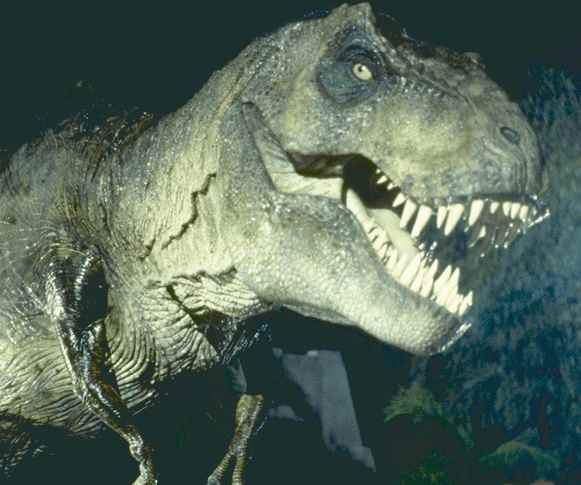


Ultimately, what purpose does the gate in Jurassic Park serve? In relation to the diegetic world of the film, the gate offers no protective use, disconnected from the electrified fences used to pen the dinosaurs. In fact, the gate is never shown in the film again! And though it presents the point at which the action bleeds into chaos, marked moments of effects before this point in the film separate Spielberg's building-block approach to tension from that of King Kong's distinct filmic binary. In the end, the gates of Jurassic Park represent a hypocritical sort of necessary excess, both within the world of the film and as part of the spectacle of modern blockbuster filmmaking. Constructed through multiple elements of mis-en-scene, the gate as an entity alludes to the important of size and showmanship without serving any other real function. It maintains the film's thematic narrative criticism of gluttonous entertainment-business practices (Represented, for example, by the lawyer, the JP products, “spared no expense,” etc), while at the same time succumbing to Hollywood's own brand of profligacy. Perhaps this complexity results from Spielberg's deft direction, but it seems more likely a product of Hollywood blockbuster tradition, where spectacle overrules necessity, even in this most minute scene.


Originally published on Metaphilm.com December 4th, 2005.
Revisit: North By Northwest


An MGM release 1959

Directed by Alfred Hitchcock

Written by Ernest Lehman

A hapless New York advertising executive (Cary Grant) is mistaken for a government agent by a group of foreign spies, and is pursued across the country while he looks for a way to survive.


Working with screenwriter Ernest Lehman, Hitchcock was originally comissioned to do an adaptation of the novel The Wreck of the Mary Deare by Hammond Innes, but the two hit a road block. After scrapping the project, Lehman said that he wanted to write the ultimate Hichcock flick. The legend goes that Hichcock had always wanted to make a film featuring an intense climax atop Mount Rushmore, and within days North by Northwest was born.


In many ways, North by Northwest is the ultimate Hitchcock film. Perhaps his most well known, it features two iconic scenes in Hitch's canon - the intense plane sequence and the even more intense chase atop Mount Rushmore. As always with Hitchcock, the film is visually brilliant; beautiful high angle crane shots and quick pans give way to resounding depth. The film deals with traditional Hitchcock themes of mistaken identity, blurred reality, and doubling, and features the most pure example of the Hitchcock 'MacGuffin' (a physical object that everyone in a movie is chasing after but which has no deep relationship to the plot): the microfilm containing government secrets which the spies are attempting to smuggle out of the country.


Cary Grant supposedly felt the script was convoluted and didn't make sense, but that doesn't show in his performance, which comes across as effortless and breezy. Grant was almost entering the 'grouch' phase at this point is his career, but he's a pleasure to watch as an affable victim of circumstance.


A must see for anyone who enjoys the cinema.

Sunday, April 22, 2007

Revisit: eXistenZ


A Dimension films release 1999

Written & Directed by David Cronenberg

A videogame designer (Jennifer Jason Leigh) creates a virtual-reality game that taps into players' minds.


An existentialist film about the power of gaming, eXistenZ is unmistakably Cronenberg. Violent, gruesome, and rampant with flesh, the film acts as a sort of compendium to his 1983 masterpiece Videodrome; it explores similar themes of human sexuality and technology, along with blurred visions of reality, and even has many direct references to Videodrome ("Death to eXistenZ!", the fleshy gun/pods, etc). Cronenberg has an excellent way of taking imagery and recontextualizing it, reframing objects, characters, and settings so that they become unique, or take on new meanings. For example, the Chinese Restaurant present in this film. While not one of his premiere works, eXistenZ is a fun film by one of the best working directors of our time.

Saturday, April 14, 2007

Revisit: Mad Max Beyond Thunderdome


A Warner Brothers picture 1985

Directed by:
George Miller
George Ogilvie

Writing Credits:
Terry Hayes &
George Miller


Mad Max (Mel Gibson) is a former cop who finds himself in a post-apocolyptic desert town called Bartertown. He is hired by the leader of the city to fight in a gladiator like arena called Thunderdome, so he can kill Auntie's (Tina Turner) rival Master Mlaster. Later banished, Max finds a group of children that survived a plane crash during the war. Some of the children leave to find their fabled tomorrowmorrow land, so Mad Max has to save them from the desert and from Auntie's Bartertown.


Absurdity abounds in this third installment in Mel Gibson's post-apocalyptic Mad Max series. The Thunderdome sequence is cool as hell, and the car chases are sweet, but this thing starts sucking whenever it tries to go "Beyond Thunderdome". Coherence and logic are not one of the film's friends. And another thing - why do women find Mel Gibson attractive? The man grunts and groans his way through this flick looking like the missing link. I mean, I guess if you like illiterate drunk Australian douchebags you'd find him attractive. But at least its got some strange ideas (Tina Turner as the evil queen?!) and funny moments (Mel Gibson almost kills a retard!). They don't really make ridiculous action flicks like this anymore - insincere and totally insane - so the humor and spunk are definitely something to cherish.

Thursday, March 15, 2007

Why Critics Don't Understand 300

Backlash against 300 has been brewing for quite sometime now, and this guy is sick and tired of it:

Let's get this out of the way once and for all.

300 has no politics.

At least, none worth yapping about - critics looking for allegory should look elsewhere (like, hmm, Harry Potter? Go mad, you crazy kids! Lot's of politics there...) In 300 there is no commentary on the Spartan attitude toward Athenian democracy, no soliloquys on totalitarianism. The Spartans only care about fighting well - politics and politicians are clearly the domain of old men, diseased inbreds, or the despicably corrupt.

...And it is because 300 is so unfamiliar that makes it harder to explain: this is an expensive art-house project, not your usual genre piece starring Gwyneth or Brad. Critics have tried to twist the story into some kind of contemporary allegory and failed.

...There is no backdrop of an American flag to sanitize the fighting, which is what is so unsettling about the nature of the violence in the film.


From brainsnap.com

Woah! Sounds like someone has some critical beef!

Personally, I always thought 300 looked like a second-rate action movie that should probably only be seen on IMAX. Something tremendously cheesey riddled with historical inaccuracies and unrealistic violence; like a super-amped Gladiator for high school kids. I mean, check out this clip:


So much slow motion! The pacing here is really hectic; the stop-go-stop-go speed makes it really uneven and pretty silly. I just can't buy into that containing any real allegorical message.

At the same time, I don't think I would unabashedly praise the film as the writer of that brainsnap article has. I haven't seen it yet, but I highly doubt 300 is an "art house picture" or even "unfamiliar". Looks like any old comic book movie to me, only this time there are Spartans instead of superheroes.

Speaking of which, pretty much everyone has ignored the fact that 300 is another comic book movie that derives its aesthetic almost entirely from its source, right down to the framing. Critics seem to be happier comparing it to a video game, and while that comparison is nice, I'm interested to see how this film may devalue Sin City. Whereas Sin City drew a lot of praise for its precise aesthetic, 300 seems to be getting an opposite response.

"The stylized action, set to crunching guitar riffs, feels suffocating in its artificiality," said Glenn Whipp of the Los Angeles Daily News.


Is making your film look exactly like its graphic novelization really that special? When you get down to it, that's really all Sin City had going for it. But if that's such an easy trick that the guy responsible for the Dawn of the Dead remake can do it, how big of a deal can it be? Frankly, I wish they'd just stop making these comic book movies all together.

Tuesday, February 27, 2007

Spielberg: 30 Years of Blockbusters part IV


Special effects play a large role in both War of the Worlds and Jaws. They reinforce the fear of the ‘other’ by revealing its physical characteristics in a spectacular fashion. In the case of War of the Worlds, these effects dominate the screen right from the beginning. From earth-shattering explosions to enormous alien ‘tripods’ to the Martians themselves, Worlds is an onslaught of big budget, state of the art wizardry. In fact, most of the excitement and thrills in War of the Worlds rely on the fantastic visuals. On the other hand, the special effects in Jaws appear sparingly, substituting shark POV shots for the actual beast. Part of this is due to budget restrictions (Jaws cost $10 mil., which even by today’s dollar would be significantly less than Worlds $132 mil.) and part to technical complications; according to Peter Biskind’s book Easy Riders, Raging Bulls mechanical malfunctions forced Spielberg to scale down some of the intense shark scenes he had originally planned (Biskind 265). Regardless, the use special effects mark a severe difference in rhythm between the two films. War of the Worlds moves at breakneck speed, hardly stopping the effects extravaganza, while Jaws is punctuated, building the image of the shark piece by piece until the beast is revealed in the climactic final act.


Ultimately, these posts might come off as a bit biased. They talk a lot about the ways in which Jaws succeeds as a film and War of the Worlds fails. It’s crucial to keep in mind that, in terms of Spielberg’s career, Jaws remains the template for many of his subsequent films. The structural similarities between Jaws and his other movies are certainly present and, after all, Jaws was a tremendous hit, so it would only make sense for Spielberg to retain its mold. Clearly, differences influenced by budget cost, social issues, source text, and technology have effected the ways in which Spielberg makes movies. His increased use of special effects also reflects the current movie market, in which audiences look for new thrills in the form of new technology. However, one element strings all of Spielberg’s works together: excitement.

Monday, February 26, 2007

Spielberg: 30 Years of Blockbusters part III


Politics play a large role in motivating the characters and events that occur in Jaws. Brody’s decision to leave the beach open after the first attack goes against his morals. Rather, he is motivated by pressure from the Mayor, who fears the town will “be on welfare the whole winter” if they close the beach. This results in a second attack involving a young child. However, the Mayor and local business owners yet again force Brody to keep the beach open. By the Forth of July, beach goers refuse to enter the water. An interesting scene unfolds between the Mayor and a local: worried about the fear stricken tourists, the Mayor assertively tells the man, “No one is going in! Please, go in the water!” The Mayor holds significant pull within the town, and though his plea sparks a rush of tourists into the ocean, his denial of the shark also results in another death, and endangers the life of Brody’s son. This vilification of the Mayor presents a post-Watergate assessment of corrupt authority, disdain towards the elected official, and reinforces the approval of the average American.


Politics are present throughout War of the Worlds as well; however, they do not function as character motivation. Rather, Spielberg uses the backdrop of an alien invasion to create a post-911 allegory. Images throughout the film recall the 2001 terrorist attacks on the World Trade Center: mass destruction of buildings, raining clothing, people in large groups running down city streets, a destructive plane crash, clouds of dust comprised of human remains. In once scene, Ray Ferrier actually gets covered in thick layers of this dust, quite like those who witnessed the real attacks first hand. Later, a fence is erected with photos and memorials, signs searching for missing people, just like the ones established at Ground Zero. Blunt dialogue works to reinforce the post-911 themes as well:

Rachel Ferrier: Is it the terrorists?

Robbie Ferrier: What is it? Is it terrorists?


Perhaps Spielberg is attempting to counter balance the lack of audience alignment with the film’s characters by paralleling the effects of the invasion with 9-11. Following this logic, a sort of direct, “this could happen to you” form of horror similar to that of Jaws could be argued, particularly regarding the progression of imagery. As the characters move outward from city to suburbs to farmland, the violence and carnage of the attacks grows increasingly more graphic. For example, people simply burst into dust when attacked in Jersey City, while bloody dismembered bodies litter the rivers and farmland. This could be interpreted as an attack on the comfort of Middle America, dispelling the misconception that only cities are in danger by showing that even the heartland is not safe from destruction. However, these overt references to 9-11 do not add depth to the story or motivate characters, but rather justify the extravagant special effects that overrun the duration of the film.

Part IV Coming Soon!
Check out the rest of the article!

Saturday, February 24, 2007

Spielberg: 30 Years of Blockbusters part II

Both Jaws and War of the Worlds revolve around the concept of an ‘other’ invading and threatening the American way of life. Spielberg uses this ‘other’ in two ways: 1) to outline a political hierarchy, focusing specifically on the everyman in relation to familial themes, and 2) to generate escalating amounts of excitement with the aid of special effects. Essentially, if one were to boil the Spielberg blockbuster down to a formula, this use of the ‘other’ would stand as the crux of his films. In the case of Jaws and War of the Worlds, it acts as the template for plot design.


Jaws centers on the small beachside community of Amity, a town that relies on summer tourism to create revenue. When a Great White shark threatens the town’s shorelines, Police Chief Martin Brody (Roy Scheider) is faced with a dilemma – pressured to keep the beaches open by local businessmen and politicians, he must decide between jeopardizing public safety or destroying community income. Without ever drawing our attention away from the problem of the shark, Spielberg hints at the generic Americanization of Amity through the use of a non-star cast, subtle visuals and dialogue. Visually, Amity is characterized by white-wash buildings, wooden docks and picket fences. It is no mistaking that one scene takes place in front of a parade, another at town hall. And when we hear locals complain to Chief Brody about “kids’ karate chopping my fence”, “sick vandalism”, and “parking violations”, it only serves to remind us of the nonspecific American setting. Similarly, the destiny of those who ultimately take on the shark reflects Spielberg’s affinity for the average man; Quint (Robert Shaw), the right-winged macho shark hunter, is killed, while Hooper (Richard Dreyfuss), the intellectual left, is impaired, leaving Brody, the everyman cop, to successfully destroy the shark (Biskind 279). Ultimately, this works to effectively produce the true ‘horror’ aspect of the film. Spielberg’s assertion of the main protagonist as the generic everyman creates a direct connection with the spectator. When audiences see the Great White tear apart a young child near the beach, they realize that the people on screen are easily substituted: we place ourselves within the film.


War of the Worlds attempts to establish a similar sense of blue collar ambiguity, but ultimately fails to do so for several reasons. The film begins on the Jersey City docks, introducing protagonist Ray Ferrier (Tom Cruise). Like a modern Fred Flintstone, Ferrier operates a large crane, stacking loading boxes near the water. He looks grungy in a pair of jeans, a flannel shirt, and workman gloves. Dialogue establishes that Ferrier works long hours, and that he belongs to a workers union. This scene lasts about two minutes until a cut shifts to Ferrier’s small ranch style home, where he meets his kids, products of a failed marriage. This is followed by about seven minutes worth of character development which demonstrate that 1) Ray neglects his kids and 2) the kids do not like Ray. Spielberg isn’t working very subtlety here; unlike in Jaws, where the blue collar-ness weaves in and out of the story, War of the Worlds very bluntly places its small-town emphasis right at the beginning, failing to resonate throughout the rest of the film, resulting in a lack of connection between the film’s characters and its audience. In addition, the presence of megastar Tom Cruise detracts from the believability of the story. One of the highest paid actors in the world, Cruise generally portrays upper-class aggressors (Eyes Wide Shut) or pretty boy action heroes (Mission Impossible, Top Gun). With this iconic connection already firmly planted in the audience’s mind, it makes it difficult to see Cruise as a dead beat union worker, negating the effect audience alignment with characters in the film.


Part III Coming Soon!
Check out Spielberg Part I!