Written by: Pierre Dumarchais (novel) Jacques Prévert (screenplay)
A military deserter (Jean Gabin) finds love and trouble in a smoky French port city.
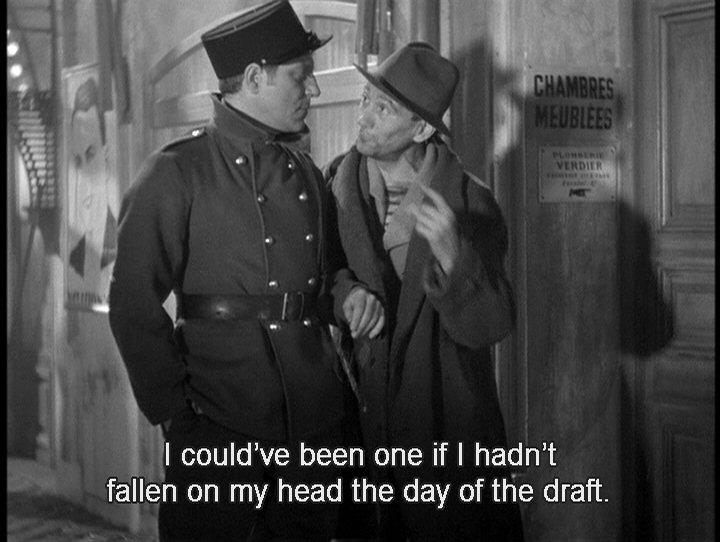
A truly beautiful film that follows the classic Hollywood template, Carné's Port of Shadows is the kind of movie where all of the elements culminate into a near-perfect package. The air-tight script is chock full of fantastic dialogue and well-rounded characters, aided by the incredible cast, which includes Jean Gabin, Michel Simon, and Michele Morgan. Even minor characters are surprisingly well developed. Likewise, there isn't a shot in the film that feels out of place or sloppy; everything is essential. The lighting, grain, and over-all look of the film is quite stunning and especially effective in telling the story. It's interesting to note that this film is pre-WWII, as much of the script feels like an allusion to the war. A must see.
A writer (Ray Milland) struggles with alcohol addiction over the course of a five day binge.
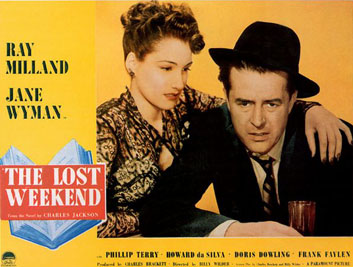
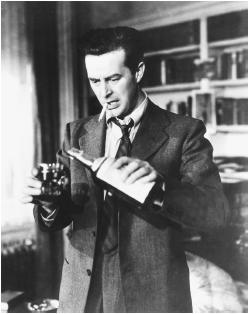
Nominated for seven Acamedy Awards, and winner of four, including Best Picture, Best Director, Best Screenplay and Best Actor, The Lost Weekend shocked audiences in 1945 with it's frank, relentless, realistic portrayal of addiction. Like with many of his films, Wilder chose an unpopular subject and somehow turned it into a smash - partly due to the strong performance of Ray Milland as addict Don Birnam, and partly due to the way the film deals with the taboo subject matter head on. Audiences had never seen anything like it before - crass, revealing, and fully realized, The Lost Weekend gives a full picture of the struggles of the addict, including some particularly terrifying hallucination scenes. The film was also the first to contain a theramin in the soundtrack, an instrument which later became associated with B sci-fi pictures.
A proud strip club owner (Ben Gazzara) is forced to come to terms with himself as a man when his gambling addiction gets him in hot water with the mob, who offer him only one alternative.
Gazzara and Cassavetes were frequent collaborators, but their individual efforts culminate in this film, which tells the story of a drunk gambler who gets in over his head. Cassavetes uncomfortably close shots and lingering camera, mixed with the improv, emotionally driven acting style results in a rich, full protrayal that leaves a bitterswett mix of sadness, humor, and the complex emotions of real life. Gazzara's strip club owner character is constantly emasculated while trying to maintain his high roller image, setting up an interesting play in sexual politics. Make sure to watch the 138 directors version - its worth the extra thirty minutes.
The Annual New York Asian Film Festival starts this Friday at the IFC Center. Highlights include a screening of Takashi Miike's unreleased in the US Zebraman, anniversary showing of John Woo's Hard Boiled, shorts from Old Boy helmer Chan Wook Park, and more. This seventeen day orgy of new films will introduce you to buffalo-busting action flicks from Thailand, cartilage-cracking gangster films from Korea, and the first gore flick ever made in Pakistan!
You can find the full screening list and purchase tickets here.
An MGM release 1952 Directed by Joseph L. Mankiewicz Written by William Shakespeare (play)
An epic version of Shakespeare's classic play of betrayal and repentance.
Brando recieved his third of four consecutive Oscar nominations for this film, in which he appears all of about twenty minutes. In that twenty minutes, however, Brando gives one of the most intense performances of his career as Marc Antony, delivering Shakespeare's classic "Friends, Romans, Countrymen" speech with such unbridled passion that it almost makes sitting through the rest of this snoozefest worth it. Edmond O'Brien makes an appearance as well, and is the only other actor on the screen who can seem to captapult this epic-in-scope retelling of Caesar beyond being a mere big-budget stage play. Mankiewicz has some interesting shots in there, but this one is for Brando fans only.
Four Eyed Monsters was one of last year's best and most innovative films, and now you can watch the whole thing for FREE on Youtube! I highly suggest checking it out, it's only 71 minutes and well worth the time and admission. But catch it soon, it's only gonna be available for one week. Also, be a good sport and sign up for Spout.com. It's free and for each person who signs up, Arin and Susan each get $1 towards paying off their debt. So help these guys out!
The formal differences between Godard’s approach to modernization in Two or Three Things and Tati’s Mon Oncle are clear: one takes on a lingual, documentary style while the other focuses on visual cues and spatial relations. However, both films feature similarly negative views on modern construction and seem to be of the viewpoint that ‘newer’ doesn’t necessarily mean ‘better’. While Godard is preoccupied with the cinema and modernizations effects on language, his assertions that commoditized culture has negatively impacted individualism mirror Tati’s sentiments. Likewise, Tati’s affinity for old time housing and ways of life can be seen in Godard’s demonizing of urban organization and physical growth.
However, neither film is without hope. While Tati’s message may seem bleak, his humor-based approach stands as a silver lining. Likewise, Godard’s playful attempts to render verbal and written language through the cinema act as a call for greater attention to language as a cultural entity. The results are a vision of Paris, a modern city, which is both culturally expanding and aware of its own deficiencies.
WORKS CITED
Barthes, Roland. “Towards a Semiotics of Cinema: Barthes in interview with Michel Delahaye, Jacques Rivette”. Cahiers du Cinema: The 1960s. Jim Hillier. Massachusetts: Harvard University Press, 1986.
Chion, Michel. The Films of Jacques Tati. New York: Guernica, 1997. Leutrat, Jean-Louis. “The Power of Language”. The Cinema Alone: Essays on the Work of Jean-Luc Godard. Michael Temple & James S. Williams. Amsterdam: Amsterdam University Press, 2000.
Makeieff, Macha. Playtime. Notes on Lecture, 4/10/2007.
Ramierz, Francis and Christian Rolot. Mon Oncle: Jacques Tati. Collection Synopsis, no. 16. Paris: Nathan, 1993.
Mon Oncle. Jacques Tati. DVD. Criterion, 2001.
Stam, Robert. French New Wave II. Notes on Lecture, 2/8/2007.
Thiher, Allen. “Postmodern Dilemmas: Godard's Alphaville and Two or Three Things That I Know about Her”. Boundary 2, Vol. 4, No. 3. (Spring, 1976), pp. 947-964.
Two or Three Things I Know About Her. Jean-Luc Godard. VHS. New Yorker Films, 1988.
Gordon Williams: (novel "The Siege of Trencher's Farm") (as Gordon M. Williams)
Sreenplay by: David Zelag Goodman and Sam Peckinpah
Plot description: A young American and his English wife come to rural England and face increasingly vicious local harassment.
Upon its release in 1971, director Sam Peckinpah was engulfed by a storm of controversy (what else is new?) surrounding his latest film, Straw Dogs. Peckinpah and his crew were attacked for the vicious and sick scenes of violence and rape that occur in the film. While many claime the scenes were too extreme for audiences, the film is not merely violent without purpose. Straw Dogs centers on David and Amy Sumner (played by Dustin Hoffman and Susan George), and their life in a small rural village in the UK. Sumner is an American mathematician who was given a grant to work in the film's setting, where he has recently overtook his wife's farm and where the couple now lives. In conducting renovations on the house the two are incessantly harassed by a violent collection of brutes who were commissioned to repair their home. Ultimately, the provocations turn to violent action and Amy Sumner is raped by the workers and their home assaulted by the men. David Sumner, ever the reluctant pacifist, is forced to defend his home and the lengths to which he goes are partly what give the film its gritty, extreme violence.
In Straw Dogs, Peckinpah (forever remembered for his unflinching and gruesome depictions of violence) is at the top of his game. What separates the film from his other works such as The Wild Bunch or Bring Me The Head of Alfredo Garcia is that in addition to jarring, blood-soaked physical violence (as expected), the film presents equally disturbing forms of psychological, and psycho-sexual torment. Hoffman plays David Sumner perfectly, summoning his then famous Benjamin Braddock persona from The Graduate, except adding a vicious, demented, and downright schizophrenic twist. Sumner is a reclusive, shy scholar whose reticence to engage in action is clearly established from his very first appearence. However, as the film progresses we see that he and his wife torment each other frequently, generally through verbal stabs and sexualized exchanges. In these exchanges we notice a peculiar agency on both their parts, as though David's shyness is not always sincere - it is in part an act, an attempt to outsmart others by allowing them the ease of assumption. Similarly, Susan George plays Amy with a double-face: In one sense she is the naive sexbot who never graduated from the lecherous gazes she no doubt received as a youngster/to this day. In other scenes, such as one in which she taunts the construction workers by walking topless in her bedroom as a form of revenge on David, she clearly possesses the agency and intelligence that her appearances before David obscure.
The film manages to provide both of these characters, each with seemingly split personalities all while using a setting in which every local townsperson is downright nasty, hateful and violent. What Peckinpah is suggesting with the stereotypical scholar David and the deviant, sexy wife have the capacity for all types of behavior, and as the film progresses David proves that he is in fact no different than the menacing lunatics trying to murder him and his family.
Overall, Straw Dogs is an extremely provocative and compelling film, and careful viewing proves that the criticisms that it is a one dimensional, blood-fest are unfounded. Peckinpah's strengths are in his ability to convey the potential darkness of man, and contextualizing this darkness within an appropriately familiar and quotidian setting. Much like Cronenberg's A History of Violence (only 35 years prior), Peckinpah's film deconstructs audience identification and their notions of "justifiable violence" in a meta-discursive fashion while within the narrative he explores the intricate sexual tensions that exist between man and woman. Straw Dogs is a primal and damn near bestial film both in its story and Peckinpah's signature film aesthetic of harshness and brutality. Peckinpah's shots (filthy and drained of all pleasantness the countryside could provide), disorienting edits and movements (perfectly embodied during Amy's rape flashbacks at a church gathering as well as the break-in scene), and ability to generate both seemingly obvious exploitation and ambiguity in the same breath make this flick a must-see.
Near Penn Station, next to the Amtrak tracks, squatters have been living for years.
This Sundance and Indie Spirit award-winning documentary follows the lives of several squatters as they deal with life in the New York subways. Shot in stunning 16mm black and white, director Marc Singer actually lived with these people for a short time, using them as his crew and his subject matter. The result is an amazing, honest portrait of the hardships homeless people face, a strong representation their tenacity and stubbornness. My only problem with the film is that it ends on such an overtly positive note - each of the characters recieves an apartment through a NYC works programs, but what happens next? I find it hard to believe that each person in the film managed to maintain a working lifestyle. This is one film that is begging for a sequel.
Lionsgate marketing exec and part-time photographer Tim Palen shot the photo as part of an upcoming book titled Guts: The Art of Marketing Horror Films. NYMag says that the book is “a collection of his creepiest work, including a pornographic, absolutely not-safe-for-work portrait of Roth”. The photo is called “Eli Roth Has the Biggest Dick in Hollywood.” The prosthetic was built by K.N.B. Effects, the same effects company that worked on The Chronicles of Narnia and The Island.
Godard plays with the idea of consumption and mass culture throughout Two or Three Things. He offers many symbols of culture – magazine covers, famous quotes, novels – but sets them up so that, as signifiers, they offer little meaning. In one scene, Juliette and fellow prostitute Miriam don duffel bags bearing TWA and PAN-AM logos and are forced to parade around naked. In another, two men sit in a café compiling sentences out of novels in the hope of composing the ultimate book. Both these scenes exhibit the appropriation of cultural images or objects, but recontextualize them so that all meaning is obscured.
Godard keeps a philosophical dialogue going throughout the film via a non-diegetic voiceover. Considering the narrator’s penchant for the first person, and his lengthy transcendental musings, it’s almost appropriate to assume that it is a surrogate for Godard himself. One scene is particularly telling of this idea: as the camera focuses in on a cup of coffee, the narrator laments his inability to understand objects, and his verbose speech peters out into a verifiable spew of words. It is as if Godard himself is lamenting the way language has been corrupted by culture, rendered ineffective. “To say that the limits of language, of my language, are those of the world, of my world, and that in speaking, I limit the world, I end it” he cries.
If Two or Three Things presents the idea that consumerism has limited man’s ability to communicate, than it also suggests that the modern environment limits man’s ability to connect. As previously stated, construction is depicted in the film as imposing, a dominating force. But already established edifices are given equally biting critiques. “A landscape is like a face”. Towards the end of the film, Godard pans around Juliette’s building complex as she says this phrase. We see that the area is completely enclosed by buildings, each one composed of tiny little boxes, presumably individual apartments. The space is called le grand ensemble, a new form of urban organization implying a certain sense of togetherness, and yet we can only perceive the area in fragments, as each individual who lives there must do as well.
Writing credits: Edna Anhalt (story) Edward Anhalt (story) Harry Brown
Rejected by women all his life, a loner with a high-power rifle starts on a murder spree.
This black and white B-crime noir from the early fifties remains fun depsite it's heavy pro-institutionalization reform sentiments. It also eerily echos that recent D.C. Sniper case. If you're a fan of crime films, it's worth checking out.
A Lionsgate film 2007 Directed by William Friedkin Written by Tracy Letts
A paranoid, unhinged war veteran (Michael Shannon) who sees insects everywhere holes up with a lonely woman (Ashley Judd) in a spooky Oklahoma motel room.
This intense psychological thriller is being marketed as a horror flick, perhaps because director Friedkin is the man behind that scare classic The Exorcist, but to strictly label it as such is pretty unfair. Bug is scary, for sure, but the screams don't come from any slashers or supernatural beings. This is a film about what lurks deep inside the human mind, and the horrors it can manifest when two sick and lonely people spend too much time together.
Based on Letts' hit off-broadway play of the same name, the film is dialogue heavy, but stands supported by Shannon and Judd's strong performances. As they slowly transform from a pair of off-kilter drifters to certifiable crack-ups, they command the screen. Friedkin's semi-hand held camera captures the experience as if we were right along side them, producing a bitter-sweet feeling of sympathy and disgust.
Ambiguity plays a huge role in keeping the film interesting as well. We never do find out if the 'bugs' are real, and knowing that our narrator is a drug addicted deadbeat renders her completely unreliable. It's up to the audience to decifer exactly what's going on, and even if it seems clear, it's never quite crystal. But the film gives just enough details to patch together several unique interpretations that could leave film-goers arguing for days. One such interpretation has been heavily debated on the Lionsgate forum for the film, and claims that the characters are suffering from Morgellons disease, a sort of psychological impairment that causes extreme paranoia. While I find this idea way too literal (it does no justice to the nuanced tics of the characters), it certainly is interesting.
Bug is definitely worth a gander, but don't go into it expecting The Exorcist. It's a much smaller, more personal film that will either grab you or leave you cold. Think Terry Gilliam's Tideland, and might know what I mean. It really makes me wish I had seen the play - it must be amazing to see on stage.
William Friedkin on the actors in Bug
about Ashley Judd: "Ashley and I talked extensively about the film before we did it, and we were really on the same page."
about Michael Shannon: "To achieve Shannon’s performance took a great deal of discussion, toning, modulation. Shannon is primarily a stage actor, he’s only done small parts in films, though I’ve been told he has a very good role in World Trade Center, a small but pivotal part. He needs a lot of attention, love, appreciation. He becomes that character. And you have to realize that you’re talking to the character and not to him when you start rehearsing. You’ve got to walk on eggshells. He would tend to go over the top too soon, so I’d have to bring him down. But whenever I would modulate his performance, he almost took it as an insult to his character!"
about Harry Connick: "I’d met Connick at a party before I was casting this film, and I saw that a very large part of him was this guy. When I called him to do this role and sent him the script, I told him about some of his behaviour which I’d observed, and he knew exactly what I was talking about. There’s a part of him that likes to put people on like Goss does, sometimes maliciously."
Coney Island is offering a summer of fantastic popcorn movies every Saturday night for discount prices. Highlights include Dog Day Afternoon, Fritz the Cat, Viva Las Vegas, Marx Brothers At the Circus, and my personal favorite, Killer Klowns from Outer Space.
CONEY ISLAND SATURDAY NIGHT FILM SERIES 2007 presented by indiefilmpage.com & Coney Island USA MAY 19TH - SEPTEMBER 8TH at the Coney Island Museum 1208 Surf Ave. between Stillwell Ave. and West 12th Street Tickets $5, Free Popcorn! Shows start at 8:30pm, doors open 8pm.
“I examine the city, its inhabitants, and the bonds between them as closely as a biologist examines the relations between individuals and race in evolution. Only thus can I tackle problems of social pathology and formulate hope for a genuine new city” - Narrator
The opening credits of Two or Three Things I Know About Her feature an inter-title that informs the viewer that the word Her refers to the Paris region, while it also refers to the main protagonist and the actress playing her. This concept – the suggestion of dual intendment behind a word – is crucial to the film. Like in Mon Oncle, Two or Three Things offers a semblance of a narrative: the film follows a day in the life of a suburban housewife who practices prostitution part-time in order to afford luxuries that society deems necessary. Through herstruggles to stay on top in life, the film explores mankind’s relationship to language, semiotics and meaning.
Two or Three Things opens with the image of a large highway construction site. The interminable racket of modern development heard over the credits is hushed as a voice over begins, outlining history and establishing philosophical viewpoints. Both of these elements remain constant throughout the film. Godard offers documentary style visuals of the physical growth of Paris; giant cranes and dump trucks, unfinished highways over dilapidated homes. The construction seems daunting, as modern buildings and work sites seem to tower into the sky, envelope older cityscapes. The fact that these are actual shots of Paris reinforces the cinematic idea of injecting symbolism onto reality, an idea that plays a crucial role in the film. How do we accept cinematic representations as being ‘real’ when the basic properties of film automatically convert all images into symbols? Godard plays with this idea by showing these construction sites, presenting them as they exist, but over-scoring their presence, having them appear monstrous and dwarfing. Thus the audience understands both what is ‘real’, and the critique of progress the images present.
A similar example of this idea can be found at the beginning of the film when the main protagonist, Juliette, is introduced. The voice over first introduces her as the actress Marina Vlady. Then the scene repeats, reintroducing her under her characters name. This demonstrates how the cinematic medium converts what is real into a symbol; Vlady is at once her real self, and her fictional cinematic counterpart. As Allen Thiher points out, this allows Juliette, as a cinematic character, to have multiple voices: “On one level she speaks as a fictional housewife-prostitute in a non-reflexive manner. On a second level she examines her language and uses self-reflexive language. This level leads to a third where she tests her language against her environment, which often shows how absurdly incongruous her language is with regard to the images that present her situation” (958).
From here, Godard is able to disregard conventional cinematic standards for conversation and allow the character to slip out of a scene and impose additional commentary. This, coupled with the film’s documentary style approach, grants access into the thoughts of both major and minor characters, almost in a novel-like fashion, highlighting the shortcomings of language and the cinematic medium.
For example, in the scene in the shop where Juliette purchases a new dress, the camera picks up the banal chatter of several young girls. In one shot, the camera stops and focuses on a girl, who says “I have a date with Jean-Claude at 8. We go to a restaurant, sometimes a film.” This part of the scene appears like a documentary, the camera focusing on the girl as if it were asking her a question.
However, when Juliette speaks into the camera seconds later, it becomes clear that Godard is not interested in the banality of the girls conversation, but rather their inability to fully communicate due to the consumer-based, degrading environment surrounding them. “I know how to talk. Let’s talk together,” Juliette begins. “Together is a word I like. Together means thousands of people, perhaps a whole city. No one knows what the city of the future will be like. Part of the wealth of meaning it had will undoubtedly be lost. The creative and formative roles of the city will be taken over by other forms of communication. Maybe… television and radio…Vocabulary and syntax, consciously and deliberately.” This reflexive speech seems to draw on the Parisian girls inability to discuss anything real. And yet, the speech itself seems equally disgenuine, clearly scripted. The following shot of a trashy paperback shows Godard is commenting on the way language seems to have piggybacked off of a massified culture. Language is no longer an effective mode of expression, because it has been commoditized, marketed, and consumed.
Sterility is a major theme throughout the film. The old sect is constantly littered with garbage; a man is put to the seemingly never-ending task of sweeping, and can be seen constantly, but contently, attempting to clean up after his fellow townspeople. Madame Arpel is obsessed with cleaning as well, but their overly aseptic home provides her with little opportunities for any actual work. So, she can be seen constantly scrubbing windows that are already clear, objects that aren’t dusty. The best example of this comes in the Arpels introduction, in which she can be seen washing windows, pulling at creases on her husbands suit, fixing his tie, and scrubbing strange objects: a plant, the front gate, her sons briefcase, the car. Everything she touches she has to give a good once-over with her washcloth. Madame Arpel especially treats her son, Gerard, with a germicidal zeal. “Gerard, don’t mess up your room! Take off your shoes and wash your hands!” she tells him when he enters the house. Gerard can be seen rubbing his feet furiously on the mats outside, and his mother, dressed like a nurse in a long white coat and blue gloves, sprays him with a large hose.
Sterility can be found in the kitchen as well. The Arpel’s modern home allows them to cook without ever touching the food. Cooking is impersonal, handled at a distance by buttons and machines. Madame Arpel flips a grey, sickly-looking steak by pressing a button under the stove; she butters a pan by spraying it with a hose-like object. This is shown in stark contrast to the way food is handled in the old town. The local market features carts of vegetables and fruits fingered by all sorts of people; an old woman picks up a head of lettuce, weighs it in her hand, and puts it back for a different piece. Later, a man grills meats and sweet bread for children on a large wooden cart, handling the food with a charred spatula. The children accept readily with their hands.
This idea of sterility stems from the Arpel’s obsession with status. Madame Arpel gives three separate tours of the house in the film, each time pointing out insignificant objects and highlighting the ultra-modern aspects of the space. One object, a ridiculous looking fish-shaped fountain, is particularly telling of this obsession with status. Madame Arpel rushes to turn it on whenever someone enters the gate. However, if it’s not someone she is trying to impress (Hulot, peddlers), she shuts it off in disgust. Likewise, Monsieur Arpel’s car is an object of status. However, once it enters the main road, we that everyone in town owns a car that appears only slightly different. The cars show that the modern society upholds an ideal of massified individualism funneled through consumerism.
It would appear that Tati is making a concrete criticism of modern society – that so-called ‘progress’ leads to disconnect with humanity, with an over-emphasis on status quo – however, that’s not entirely the case. While the characters in the old section are presented as livelier and less preoccupied than that of the new one, there is no evidence to show that the residents of the modern world are discontent. In fact, it would appear that the Arpels are perfectly happy in their tech-savvy world. Likewise, Hulot’s inability to adjust to their world stems not from his disinterest, but rather his lack of familiarity and physical awkwardness. We must, then, view these people as social types, representative of ways of being and not specifically critical of any particular way of life.
It is only in Gerard, the indelible young nephew of Hulot, that we see any true character-based critique of the modern society. Gerard seems stifled by the trappings of his parent’s modern ways, and is sternly attached to the lackadaisical Hulot; he prefers the simplistic toy presented to him by his uncle to the complex motor engine given to him by his father. When in the modern home, Gerard appears despondent, bored, and lifeless. He seems to desire nothing more than to join the group of mischievous troublemakers who play freely in the old town; and, when he finally does join their company, his face exudes pure joy. Here, Tati presents perhaps his most biting criticism: that the shiny conveniences of modern life stifle the imagination of youth.
Summer is usually a great time for the movies. Theaters always beat the heat as Hollywood puts forth the big bucks to blow audiences away with special effects extravanganzas and escapist fare. But unless you live in a city where Herzog films or Lee Marvin tributes abound, there isn't much to look forward to this year. Most of the movies coming out are unnecessary sequels or tired ideas. It's in these trying times that I am thankful for DVDs. While home entertainment will never quite match the theater-going experience, at least it puts you in control of the crap that's on screen. So this summer, instead of wasting seven dollars on another sequel, crank the A.C., curl up on the couch and enjoy these flicks:
INSTEAD OF
WATCH
The original ogre, The Hunchback of Notre Dame is a classic story and was perhaps no better realized than in this 1939 film starring Charles Laughton. Laughton gives an impressive dramatic performance as the insufferable Quasimodo, whose damaged looks went on to set the standard for Hollywood make-up effects and inspired effects artists such as Rick Baker. The 1928 silent version is great as well.
INSTEAD OF
WATCH
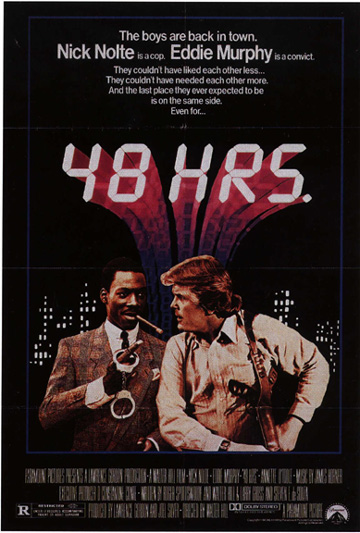
The original Rush Hour was noted for its plays on race relations, but people forget that this idea had already been perfected in the 1982 buddy pic 48 Hours. Much funnier than anything Brett Ratner could produce, 48 Hours features Eddie Murphy as a wise-cracking criminal turned cop who aids Nick Nolte in tracking down a killer. This one's almost a no-brainer - Eddie Murphy and Nick Nolte? Handled by The Warriors Walter Hill? Obviously better than a bunch of Jackie-Chan-No-Speaka-Da-English jokes any day.
INSTEAD OF
WATCH
War and screwball comedy are often mixed with hellish results, but David O. Russel's best film manages to combine the two with biting results. Three Kings is as hilarious as it is critical, pertinent as it is pastiche. Besides, Larry the Cable Guy isn't funny.
INSTEAD OF
WATCH
The brillance behind the 1993 kid's flick Surf Ninjas is incredibly understated. You see, it's about ninjas. Who surf. That's cooler than Penguins any day. The pic stars a young Rob Schneider and Leslie Neilson as the bumbling half-cyborg supervillian. Trust me, it's sweet.
INSTEAD OF
WATCH ANYTHING WITH ERROL FLYNN
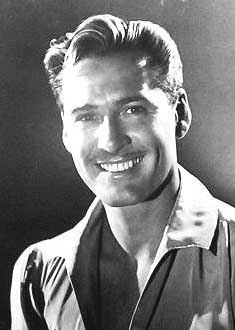
Errol Flynn was the swashbuckler Johnny Depp wishes he could be. Don't get me wrong, Depp makes a great pirate and all, but those Carribean movies are crap. You're better off watching any number of Flynn's old flicks, including (but not limited to) Captain Blood, The Adventures of Robin Hood, The Dawn Patrol, The Prince and the Pauper, or The Sea Hawk.
INSTEAD OF
WATCH
C'mon now. A PG-13 Die Hard? No one wants that.
INSTEAD OF
WATCH
If you're going to watch a musical that features cross-dressing males in prominent roles, you might as well make it one that stars Marilyn Monroe as well. This classic screwball comedy follows two musicians on the run after witnessing a mob hit. It's countlessly referenced as one of the greatest comedies of all time, and is a great way to get started on the works of master director Billy Wilder.
Disney CEO Robert Iger threw cold water Tuesday on the disclosure by Comcast COO Steve Burke earlier in the week that he was in discussions with studios to make movies available on pay-per-view cable on the same day they were released in theaters for $30-50. Iger insisted that Disney was "not in discussions to sell movies to cable in the same window as theatrical." Iger's comments came during a telephone conference with analysts following release of the company's first-quarter report showing total revenue rising to $8.1 billion from $8 billion during the same period a year ago. Iger forecast a big second quarter but declined to predict whether the upcoming Pirates of the Caribbean: At World's End would exceed the box-office take of the new record holder, Spider-Man 3. He called the new Pirates film, due to open over the Memorial Day holiday, "simply great." Asked about remaining the only major studio to release new movies on Apple's iTunes online store at prices well below those for DVDs, Iger said that Disney makes the same amount of money from an iTunes sale as it does from a DVD. Commenting on the policy of other studios to release only library titles via the Apple site, Iger indicated that only Disney's "fresh titles" are selling well on iTunes.
$30 sounds like a lot to watch a movie on cable TV. I'd much rather go to a theater. But nonetheless, same day multiplatform release is going to become a standard sometime soon. Read more about Simulatenous Release Platforms here.
Mon Oncle & Forms of Comedy “This is our very own corner… The vase… All of our house is air-conditioned… And I must tell you it was all designed at my husbands factory!” – Madame Arpel
With the release of Play Time in 1967, Jacques Tati completed his masterwork: a film so expertly handled, with so much precise attention to detail, that it took over ten years and required the construction of an entire city to complete. At first glance, Play Time may seem to be the perfect film to address when referring to visions of a modernized Paris. With its ultra-chic, hyper-stylized formations and startling empty spaces, Tatiland appears on screen as a futuristic version of the city, impersonal and indifferent to its inhabitants. But the critique in Play Time is not so much specific to Paris as it is to cities as a whole; as Tati historian Macha Makeieff points out, “Tatiland is not a vision of Paris, but of cities across the globe.” Despite a single scene in which a reflection of the Eiffel Tower is visible in a swinging glass door, Play Time offers much evidence that the city represented within is not specific to a singular location, but rather an amalgamation of multiple regions.
Rather, it is in Tati’s earlier picture, the less abstracted Mon Oncle, where one finds his most distinct representation of Paris. Released in 1958, Mon Oncle is in many ways Tati’s most straightforward film. Michel Chion writes: “Mon Oncle (1958) is, in the works of Tati, the film which most conforms to the classical narrative system, and even represents the only example of its creator’s efforts to unfold a genuine story till the end, starting from a succession of causes and consequences” (32). That story, which focuses on Madame Arpel’s attempts to ‘clean up’ her brother, the insufferable M. Hulot, is in it’s own right a direct representation of modernization. Tati’s Hulot, who lives a simple life in the old part of town, cannot seem to conform to his sister’s hyper-controlled, sterilized ways. While the humor and themes remain constructed through Tati’s dialogue-less, seemingly meandering style, the film is very much aware of its narrative focus, going so far as to make self-reflexive nods. “Listen, what my poor brother needs is an objective… a home… like all this!” proclaims the most determined Madame Arpel.
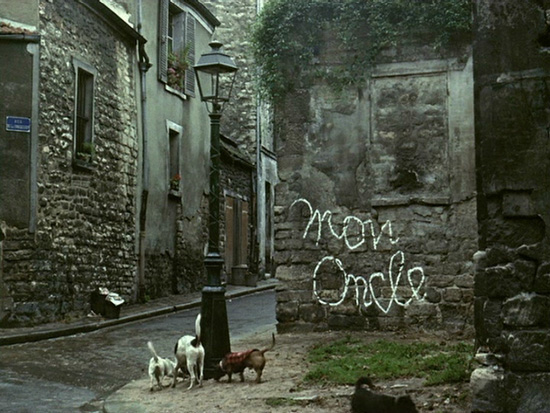
Tati divides his vision of the city into two halves: the quaint, cobblestone old town in which Hulot lives, and the homogenized modern section of the Arpels. The film sets up this division immediately in the opening credits. Beginning with a shot of a crane and the harsh jackhammer sounds of a construction site, the camera pans down across architect nameplates, which feature the credits. The main title, however, is scribbled in chalk on a building in the old world, and the flighty musical theme of the film begins. This theme becomes a crucial cue in distinguishing the two locations. While the music is prevalent throughout the old section, it is never heard in the modern one, except for in a single scene in which Monsieur Arpel telephones Hulot from his boss’ office to see if he would be interested in a position at the factory. Even then, the music is heard only through the telephone, and disappears when their conversations ends, further accenting the juxtaposition between the whimsical old town and the stuffy modern one. In fact, most of the sounds in the modern section are sharp, grating, or otherworldly; strange buzzes, odd bloops, and accented clanks. However, the pervading sonic mode is silence.
Further shots accent the division between the two sections of the city. The old section is notably characterized by its brick buildings and cobblestone streets, which give it a lively sense of color and human-like imperfections. Conversely, the new section features stark grey buildings that seem identical in form. When a character transitions between the two, Tati offers a shot of a crumbled brick gate, a figure of the old town, with the skyline of the grey modern section dominating the background. This shot, used multiple times in the film, is representative of the deteriorating old ways of Paris. Likewise, inhabitants of the old section seem free to walk as they please, harmonious with nature, while in the modern section, distinct pathways direct characters in motion. In the Arpel’s home, no one is allowed to step on the grass, for fear of ruining the perfect lawn.
The L.A. Times is reporting that Mexican directors Guillermo del Toro (Hellboy, Pan’s Labyrinth), Alfonso Cuarón (Harry Potter and the Prisoner of Azkaban, Children of Men) and Alejandro González Iñárritu (21 Grams, Babel) have joined together as a team and are attempting to sell themselves in an “all-or-nothing, five-picture deal” worth approximately $100 million. Carlos Cuarón (Rudo y Cursi) and Rodrigo García (Passengers, Six Feet Under) would also be included in the deal, which the publication says will likely include at least two Spanish language films. Sources also claim that all five films have been identified and budgets had been estimated, but some of the projects do not yet have finished scripts.
The comradery these directors have with each other is really inspiring. I wish more American directors would help each other in this way. The deal is supposedly going to Universal; here's hoping that we see many more great films from these guys.