A prince and a fellowship of companions set out to rescue his bride from a fortress of alien invaders who have arrived on their home planet.
Star Wars meets Lord of the Rings in this fantasy medieval space mash up. The story follows the typical fantasy archetype: long awaited prophecy involving a future king and his bride finally comes to pass, as the prince must rescue the princess before the evil consumes the land. Only for some reason the evil in this film is a giant Alien looking creature who controls a nasty set of beetles inside Darth Vader-like stormtrooper suits that shoot lasers.
Literally everything in this film is an amalgamation of LOTR & Star Wars, from the epic landscape shots, complete with a snowy mountain trek and wild horse rides through forests and plains, to the pew! pew! laser shootouts in close quarters. There are giant spiders, a cyclops, bumbling magicians, elaborate sets, natural sets. It's even got Liam Neeson.
For some reason, despite the film's lengthy expositions, I couldn't quite grasp the main character's name, or the name of his shiny sharp boomerang. But thankfully, the title of the film is enough to describe all people, places, and objects within it. "Did Krull get his Krull back?", "Oh shit, he's gonna toss the Krull!", etc. I laughed a whole lot while watching this but unless you're a serious fan of early 80's fantasy epics (Dark Crystal, Labyrinth, Beastmaster, etc.), you probably won't want to watch this. It's too cheap and slow for modern audiences, and too silly to take seriously.
Peter Yates, by the way, directed the supremely awesome Steve McQueen vehicle Bullitt. He was nominated for two Oscars the year this film was released -- both for his follow up, The Dresser, with Albert Finney.
Bi-polar mall security guard Ronnie Barnhardt is called into action to stop a flasher from turning shopper's paradise into his personal peep show. But when Barnhardt can't bring the culprit to justice, a surly police detective is recruited to close the case.
After the delirious high that was Eastbound & Down, I had much hope for this comedy helmed by Eastbound co-creator Jody Hill. Mr. Hill, it seems, has a penchant for mining foul-mouthed, aggressive, unlikeable characters for comedy gold. Unfortunately the schtick is too thin here. Hill's script doesn't push far enough, and Seth Rogan is terribly miscast as the bi-polar, pill popping mall cop. Rogan is too jovial and affable to make the deranged, obsessive personality of his character come to life. And since most, if not all of the film rests on his shoulders, it falls flat in the end.
Supporting actors Ray Liotta and Anna Faris are given little to work with; in fact, their presence barely registers. Sadly, most of the film suffers from this half-assed feel -- characters feel more like sketches, and the plot meanders without much story supporting it. The events of the film sort of just happen, there's no rhyme or reason to it. Through lines are set up and then left sitting for a while until they either resolve themselves or are forgotten. Others simply barely exist to begin with, like a feud between Ronnie and an Arab store worker that is basically comprised of a bunch of Fuck you!'s back and forth.
Ronnie's personality troubles are glossed over with the blanket "bi-polar" explanation, except nothing about what Ronnie says or does is particularly emblematic of someone actually suffering from bi-polar disorder. This was particularly upsetting to me; it seems to be a recent trend in films to use bi-polar disorder as an excuse for a character's odd or aggressive behavior. Anyone who acts out of tune in a film is suddenly a "bi-polar" character, regardless of the accuracy of the representation. Someone needs to call bullshit on this: bi-polar disorder is real, and to use it simply as an excuse to create batshit aggressive characters is unacceptable. There's a way to constructively explore bi-polar disorder and it's affects on people, even through comedy, but so far it's only been approached as a blank justification for petty behavior, and I ain't buying.
But forget the bi-polar thing: many critics and outspoken individuals have been up in arms about a scene in which Rogan's character is having sex with a seemingly unconscious Anna Faris, only to hear her cry out "I didn't tell you to stop, mother fucker!" when he begins to second guess his actions. "Date rape!" they cried. "Inappropriate! Too far!" Frankly, I think that's also bullshit; the joke didn't go far enough. It would have been funnier if they had taken that line out. You can't push a joke that far, only to pull it back at the end. It sucks the wind right out of the sails. Likewise, there's nothing suggestive in the scene that it promotes date rape or paints it in a positive light. That scene to me embodies the entire problem of the movie: Jody Hill can't seem to decide if he's going for a caustic, aggressively dark tone or Apatow-style slapstick raunch. He ends up with neither.
Observe & Report is a film that has a lot of ideas working underneath it but ends up with few of them making it onto the screen. It's a shame. The film suffers from so many tonal shifts and such a lack of breadth that it comes across as a faint blip. Hopefully they're just saving all the goods for Eastbound Season 2.
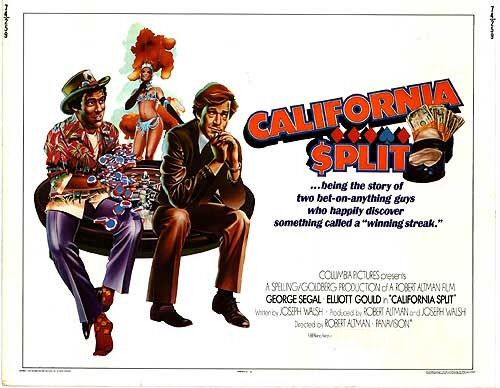
A down on his luck gambler partners with free spirit on a winning streak, but finds himself deep in debt. As a final act of desperation, he pawns most of his possessions and heads to Reno for the poker game of a lifetime.
Elliot Gould and George Segal shine in this affable comedy-drama about gambling addiction. The two make a great on screen pair, with Gould playing the fast-talking, easy, sleazy know-it-all against Segal's excitable but straight laced persona. Add to the mix Altman's meandering, multi-layered audio, long takes and tracking shots -- a perfect match for the film's loud, chaotic casino settings -- and you get a pretty unique buddy picture.
The story is pretty simple: an amateur gambler meets another and find they make perfectly profitable partners. Soon enough the pairing goes sour and the two must part ways. While Gould pretty much sticks to what he does best (re: wisecracks), Segal gets to stretch his chops a bit once he gets in too deep. The film doesn't really aim to make any poignant commentary -- one scene between a mournful Segal and a loud, foul-mouthed female alcoholic seems to make a statement on the blind nature of addiction -- but it does do some interesting things to the buddy picture, namely in the fall-out ending.
While not one of Altman's landmark pictures, California Split exhibits much of his trademark style and motifs at a more palatable pace for broader audiences. If you're new to Altman, this isn't a bad place to start. I'd recommend it for the Gould & Segal pairing as well.
Written by James Costigan, Ivan Davis & Michael Thomas
Based on the novel by Whitley Strieber
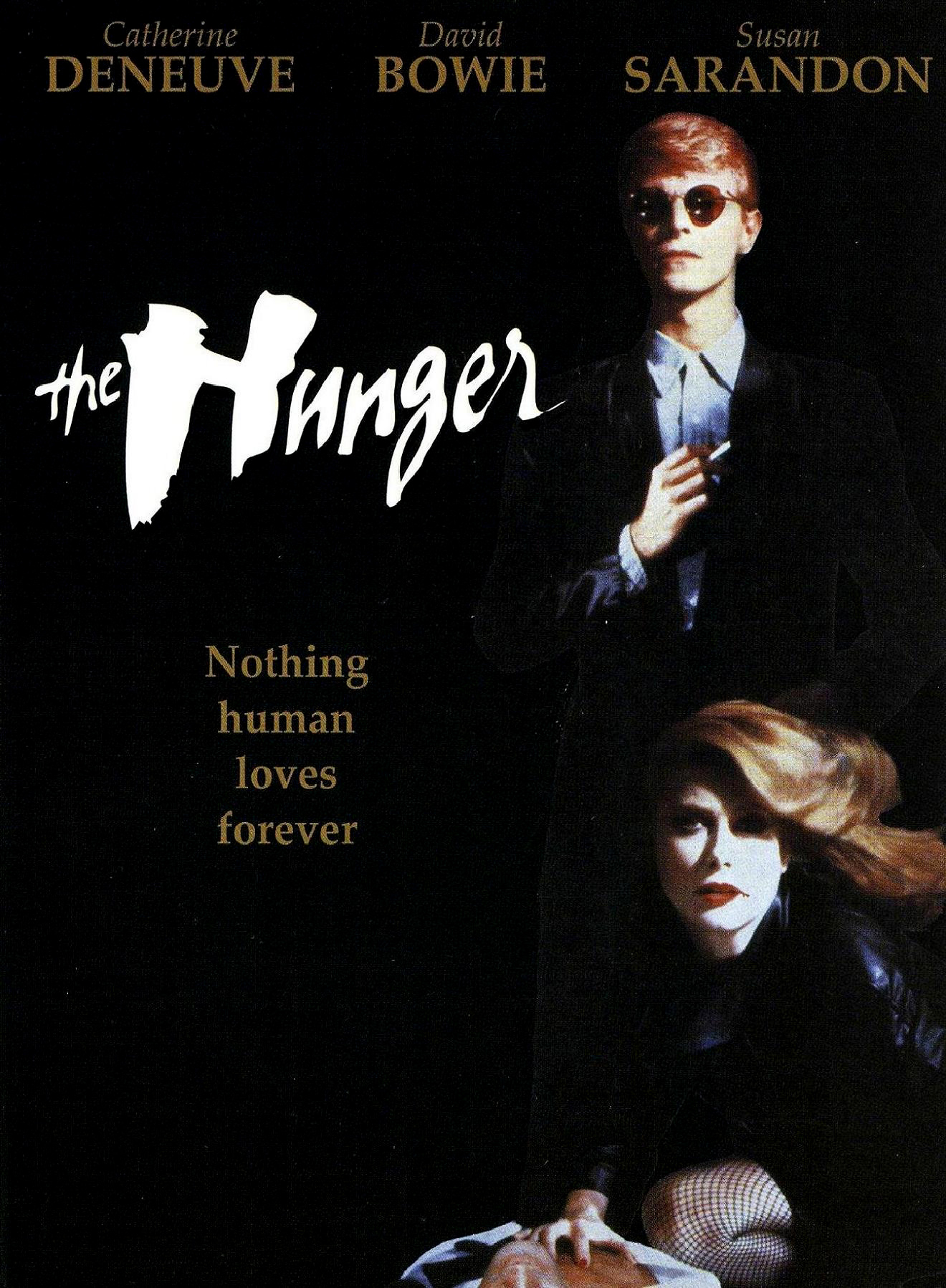
An ancient vampire seduces a famous gerontologist after her similarly ancient husband begins to fade away.
Tony Scott's studio debut has become somewhat of a cult classic since its release in 1983. The Hunger is a vampire flick cut from the Anne Rice tradition -- elegant, ageless, and refined. Much of the film focuses on the seductive powers of the female, played by the always beautiful Catherine Deneuve. Likewise, the main theme is the quest for immortality, and the consequences that come with it.
However, once you strip away the film's glamorous atmosphere, it falls rather flat. Tony Scott's films always seem to be in montage mode; he's a fan of cutting back and forth between planes of action while synchronizing voice-over to wring out double meaning, a trick I always found to be a bit obnoxious. It can be done well but here (and in another one of Scott's films, Spy Game) the cuts move so fast there's barely any time to process the visuals. It's rarely a good sign when a film starts out with a flurry of quick cuts and crazy images, and this one turned me off almost right away.
The performances aren't too great either. Say what you will about Miss Deneuve's looks, but her acting here is stoic, aloof, and disengaging. Likewise for Susan Sarandon, who looks great but is unconvincing as a doctor who specializes in aging research. Casting David Bowie, however, as Deneuve's rapidly aging husband was a very inspired choice. Bowie is by no means an extraordinary actor, but he plays the role straight and does a serviceable job. Marrying the fading vampire character with Bowie's androgynous persona, openly bisexual orientation, and frequently reinvented image adds a lot of intertextual depth that would not have been present otherwise.
If you like gothic vampire lore, you've probably already seen this flick. Otherwise I wouldn't recommend it.
A Harvard scientist conducts experiments on himself with a hallucinatory drug and an isolation chamber that may be causing him to regress genetically.
William Hurt makes his film debut in this 1980 sci-fi/horror thriller that poises itself as an intellectual dissertation on consciousness and slowly descends into absurdity by its last act. Directed by British filmmaker Ken Russell, the film meshes video art style with practical makeup and special effects. The film is sort of a cross between Cronenberg's The Fly and something like A Beautiful Mind. At the start it appears to be a drama revolving around post-radical 70's academic elites, but slowly it regresses (quite literally) as Hurt devolves into an ape like creature, and then some.
Russell is often criticized as being overly obsessed with sexuality and the church, and Altered States is no exception. Hurt's scientist is obsessed with restoring his faith and externalizing his past lives, and his hallucinations are often riddled with religious and allegorical imagery, from depictions of hell to himself on the cross. As he genetically retrogrades, the idea of man's progression from nothing becomes literal, and downright bizarre. Russell's direction treats these events so matter-of-factly that it's hard to take serious; the whole thing almost feels facetious, just short of camp. But the film's strangeness is its greatest asset; each twist and turn leads down an unexpected path until the ultimate WTF? climax is revealed.
Of course the films final message is that humanity is the ultimate truth - outside existence is merely a vast, impersonal nothingness. The film really strains to bring this idea to the forefront, and a lot of questions/absurdisms linger at the end. But if you're into so-heady-its-campy sci-fi or simply bizarre films, this one won't disappoint.
One would assume that this 1990 remake of George Romero's zombie apocalypse classic Night of the Living Dead exists for the same reason as Zack Snyder's Dawn of the Dead - advanced film-making techniques "update" a horror classic for modern audiences. There are only two problems with this theory: Tom Savini's amateur direction, coupled with his DIY special-effects aesthetic, are rudimentary even for early 90's standards.
Alas, the remake does the original little justice, and brings little new to the table. Aside from being filmed in color, everything seems a lot more routine this go-round, particularly in the shadows of Day and Dawn of the Dead. A few alterations are made to the plot of Romero's classic horror tale, including the survival of our hero Barbara, who doesn't make it out alive in the first film. Romero has gone on to amend and augment much of his zombie apocalypse universe, with Land of the Dead and other recent forrays, so the chance to revisit his pioneering classic was, and still is, presumably very tempting.
I'll give Savini some credit -- Living Dead is his directorial debut, and hand-made effects are always a delight. But it doesn't negate the fact that the film is, quite frankly, a pointless excursion.
Ultimately you're better off watching the original or one of it's earlier sequels. But if you're a splatter fan or zombie freak, you could do worse. It's better than Return of the Living Dead by a long shot.
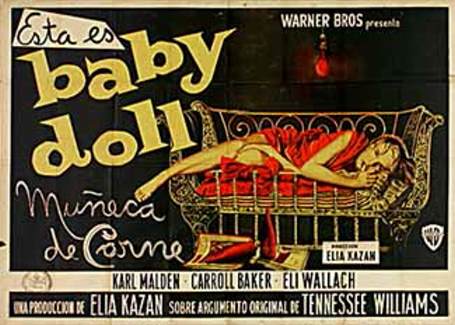
Steamy tale of two Southern rivals and a sensuous 19-year-old virgin.
The second film pairing director Kazan with writer Tennessee Williams brought much controversy upon its release in 1956. Francis Cardinal Spellman condemned the film in a stunning attack from the pulpit of St. Patrick's Cathedral two days before the film opened, saying that the film had been "responsibly judged to be evil in concept" and was certain that it would "exert an immoral and corrupting influence on those who see it", and exhorted all Catholics to refrain from patronizing the film "under pain of sin". Cardinal Spellman's condemnation of the film led to the Legion of Decency's first-ever nationwide boycott of an American-made film produced by a major studio. All over the country, almost 20 million Catholics protested the film and picketed theaters that showed it. The Catholic boycott nearly killed the film; it was cancelled by 77% of theaters scheduled to show it, and it only made a meager $600,000 at the box office. The film was also condemned by Time Magazine, which called it the dirtiest American-made motion picture that had ever been legally exhibited.
Despite all the fuss, the Production Code Administration gave it a seal of approval, (which in many ways led to the PCA drifting farther and farther away from its traditional guidelines until it was replaced by the MPAA ratings system in 1968), and Baby Doll was nominated for four Oscars, included Best Adapted Screenplay and Best Actress for Carroll Baker.
By today's standards the film is a little less shocking, but its straight-forward approach to sex and violence still stings. Miss Baker struts around in a slip while Karl Malden's ineffectual male dishes innuendo after innuendo before Eli Wallach (in his first screen role) can swoop in and squeeze himself uncomfortably between the two. The acting is top-notch, and the tension starts on high and simply mounts with each progressive scene. A surprising amount of humor is wrung out as well; for all the seriousness going on, the film ultimately shapes itself as a sexual farce. The delta setting, including a dilapidated mansion, is gorgeously portrayed in detailed black and white.
Baby Doll is one of Kazan's forgotten masterpieces, a sort of sick sibling of Streetcar. Worth hunting down.
A Christlike figure wanders through bizarre, grotesque scenarios filled with religious and sacrilegious imagery.
An epic exploration of the connections between religious and socio-political trends, Jodorowsky's Holy Mountain aims to be a spiritual experience of its own. Mixing traditional religious narrative with shockingly grotesque imagery, the film attempts to expose art and religion as tools of mass-mind-control. As with many of Jodorowsky's films, the bombastic and eclectic imagery often overshadows the thematic intent, resulting in a film that is more fun to simply absorb rather than analyze. But Jodorowsky has a lot of ideas working in here, from the artificial nature of film to the corruptive powers of prominent social/religious stature and the fraudulent nature of spiritual guru's. Decoding all of the film's symbols would be a herculean task -- objects ranging from the solar system to a war between frogs and cameleons act as representative figures -- with much of the film's icons rooted in occultism, astronomy, and alchemy.
From a production standpoint, Holy Mountain is drop dead gorgeous, particularly aided by a 2006 restoration effort, which brings much of Jodorowsky's harrowing imagery to brighter, more detailed heights. Jodorowsky is a master of the surreal, and the restoration process certainly did this film justice. Dada would be proud.
Holy Mountain is an interesting experience chock full of controversial imagery and engaging ideas. While it may not be a spiritual experience that will rock you to your core, it will certainly leave a lasting impression, most likely different for every person.
Written by Valerie Breiman & Scott LaRose & Adam Sandler
A struggling young comedian takes a menial job on a cruise ship where he hopes for his big chance to make it in the world of cruise ship comedy.
Going Overboard, Adam Sandler's first feature film, rests comfortably at #71 on IMDB's Bottom 100 list. It's the kind of film you'd find on the turn-style rack at your local supermarket - forgotten. Let's hope it stays that way.
Going Overboard is terribly humorless. It strains to wring laughs out of mean-spirited characters, a lame-duck plot, and piss poor production values. Of course some of the quality issues have to be forgiven - director Valerie Breiman made the film on a shoe-string budget while on a cruise - but it doesn't help when the script is an unfunny travesty to begin with. Sandler leans on the usual angry man-child schtick, though not quite as refined. The rest of the cast adds nothing. The result is a film that feels like a bunch of slapdash ideas with little comedic merit. Avoid at all costs.
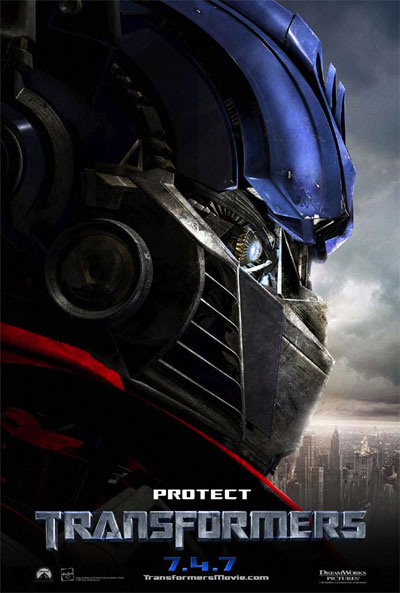
An ancient struggle re-erupts on Earth between two extraterrestrial clans, the heroic Autobots and the evil Decepticons, with a clue to the ultimate power held by a young teenager.
Transformers is a big, loud, dumb movie. That would be fine - I'd expect nothing less, especially from Michael Bay - if it were fun. But it isn't. It's just big, loud, and dumb.
What's wrong with it? Two things, namely: the script, and the action. Writers Roberto Orci & Alex Kurtzman spend a lot of time dilly-dallying, wasting our time with corny jokes, backstory and general B.S. before getting to the action. When it finally comes, the robots move too quickly, with their 'transformations' so visually complex, that it's difficult to follow. The result: boring boring boring.
How hard is it to make giant robots fun? Get 'em smashing shit and we've got a movie! You would think pairing Michael Bay and giant friggin' robots would be a match made in heaven. Hopefully they up the ante with the sequel, due this summer, cause this first installment was quite the snoozefest.
While being pursued by the government, an alien takes the form of a young widow's husband and asks her to drive him from Wisconsin to Arizona.
Jeff Bridges scored an Academy Award nomination for his performance as an otherworldly being adjusting to life on Earth in this film from John Carpenter and producer Michael Douglas (yes, THAT Michael Douglas). Surprisingly, it's the only film ever made by John Carpenter to garner a nomination, and as a result, exists as proof that all you really need to do to get an Oscar is mix some ticks with a stutter and act like a retard. The film itself is fine, if not a little dated - Carpenter handles the romantic stuff surprisingly well, and the story is effective, despite more recent thematic advances in mainstream science fiction. If you're a Carpenter fan in need of another weapon in arguing why Carpenter was one of the masters of genre, Starman makes a great addition to your arsenal. Otherwise, I'd recommend it for a quiet night with the significant other, if they're down with older-type flicks with 80's nostalgia appeal.
Tragedy besets a broken family when a mysterious uncle returns from prison with more on his mind than a happy reunion.
An unsettling film with a strong Southern voice, Undertow is a fine representation of David Gordon Green's skills as a director. While far from perfect - the script takes a while to get going, stumbles in some information reveals and relies a little heavily on Christ metaphors - Undertow is a captivating mix of melodrama, suspense, and horror. Green really makes the most of the setting, a Southern bayou, letting cinematographer Tim Orr really stretch his camera and get a good feel for the murky, hot, muddy surroundings. Performances from Josh Lucas, Jamie Bell, and Dermot Mulroney are more than passable, elevating the somewhat leaden script to a much scarier place. Ditto for composer Philip Glass's music, which certainly adds to the tension and moves many of the scenes. Under anyone else's supervision, Undertow may have been a sub-par or downright silly affair. But David Gordon Green and his crew make it something more: a sort of modern day Night of the Hunter, fairy-tale-esque and all the more tragic. Worth a watch.
During a local fishing contest, people are being mysteriously dragged into the lake and killed by a giant fish hook.
For a D-list film revolving around "Muskie Madness" and a fishing rod wielding killer, Blood Hook is a surprisingly satisfying (and unsurprisingly hilarious) adventure. Shot in 6 weeks with a cast and crew of non-professionals, the film looks like crap but is campy fun and a testament to the independent spirit. It's no surprise the director, Jim Mallon, went on to be part of Mystery Science Theater 3000 - Blood Hook is the exact kind of film those guys love to trash. Yet at the same time, it manages to be aware of the inner-workings of the genre, subverting some of the slasher flicks most timeworn cliches, including characters like the idiotic punk-rock teen, shell-shocked war vet, among others. While the plot may be completely ridiculous and full of Midwestern inside jokes, information is never revealed too quickly, and the story keeps you guessing up until the very end. Far more intelligent than it looks, Blood Hook is perfect for anyone who loves well thought out, shoe-string DIY horror trash.
Written by Robert Collector, Dana Olsen & William Goldman
Based on the book by H.F. Saint
After a freak accident, an invisible yuppie runs from a treacherous CIA official while trying to cope with his new life.
Horror master John Carpenter teams up with Chevy Chase in this bizarre effects-pushing adaptation of H.F. Saint's famous novel. Not quite a comedy (as Chase's presence would imply), not quite a horror film, and yet not quite a thriller, Memoirs is a bit of everything but not enough of anything. A fun film, but a weird one, it's not surprising audiences didn't connect with it during it's 1992 theatrical run. The tone is simply too scattered, and Chase too uncouth and indifferent a performer to keep it centered. I've always appreciated Chase's nonchalant style, but it feels really out of place here. Carpenter surrounds Chase with a bevy of quality supporting actors, but Sam Neil seems to be trying way too hard (it's almost like he's in a different movie), Darryl Hannah is just kind of there, and Michael McKean gets nothing to work with. The real highlight (at the time) must have been the invisible effects from Industrial Light & Magic. One year before Jurassic Park blew everyone's minds, ILM was tinkering with mixing CGI and practical effects on this film. Watch only if you're a fan of those involved, or have nothing better to do.
Written by Murray Salem, Herschel Weingrod & Timothy Harris
A police officer goes undercover as a kindergarten teacher to track down the wife and child of a ruthless drug lord.
This 1990 comedy is endlessly quotable, thanks to counter-programming Arnold Schwarzenegger's over-the-top action persona with a group of sharp-tongued little kids. Like many of Arnold's films the plot verges on completely ridiculous, and serves a fine helping of subverted genre cliches, including a crazed mother/son crime combo that make the Bates family look normal. A mild diversion, with the kind of dirty jokes involving kids that don't really make it into movies much anymore.
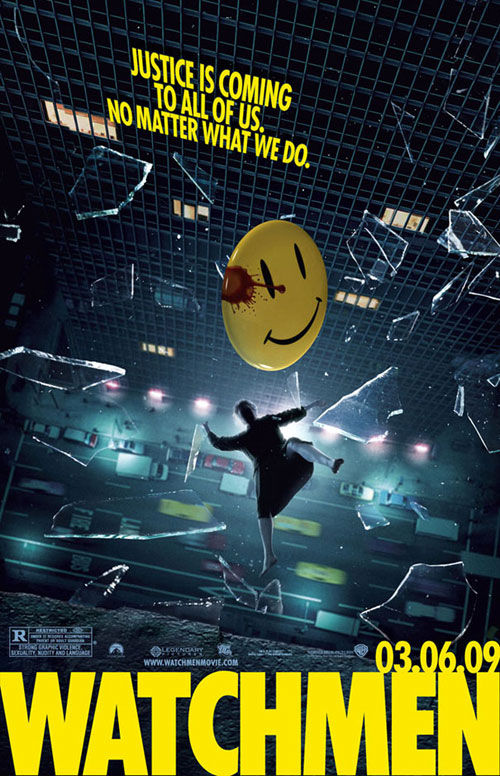
When an ex-superhero is murdered, a vigilante named Rorschach begins an investigation into the murder, which begins to lead to a much more terrifying conclusion.
Long considered 'unfilmable', Watchmen is one of the most celebrated graphic novels of all time, and often credited for ushering in an era of more serious, cerebral, adult-themed comic books. Hollywood took stabs at bringing Alan Moore & Dave Gibbon's time-altering, mind-bending grit fest to the screen for nearly 3 decades, with everyone from Paul Greengrass to Terry Gilliam to Michael Bay set to direct. Zack Snyder finally succeeded in producing the film, which finally hit theaters this week after much fanboy anticipation.
Fanboys like myself, who fell in the love with the graphic novel's sharp thematic and formal critique of the medium, as well as it's intense philosophical and political exploration, engrossing characters and wonderfully rich universe. Watchmen the novel is as complete a package as one could ever expect or want; a vast and detailed world with no stone unturned tenderly committed to the page.
Which begs the question -- why make it into a movie at all? Particularly one that adheres so faithfully to it's source?
Of course, that's the question I asked myself before the movie was released, and after having seen it, I'm not sure I have a full answer. From a business standpoint, I could understand why the movie was made -- large built-in fan base, a film that paves the way for grittier, more difficult graphic novel adaptations, and lots of fanboy cred for the distributors. But artistically, what are the merits? It seems there are some, but mainly the film exists as a celebration of Moore & Gibbon's work.
To their credit, Warner Brothers and Mr. Snyder have delivered one balls to the walls, full-force, hard R, uncompromising vision of Watchmen. Like the comic's creators, they left no stone unturned in bringing this epic to the big screen, inserting as much possible detail with extra care. For those unfamiliar with Watchmen's source, the film must be a dizzying experience with many WTF? moments, but fanboys rejoice: never has there been such a detailed adaptation in the history of the medium.
Snyder's visual flair and special effects prowess certainly help bring the panels to exacting life. Some sequences, particularly the Dr. Manhattan chapter, the back-peddling opening credits and almost anything involving Rorschach, are undeniably brilliant. Others, such as the Silk Spectre father reveal and the tweaked ending, lack some of the emotional punch delivered in the novel, but are nonetheless visually arresting.
Perhaps my biggest problem with the film is that it could never replicate all that the novel contains. Much of the climate of the Watchmen universe -- the nuclear war paranoia, the aggression towards authority figures, the degrading of social moral -- is reduced to blanket statements and quick set ups. The majority of the second and third tier characters present in the novel, many of which establish and elaborate these themes to flesh out the temporal backdrop, are absent here. Likewise, many details surrounding the characters origins are trimmed down, making their screen counterparts feel somewhat incomplete.
The music, too, felt jarring to me. The film deserves it's own original score, not some smattering of pop songs that vaguely adhere thematically to the action. I think Warner Brothers were a tad afraid of mainstream audience reactions, and figured if they put some huge pop hits behind some of the more audacious sequences it would make them more palatable. Maybe -- but it also severely undermined the tone. I highly doubt Hendrix would be blasting while Rorcshach and Nite Owl scourge Antarctica for Ozymandias's hideaway.
But with that said, it's amazing how much Synder and his team managed to cram into this two and a half hour epic, and it's even more amazing that Warner Brothers was willing to see through on his vision. This is one bloody disgusting, gut-wrenching, depressing, dark as hell film. It's views on humanity and social decency make Dark Knight look like kiddie play time. As does the on-screen sex and violence.
Watching the origins of Dr. Manhattan unfold on screen will remain one of my favorite cinematic moments for a long time. Billy Crudup does an amazing job and really nails the character to the T. But seeing it come alive, watching it unfold in real time -- nothing will ever compare. It's breathtaking. And that alone makes Watchmen worthy of repeat viewings.
And I definitely think I need to see it again, now that the fanboy giddiness is out of my system. It's hard to really critically assess Snyder's formal elements in that malaise. There is too much immediate beauty in the imagery to really look deep into what Snyder uses to shape the story. Regardless, Watchmen remains a unique ride, one that will (probably) never be duplicated.
The Oscars are only a week away, and I finally had some time to sit down and watch all the nominated animated shorts. As per usual, the selection comes from a variety of countries -- Russia, Japan, & France to name a few -- and feature styles ranging from computer animation to traditional hand-drawn. It's always a treat to get to see independent animation up on the big screen, but I felt this year's selection was a tad lackluster.
Of the five films up for the statue, Pixar's Presto was honest to God the best. As much as it hurts me to say it, the Pixar short was just more entertaining: livelier, brighter, sillier, and simply more impressive than the rest of the bunch. A relatively insignificant short about a hungry rabbit and his inept magician owner, the film looks gorgeous and stands head and shoulders above the other entries on technical terms. It goes up against three love stories (one about a Lavatory attendant in a nice but ultimately flat 2D flash design, one from Japan about an old man revisiting his life in gorgeous hand-drawn that's just too long and depressing, and another CG one about Octopi that just doesn't hold a candle to Pixar's lush lighting and shading techniques) and a silly CG animation about two pallbearers that just looks like crap (no offense, producers Mike Judge & Don Hertzfeldt. I still love you and the Animation Show).
The real treats lay in the short list entries, including Plympton's latest Dog short and a real gem from France titled Skhizein about a man who gets hit by a meteor. Worst of the lot was a 24 minute self aggrandizing, overly simplified treatise on the state of the environment called Varmints, directed by Marc Caste. Despite the lush CG and beautiful score by Icelandic composer Johann Johannsson, the film is a gratuitous plea for environmental change. I'll take my metaphors a little less ham-fisted, thank you.
All in all, last year's shorts were a better lot, and I'm surprised so many of the short-listed nominees didn't make it to the top five. Oh well. Either way, it's nice to be able to catch cartoons on the big screen, and I'm glad the AMPAS airs these guys out for everyone to see, even if it is just a glorified screener. (For those who see it -- be on the look out for awful, awful DVD style transitions with insipid quotes about the benefits of the short film medium).
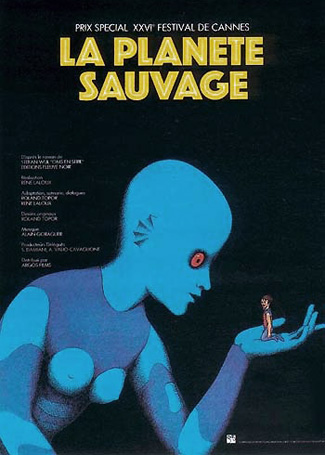
On a faraway planet where giants rule, tiny humanoids must fight for their lives and their equality.
This surreal animated film was winner of the Special Grand Prix at Cannes in 1973. Decades later it still reigns as one of the premier surrealist animated features. The film lives up to it's title; artist Ronald Topor populates the story with a host of strange creatures and bizarre landscapes. A beauty to behold, the animation and artistry of images is what makes the film work. Without it, it's a bland tale about learning to live in peace with mutual benefit. But do check it out if you're an animation junkie.
Oscar, an overlooked and bullied boy, finds love and revenge through Eli, a beautiful but peculiar girl who turns out to be a vampire.
A chilling film about adolescence, love, and vampires, Let the Right One In sounds like an arthouse grindcore mess but manages to marry budding romance with bloody horror in just the right way. Alfredson's snowy white/pitch black palate, cold Sweden setting and deliberate pacing create a truly unsettling mood, one that grows throughout the picture and shakes off any absurd notions that come with the idea of human/vampire love. The child actors are terrific, particularly Lina Leandersson as the ancient vampire Eli. And the film has plenty of blood and effects to keep any splatter fan happy, without being too silly. An original and enjoyable film that was unjustly shut out of this years Oscar race.
A young girl walks through a secret door in her new home and discovers an alternate version of her life.
I've seen Coraline twice now and I can't seem to get it out of my head. The mix of intense artistry and chilling children's fantasy is infectious, and incredibly beautiful. As of right now it's my top film of 2009 and sure to be on my top ten list come the end of the year.
There are two major reasons why I love this film. Number one: Henry Selick's incredibly detailed, labor of love animation. This is as good as it gets people -- a fully realized, amazingly in depth 3D world made entirely of miniature puppets and set pieces. A lot of heart and soul went into the making of this film, and every ounce of it shows on screen. Everything from the soundtrack to the V.O. to the little hairs on Coraline's head are pitch perfect. It's truly a wonder to behold, and infinitely more impressive than any computer generated image. It's a shame more filmmakers don't follow in his footsteps.
Number two: Neil Gaiman's beautiful story. A take on the classic Alice in Wonderland, down the rabbit hole type tale, the story of Coraline is as breathtakingly imaginative as the animation that brings it to life. Despite being a fantasy, it doesn't pander to overprotective parents and has some real scares that are sure to upset younger viewers. But no matter -- Gaiman knows that kids are braver than we give them credit, and it's refreshing to see a children's film that isn't all cute animals and silly colors.
The film does have its flaws. Some scenes drag on a tad too long and overall the screen story isn't as streamlined as the novel. But those are some small grievances that were easily overlooked on my first viewing. I may be biased as this film has a lot of elements that tickle my fancy, but seriously -- I don't think I could be friends with anyone who didn't like this film. Selick and Gaiman have done children (and adults) everywhere a service, creating a masterful and resonating work that should be cherished for generations.