Tuesday, February 17, 2009

Review: The 2009 Short Animated Film Oscar Nominees

The Oscars are only a week away, and I finally had some time to sit down and watch all the nominated animated shorts. As per usual, the selection comes from a variety of countries -- Russia, Japan, & France to name a few -- and feature styles ranging from computer animation to traditional hand-drawn. It's always a treat to get to see independent animation up on the big screen, but I felt this year's selection was a tad lackluster.

Nominee Photo Gallery

Of the five films up for the statue, Pixar's Presto was honest to God the best. As much as it hurts me to say it, the Pixar short was just more entertaining: livelier, brighter, sillier, and simply more impressive than the rest of the bunch. A relatively insignificant short about a hungry rabbit and his inept magician owner, the film looks gorgeous and stands head and shoulders above the other entries on technical terms. It goes up against three love stories (one about a Lavatory attendant in a nice but ultimately flat 2D flash design, one from Japan about an old man revisiting his life in gorgeous hand-drawn that's just too long and depressing, and another CG one about Octopi that just doesn't hold a candle to Pixar's lush lighting and shading techniques) and a silly CG animation about two pallbearers that just looks like crap (no offense, producers Mike Judge & Don Hertzfeldt. I still love you and the Animation Show).

The real treats lay in the short list entries, including Plympton's latest Dog short and a real gem from France titled Skhizein about a man who gets hit by a meteor. Worst of the lot was a 24 minute self aggrandizing, overly simplified treatise on the state of the environment called Varmints, directed by Marc Caste. Despite the lush CG and beautiful score by Icelandic composer Johann Johannsson, the film is a gratuitous plea for environmental change. I'll take my metaphors a little less ham-fisted, thank you.

All in all, last year's shorts were a better lot, and I'm surprised so many of the short-listed nominees didn't make it to the top five. Oh well. Either way, it's nice to be able to catch cartoons on the big screen, and I'm glad the AMPAS airs these guys out for everyone to see, even if it is just a glorified screener. (For those who see it -- be on the look out for awful, awful DVD style transitions with insipid quotes about the benefits of the short film medium).

Revisit: Fantastic Planet


An Anchor Bay release 1973

Directed by René Laloux

Written by Roland Topor & René Laloux

Based on the novel by Stefan Wul

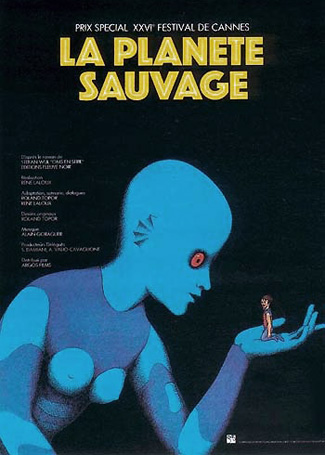
On a faraway planet where giants rule, tiny humanoids must fight for their lives and their equality.


This surreal animated film was winner of the Special Grand Prix at Cannes in 1973. Decades later it still reigns as one of the premier surrealist animated features. The film lives up to it's title; artist Ronald Topor populates the story with a host of strange creatures and bizarre landscapes. A beauty to behold, the animation and artistry of images is what makes the film work. Without it, it's a bland tale about learning to live in peace with mutual benefit. But do check it out if you're an animation junkie.

Review: Let the Right One In


A Magnolia Pictures release 2008

Directed by Tomas Alfredson

Written by John Ajvide Lindqvist

Oscar, an overlooked and bullied boy, finds love and revenge through Eli, a beautiful but peculiar girl who turns out to be a vampire.


A chilling film about adolescence, love, and vampires, Let the Right One In sounds like an arthouse grindcore mess but manages to marry budding romance with bloody horror in just the right way. Alfredson's snowy white/pitch black palate, cold Sweden setting and deliberate pacing create a truly unsettling mood, one that grows throughout the picture and shakes off any absurd notions that come with the idea of human/vampire love. The child actors are terrific, particularly Lina Leandersson as the ancient vampire Eli. And the film has plenty of blood and effects to keep any splatter fan happy, without being too silly. An original and enjoyable film that was unjustly shut out of this years Oscar race.

Review: Coraline


Written & Directed by Henry Selick

Based on the book by Neil Gaiman

A young girl walks through a secret door in her new home and discovers an alternate version of her life.


I've seen Coraline twice now and I can't seem to get it out of my head. The mix of intense artistry and chilling children's fantasy is infectious, and incredibly beautiful. As of right now it's my top film of 2009 and sure to be on my top ten list come the end of the year.

There are two major reasons why I love this film. Number one: Henry Selick's incredibly detailed, labor of love animation. This is as good as it gets people -- a fully realized, amazingly in depth 3D world made entirely of miniature puppets and set pieces. A lot of heart and soul went into the making of this film, and every ounce of it shows on screen. Everything from the soundtrack to the V.O. to the little hairs on Coraline's head are pitch perfect. It's truly a wonder to behold, and infinitely more impressive than any computer generated image. It's a shame more filmmakers don't follow in his footsteps.

Number two: Neil Gaiman's beautiful story. A take on the classic Alice in Wonderland, down the rabbit hole type tale, the story of Coraline is as breathtakingly imaginative as the animation that brings it to life. Despite being a fantasy, it doesn't pander to overprotective parents and has some real scares that are sure to upset younger viewers. But no matter -- Gaiman knows that kids are braver than we give them credit, and it's refreshing to see a children's film that isn't all cute animals and silly colors.

The film does have its flaws. Some scenes drag on a tad too long and overall the screen story isn't as streamlined as the novel. But those are some small grievances that were easily overlooked on my first viewing. I may be biased as this film has a lot of elements that tickle my fancy, but seriously -- I don't think I could be friends with anyone who didn't like this film. Selick and Gaiman have done children (and adults) everywhere a service, creating a masterful and resonating work that should be cherished for generations.

Review: Friday the 13th


A Warner Brothers release 2009

Directed by Marcus Nispel

Written by Damian Shannon & Mark Swift

A group of young adults discover a boarded up Camp Crystal Lake, where they soon encounter Jason Voorhees and his deadly intentions.


Not so much a reboot or remake as it is a sequel of sorts, the new Friday the 13th amalgamizes elements from the first three Jason movies to create a 'fresh start' for the series. Continuing where the original Friday the 13th left off -- with Jason's mother being brutally beheaded whilst her son watches in the darkness -- the film quickly dispenses its ludicrous plot involving a weed heist and starts the killing almost right away.

While Jason and his victims may have never looked as stylish or sexy as they do in this entry to the series, they've also never been so damn boring. The strength of a slasher always rests on the creativity of its kills, something this entry severely lacks. Most of the death scenes rely on run of the mill pop up/jump 'look out behind you!' scare tactics, or even blatantly rehash kills from early Jason flicks (ie: the famous jump through the window scene from Part II). Several key story elements, such as the manipulation of Jason's mommy complex, are all lifted from earlier Jason flicks. As a result the whole flick has a been there/done that, I-saw-that-coming-from-a-mile-away type feel.

Rather than amping the creativity of the kills and the omnipresent nature of Jason's character, the film relies on and retools the worst slasher cliches: annoying, bratty, stupid teens and their sick vices. While I commend the filmmakers for managing to get Willa Ford naked and showing an ample amount of breasts, it's hard to sit through a flick where the main characters keep saying "bro" and pound beers till they vomit. Truly they are better off dead. The stupidity and immorality of the victims has always been a major thematic point for these kind of flicks, but I'm not sure if they've ever been quite as vapid or abhorrent.

It would be nice, for a change, to see some relatively decent people go up against the monster that is Jason. Or, perhaps even better, some actual camp counselors. Why does the series always move away from the camp idea? Wouldn't it be more terrifying to see some teenagers dealing with young children as well as a masked psycho killer? Balancing responsibility with survival? Camp Crystal Lake is barely present in these films anymore (at least beyond an overgrown forest/murder scene), and it would be nice to see it return.

Ultimately this reboot/rehash/whatever was all about streamlining the inconic killer and making a version that adhered to our modern technical standards. On that level it succeeds. But as entertainment it's completely inept. Amping all the intolerable cliches and lacking any real creativity, Friday the 13th is a truly awful representation of the slasher genre. Hearing that the guys responsible for this are planning a Nightmare on Elm Street reboot sends shudders through my spine...

Monday, February 02, 2009

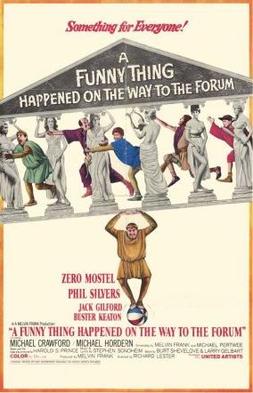
Revisit: A Funny Thing Happened on the Way to the Forum


An MGM release 1966

Directed by Richard Lester

Written by Melvin Frank & Michael Pertwee
Based on the musical play by Burt Shevelove & Larry Gelbart
With lyrics by Stephen Sondheim


It's a shame Buster Keaton spends his last screen credit hiding in the shadows of Zero Mostel -- not that Mr. Mostel wasn't a terrifically talented performer, but this aborted fetus of a musical-comedy doesn't do either of them justice.

Released at the low-point of musical-comedy's popularity, this Forum is a stripped down version of the stage play, substituting most of Sondheim's trademark bouncy show tunes with sight gags, puns & wordplay.

I watched this because I was in the stage version in high school and wanted to see how it translated to film. I got my answer: it doesn't. Without the songs, there simply isn't much to go on; stripping to the show to it's essence you sort of realize slavery, prostitutes and Greek tragedy aren't that funny. Add in tons of jokes that are more stale that Roman fresco and you've got yourself one cornball comedy. Likewise, the directorial 'flashes', including jump cuts and the kind of dance sequences Mel Brooks liked to spoof, don't add much flavor.

The cast is terrific -- Phil Silvers, Zero Mostel, Jack Gilford and Mr. Keaton all working hard to elevate the material. They are a pleasure to watch. But it's just not enough. This is a story meant for the stage -- where you can feel the energy -- not the screen.

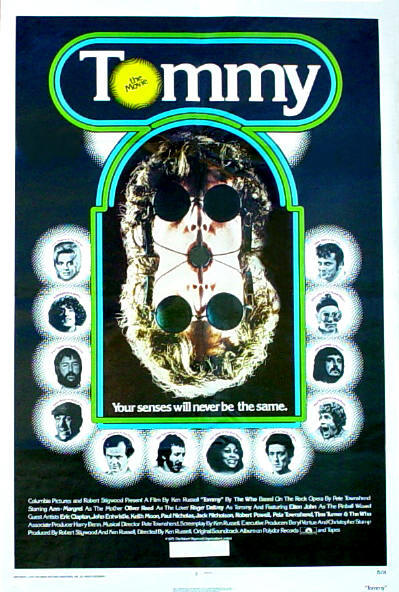
Revisit: Tommy


A Columbia Pictures release 1975

Written & Directed by Ken Russell
Based on the album by The Who

A deaf, dumb and blind boy becomes a master pinball player and the object of a religious cult.


Ken Russell's 1975 adaptation of the classic Who concept album is a psychedelic kaleidoscope, a smattering of elaborate set-pieces, insane costumes and cartoon colors set the tune of Pete Townsend's windmill licks. It's a lot of fun in that tripped out, self-important yet actually silly & superfluous 70's way. It features the band along with several name actors -- Oliver Reed, Ann-Margaret (in an Oscar nominated turn), Jack Nicholson -- as well as other musicians -- Eric Clapton, Elton John, Tina Turner -- as they tell the story of Tommy, the famed deaf/dumb/blind pinball wizard.

What strikes me most about this film is how it jumbles the story and song out of sequence from the album to bring its vision to life. They make a lot of changes to the source material and take the story down a path I had never truly envisioned in my own head. Tommy was my favorite album growing up -- I used to listen to it every night as I went to bed -- so you could say I have some personal attachment to it. Little details, like the fact that the song "1921" was changed to "1951" so the setting would make sense, seem like strange and unnecessary compromises, while other songs, like "Cousin Kevin", are put to image perfectly. Overall it's a fun film and certainly engaging visually (as Ken Russell films usually are), so it's worth a watch if you're a fan of The Who.

Friday, January 23, 2009

Revisit: The Thief of Bagdad


A United Artists film 1940

Directed by:
Ludwig Berger
Michael Powell
Tim Whelan
Alexander Korda(uncredited)
Zoltan Korda (uncredited)
William Cameron Menzies (uncredited)

Written by Miles Malleson

Prince Ahmad is the rightful King of Bagdad but has been blinded and cast out as a beggar. Together with Abu, the best thief in all Bagdad, the Prince sets out on a series of adventures that involve a Djinni in a bottle, a mechanical flying horse, an all-seeing magic jewel, a flying carpet and a beautiful princess in order to restore his kingdom from the wicked Grand Vizier Jaffar.


Old school Hollywood in all its splendor, The Thief of Bagdad features exotic locales (!), amazing special effects (!), beautiful women (!), and high-flying action (!), all in glorious Technicolor (!!!). Not to be confused with the (arguably better) 1924 silent film of the same name, this Thief cobbles its plot from a bunch of stories out of Arabian Nights, which makes for some spectacular sequences that were then re-imaged for the Disney animated film Aladdin.

The film is delightfully simple stuff -- easy to digest and fun to look at with a lot happening on screen but little going on up stairs. For some reason, none of the actors are Arab -- Sabu (who plays Abu in the film, why'd they even bother to change his name?) is the most famous actor here, and the most ethnic, having been one of the first Indian actors in Hollywood. It also marks John Justin's film debut, a British stage actor who occasionally dabbled in film. He sports a hilarious thin-lip-stache and struggles to hide his British roots throughout the film. We had a lot of fun making jokes at his expense while watching.

Legend has it that producer Alexander Korda was so demanding that he went through six directors during the making of this film, including his brother Zoltan Korda and leading art director William Cameron Menzies. Not shocking -- everything presented on screen, from the lavish set pieces to the extravagant effects to the pastel-saturated color scheme looks expensive as hell, especially considering the time. This is one of the best example of early big budget Hollywood movie-making one could find. Worth watching if you dig that sort of thing.

Thursday, January 22, 2009

2008 Oscar Nominations


The 2008 Oscar Nominations were released today, and while there were a few surprises, mostly I think this list stinks of mediocrity. What a bad year for movies, 2008! Dark Knight got snubbed (as we all expected) for... The Reader? Really?... while Slumdog & Benjamin Button lead the pack with 10 & 13 nominations respectively.

Slumdog isn't my kind of fare but I can see why people liked it -- uplifting, exotic, moving, and contrived, it's definitely a romanticized viewpoint of the world and a treatise on fate, love, & destiny, which is a subject people tend to cling to. Outside of the technical achievements, I have no idea what anyone liked about Benjamin Button. A crapfest in every sense of the word, it was by far the most snooze-inducing, mind-numbingly vacant film I'd seen all year.

That said, I'm really glad to see Michael Shannon get his due for Revolutionary Road. The man slays in the picture, and is a fantastic actor all around that elevates basically every project I've ever seen him in, so kudos to that. Likewise for Josh Brolin in Milk, which was a fantastic and understated performance from a man who's had one hell of a track record as of late. Of course they'll both lose to Dead Ledger, but that's fine -- Dark Knight was my favorite film of the year and he was incredible.

The only other surprise was the snubbing of both Bruce Springsteen & Clint Eastwood in the Best Original Song category. The academy must really love that westernized India shit; I didn't even realize Slumdog had 'original songs'.

Otherwise this list just sort of stands to show how boring boring boring boring 2008 was for movies. None of the top films are that memorable, nor would I bother to watch any again (except maybe Milk). Truly this is one of the lousiest Oscar nomination lists I've ever seen.

Oh well. What's done is done. I guess I'll have to check out the Animated Shorts soon as they make the theater rounds. Here's the full list of nominees:

Best Motion Picture of the Year

*The Curious Case of Benjamin Button (2008): Ceán Chaffin, Kathleen Kennedy, Frank Marshall
*Frost/Nixon (2008): Brian Grazer, Ron Howard, Eric Fellner
*Milk (2008): Bruce Cohen, Dan Jinks
*The Reader (2008): Nominees to be determined
*Slumdog Millionaire (2008): Christian Colson

Performance by an actor in a leading role

* Richard Jenkins in “The Visitor” (Overture Films)
* Frank Langella in “Frost/Nixon” (Universal)
* Sean Penn in “Milk” (Focus Features)
* Brad Pitt in “The Curious Case of Benjamin Button” (Paramount and Warner Bros.)
* Mickey Rourke in “The Wrestler” (Fox Searchlight)

Performance by an actor in a supporting role

* Josh Brolin in “Milk” (Focus Features)
* Robert Downey Jr. in “Tropic Thunder” (DreamWorks, Distributed by DreamWorks/Paramount)
* Philip Seymour Hoffman in “Doubt” (Miramax)
* Heath Ledger in “The Dark Knight” (Warner Bros.)
* Michael Shannon in “Revolutionary Road” (DreamWorks, Distributed by Paramount Vantage)

Performance by an actress in a leading role

* Anne Hathaway in “Rachel Getting Married” (Sony Pictures Classics)
* Angelina Jolie in “Changeling” (Universal)
* Melissa Leo in “Frozen River” (Sony Pictures Classics)
* Meryl Streep in “Doubt” (Miramax)
* Kate Winslet in “The Reader” (The Weinstein Company)

Performance by an actress in a supporting role

* Amy Adams in “Doubt” (Miramax)
* Penélope Cruz in “Vicky Cristina Barcelona” (The Weinstein Company)
* Viola Davis in “Doubt” (Miramax)
* Taraji P. Henson in “The Curious Case of Benjamin Button” (Paramount and Warner Bros.)
* Marisa Tomei in “The Wrestler” (Fox Searchlight)

Best animated feature film of the year

* “Bolt” (Walt Disney), Chris Williams and Byron Howard
* “Kung Fu Panda” (DreamWorks Animation, Distributed by Paramount), John Stevenson and Mark Osborne
* “WALL-E” (Walt Disney), Andrew Stanton

Achievement in art direction

* “Changeling” (Universal), Art Direction: James J. Murakami, Set Decoration: Gary Fettis
* “The Curious Case of Benjamin Button” (Paramount and Warner Bros.), Art Direction: Donald Graham Burt, Set Decoration: Victor J. Zolfo
* “The Dark Knight” (Warner Bros.), Art Direction: Nathan Crowley, Set Decoration: Peter Lando
* “The Duchess” (Paramount Vantage, Pathé and BBC Films), Art Direction: Michael Carlin, Set Decoration: Rebecca Alleway
* “Revolutionary Road” (DreamWorks, Distributed by Paramount Vantage), Art Direction: Kristi Zea, Set Decoration: Debra Schutt

Achievement in cinematography

* “Changeling” (Universal), Tom Stern
* “The Curious Case of Benjamin Button” (Paramount and Warner Bros.), Claudio Miranda
* “The Dark Knight” (Warner Bros.), Wally Pfister
* “The Reader” (The Weinstein Company), Chris Menges and Roger Deakins
* “Slumdog Millionaire” (Fox Searchlight), Anthony Dod Mantle

Achievement in costume design

* “Australia” (20th Century Fox), Catherine Martin
* “The Curious Case of Benjamin Button” (Paramount and Warner Bros.), Jacqueline West
* “The Duchess” (Paramount Vantage, Pathé and BBC Films), Michael O’Connor
* “Milk” (Focus Features), Danny Glicker
* “Revolutionary Road” (DreamWorks, Distributed by Paramount Vantage), Albert Wolsky

Achievement in directing

* “The Curious Case of Benjamin Button” (Paramount and Warner Bros.), David Fincher
* “Frost/Nixon” (Universal), Ron Howard
* “Milk” (Focus Features), Gus Van Sant
* “The Reader” (The Weinstein Company), Stephen Daldry
* “Slumdog Millionaire” (Fox Searchlight), Danny Boyle

Best documentary feature

* “The Betrayal (Nerakhoon)” (Cinema Guild), A Pandinlao Films Production, Ellen Kuras and Thavisouk Phrasavath
* “Encounters at the End of the World” (THINKFilm and Image Entertainment), A Creative Differences Production, Werner Herzog and Henry Kaiser
* “The Garden” A Black Valley Films Production, Scott Hamilton Kennedy
* “Man on Wire” (Magnolia Pictures), A Wall to Wall Production, James Marsh and Simon Chinn
* “Trouble the Water” (Zeitgeist Films), An Elsewhere Films Production, Tia Lessin and Carl Deal

Best documentary short subject

* “The Conscience of Nhem En” A Farallon Films Production, Steven Okazaki
* “The Final Inch” A Vermilion Films Production, Irene Taylor Brodsky and Tom Grant
* “Smile Pinki” A Principe Production, Megan Mylan
* “The Witness - From the Balcony of Room 306” A Rock Paper Scissors Production, Adam Pertofsky and Margaret Hyde

Achievement in film editing

* “The Curious Case of Benjamin Button” (Paramount and Warner Bros.), Kirk Baxter and Angus Wall
* “The Dark Knight” (Warner Bros.), Lee Smith
* “Frost/Nixon” (Universal), Mike Hill and Dan Hanley
* “Milk” (Focus Features), Elliot Graham
* “Slumdog Millionaire” (Fox Searchlight), Chris Dickens

Best foreign language film of the year

* “The Baader Meinhof Complex” A Constantin Film Production, Germany
* “The Class” (Sony Pictures Classics), A Haut et Court Production, France
* “Departures” (Regent Releasing), A Departures Film Partners Production, Japan
* “Revanche” (Janus Films), A Prisma Film/Fernseh Production, Austria
* “Waltz with Bashir” (Sony Pictures Classics), A Bridgit Folman Film Gang Production, Israel

Achievement in makeup

* “The Curious Case of Benjamin Button” (Paramount and Warner Bros.), Greg Cannom
* “The Dark Knight” (Warner Bros.), John Caglione, Jr. and Conor O’Sullivan
* “Hellboy II: The Golden Army” (Universal), Mike Elizalde and Thom Floutz

Achievement in music written for motion pictures (Original score)

* “The Curious Case of Benjamin Button” (Paramount and Warner Bros.),Alexandre Desplat
* “Defiance” (Paramount Vantage), James Newton Howard
* “Milk” (Focus Features), Danny Elfman
* “Slumdog Millionaire” (Fox Searchlight), A.R. Rahman
* “WALL-E” (Walt Disney), Thomas Newman

Achievement in music written for motion pictures (Original song)

* “Down to Earth” from “WALL-E” (Walt Disney), Music by Peter Gabriel and Thomas Newman, Lyric by Peter Gabriel
* “Jai Ho” from “Slumdog Millionaire” (Fox Searchlight), Music by A.R. Rahman, Lyric by Gulzar
* “O Saya” from “Slumdog Millionaire” (Fox Searchlight), Music and Lyric by A.R. Rahman andMaya Arulpragasam

Best motion picture of the year

* “The Curious Case of Benjamin Button” (Paramount and Warner Bros.), A Kennedy/Marshall Production, Kathleen Kennedy, Frank Marshall and Ceán Chaffin, Producers
* “Frost/Nixon” (Universal), A Universal Pictures, Imagine Entertainment and Working Title Production,Brian Grazer, Ron Howard and Eric Fellner, Producers
* “Milk” (Focus Features), A Groundswell and Jinks/Cohen Company Production, Dan Jinks and Bruce Cohen, Producers
* “The Reader” (The Weinstein Company), A Mirage Enterprises and Neunte Babelsberg Film GmbH Production, Nominees to be determined
* “Slumdog Millionaire” (Fox Searchlight), A Celador Films Production,Christian Colson, Producer

Best animated short film

* “La Maison en Petits Cubes” A Robot Communications Production, Kunio Kato
* “Lavatory - Lovestory” A Melnitsa Animation Studio and CTB Film Company Production, Konstantin Bronzit
* “Oktapodi” (Talantis Films) A Gobelins, L’école de l’image Production, Emud Mokhberi and Thierry Marchand
* “Presto” (Walt Disney) A Pixar Animation Studios Production, Doug Sweetland
* “This Way Up”, A Nexus Production, Alan Smith and Adam Foulkes

Best live action short film

* “Auf der Strecke (On the Line)” (Hamburg Shortfilmagency), An Academy of Media Arts Cologne Production, Reto Caffi
* “Manon on the Asphalt” (La Luna Productions), A La Luna Production, Elizabeth Marre and Olivier Pont
* “New Boy” (Network Ireland Television), A Zanzibar Films Production, Steph Green and Tamara Anghie
* “The Pig” An M & M Production, Tivi Magnusson and Dorte Høgh
* “Spielzeugland (Toyland)” A Mephisto Film Production, Jochen Alexander Freydank

Achievement in sound editing

* “The Dark Knight” (Warner Bros.), Richard King
* “Iron Man” (Paramount and Marvel Entertainment), Frank Eulner and Christopher Boyes
* “Slumdog Millionaire” (Fox Searchlight), Tom Sayers
* “WALL-E” (Walt Disney), Ben Burtt and Matthew Wood
* “Wanted” (Universal),Wylie Stateman

Achievement in sound mixing

* “The Curious Case of Benjamin Button” (Paramount and Warner Bros.), David Parker, Michael Semanick, Ren Klyce and Mark Weingarten
* “The Dark Knight” (Warner Bros.), Lora Hirschberg, Gary Rizzo and Ed Novick
* “Slumdog Millionaire” (Fox Searchlight), Ian Tapp, Richard Pryke and Resul Pookutty
* “WALL-E” (Walt Disney),Tom Myers, Michael Semanick and Ben Burtt
* “Wanted” (Universal), Chris Jenkins, Frank A. Montaño and Petr Forejt

Achievement in visual effects

* “The Curious Case of Benjamin Button” (Paramount and Warner Bros.), Eric Barba, Steve Preeg, Burt Dalton and Craig Barron
* “The Dark Knight” (Warner Bros.), Nick Davis, Chris Corbould, Tim Webber and Paul Franklin
* “Iron Man” (Paramount and Marvel Entertainment), John Nelson, Ben Snow, Dan Sudick and Shane Mahan

Adapted screenplay

* “The Curious Case of Benjamin Button” (Paramount and Warner Bros.), Screenplay by Eric Roth, Screen story by Eric Roth and Robin Swicord
* “Doubt” (Miramax), Written by John Patrick Shanley
* “Frost/Nixon” (Universal), Screenplay by Peter Morgan
* “The Reader” (The Weinstein Company), Screenplay by David Hare
* “Slumdog Millionaire” (Fox Searchlight), Screenplay by Simon Beaufoy

Original screenplay

* “Frozen River” (Sony Pictures Classics), Written by Courtney Hunt
* “Happy-Go-Lucky” (Miramax), Written by Mike Leigh
* “In Bruges” (Focus Features), Written by Martin McDonagh
* “Milk” (Focus Features), Written by Dustin Lance Black
* “WALL-E” (Walt Disney), Screenplay by And

Tuesday, January 20, 2009

FUCK YOU!

You twee-loving arrested-adolescent cutesy-wutesy hipster bullshit fucks. Fuck each and every last one of you. And get out of Brooklyn!!!

Thanks to Noel Murray for writing the review I've been wanting to read for quite some time. I heard about this flick a while back and it made me want to punch face. Glad to hear someone agrees.

Text bold by yours truly to accentuate the awesomeness of this review.

From the AV Club:

Paper Heart

Director: Nicholas Jasenovec (88 min.)
Cast: Charlyne Yi, Michael Cera, Jake Johnson
Headline: Alternative comedian goes looking for love, is unsure if she’s found it
Indie type: Faux-profound faux-doc

Report: Here’s another movie like Cold Souls in which the actors play “themselves” in a plot rooted in an abstract concept. Ostensibly a documentary about the existence of “love” and whether comedian/performance-artist/flibbertigibbet Yi will ever find a love of her own, Paper Heart cuts between scenes of Yi grilling everyday Americans about their romantic histories and scenes of her embarking on a new relationship with puppyish actor Michael Cera. Jasenovec and Yi want to play with the idea of documentary realism and human emotion, by showing scenes of genuine human interaction and then pulling back to reveal that they’re just “scenes.” But beyond the fact that this kind of “living in the camera eye” experiment has been done to death, Paper Heart fails because the very idea of making a playful documentary about whether love exists is, let’s be honest, incredibly dopey. (And I mean “dope” in every sense of the word.) And it doesn’t help that Yi comes off like every arrested-adolescent college sophomore who still carries a lunchbox and thinks kissing is icky, even though she’s still enamored of the idea of having a boyfriend (in an elementary school, passing-notes-at-lunch kind of way). True, those horrible, horrible people are very much a part of American life—they’re a byproduct of a culture in which growing the hell up has become less and less of a priority—but their habits and ways have been pretty well dissected in the recent films of Andrew Bujalski, Joe Swanberg and Greta Gerwig, all of whom apply a fair amount of self-criticism to their inside-out depictions of prolonged post-grad juvenilia. Yi, on the other hand, apparently thinks this crap is still cute. So she concoct this quirk-beset quasi-documentary in which people talk about “love” as though it has nothing to do with commitment, responsibility, sharing, nurturing, and—not incidentally—sex. Frankly, I’ve been over these kinds of movies (and attitudes) for some time now. But there’s really no place for Paper Heart in a post-Humpday world.

Grade: D-

Revisit: Stroszek


An Anchor Bay release 1976

Written & Directed by Werner Herzog

In Berlin, an alcoholic man, recently released from prison, joins his elderly friend and a prostitute in a determined dream to leave Germany and seek a better life in Wisconsin.

Herzog's second masterpiece with muse Bruno S., Stroszek is a deconstruction of the American Dream as it is confronted by reality, and (as always!) the inability to communicate. Bruno expects riches when he comes to the states, but he finds his girlfriend is still a whore and no one can understand him, nor he understand them. The film is sad, beautiful, and hilarious. Typical Herzog firing at all cylinders. A must see.

SPOILER: THIS IS THE FAMOUS ENDING SEQUENCE, WHICH IS GODDAMN AMAZING

Revisit: The Dark Crystal


A Universal Pictures release 1982

Directed by Jim Henson & Frank Oz

Written by Jim Henson & David Odell

On another planet in the distant past, a Gelfling embarks on a quest to find the missing shard of a magical crystal, and so restore order to his world.


I miss Jim Henson. The man was an incredibly vibrant creative force who's energy and creative philosophy you can feel pulsating through each of the film's he touched. The Dark Crystal, in particular, is brimming with Henson's personal touch -- from the bevy of creatures they created to populate the world, to the spot on characterizations of each Muppet, you can feel his presence hovering over the film throughout.

Dark Crystal is your typical fantasy fare: a strange land is in peril, and a young hero has been chosen to save the day. But what separates Dark Crystal from other fantasy epics is the amount of visual detail, flair, and attention paid to the most minute of characters. The Muppet performers are delightful, wringing personality and life out of every little piece of cloth. Particularly impressive are the vile Skeksis, who look like vultures mixed with Victorian era-elitists. A dinner scene featuring these disgusting creature is particularly hilarious, and like something straight out of Bunuel. The film is just as well shot too -- a beautiful landscape sequence shows thousands of Henson's Muppet creations marching through the desert, almost blending into the background as they slowly walk past.

If you like fantasy, Muppets, or just plain old cool special effects, Dark Crystal is a must see. The sheer magnitude of the production -- thousands of tiny little puppets and effects -- is almost unbelievable. They simply don't make movies like this any more.

Revisit: The Neverending Story


A Warner Brothers film 1980

Directed by Wolfgang Petersen

Written by Wolfgang Petersen & Herman Weigel
Based on the novel by Michael Ende

A troubled boy dives into a wonderous fantasy world through the pages of a mysterious book.


This effects-ridden fantasy film by German filmmaker Wolfgang Peterson, best known for action set pieces like Air Force One and Das Boot, was a failure at the box office when it was released, but quickly garnered a large cult following, and in turn a bevy of sequels, as well as an animated series. Based (somewhat) on the book of the same name, it follows the usual fantasy epic trajectory -- a vague evil is plaguing the land, and some young buck hero is fabled to stop it. The effects aren't quite as impressive as The Dark Crystal, nor is the land littered with as many quirks and quips to really bring it to life. But the story is simple and engaging enough that I could see why children would enjoy it.

This Family Guy spoofs sums up the best parts of the film pretty well:

Revisit: Cobra Verde


An Anchor Bay release 1987

Written & Directed by Werner Herzog

Based on the novel by Bruce Chatwin

In the Nineteenth Century, feared bandit Francisco Manoel da Silva (Cobra Verde) is sent to Almeria, in the West of Africa, to negotiate for slaves with the crazy African King Abomey, as opposition towards the trade grows.


This film is a tough one, especially for Herzog, who tries to combine his typical 'portrait of the insane' with the beauty of nature while discussing the most deplorable African slave trade. Klaus Kinski plays the bandit Cobra Verde -- his atypical step-behind-the-times-totally-batshit-crazy type character -- who is injected into the slave trade at the end of it's run. Language plays a major theme, as it does in many of Herzog's films -- the film stresses the difficulty of global communication in the 19th century and deals with cross-cultural miscommunication and misunderstanding. But ultimately the film suffers from the weight of its subject matter -- it can't help escape a sort of 'been there, done that' feeling for all the major players, and the deplorable nature of the slave trade overshadows the struggles of the titular character, no matter how insane we already know he may be. Aside from the fantastic end sequence (which I've posted below), and some gorgeous shots of the African landscape and peoples, the film fails to tread any new ground for it's director or performer.

Revisit: Phantom of the Paradise


A 20th Century Fox release 1974

Written & Directed by Brian De Palma

Music by Paul Williams

A disfigured musician sells his soul for the woman he loves so that she will perform his music.


Silly, surreal, insane, dumb, infectious and hilarious, Brian De Palma's 1974 gothic rock opera Phantom of the Paradise is deliciously absurd, and one of my favorite films. Starring the beautiful Jessica Harper (best known from another one of my favorites, Suspiria) and legendary Muppets/Carpenters songwriter Paul Williams, the film is basically a suped-up, drugged up, 70's version of Phantom of the Opera.

The first time I watched this I was quite infuriated; I had no idea what was going on, what the point of it was, why the characters were breaking out into such awful songs. By the end of my first viewing, I was hooked. The film has a 'so bad it's good' quality to it, until you realize that it's actually a work of genius. The off-beat music, the ridiculous costumes, the absurd humor -- it all works together to form this highly energetic, completely insane film that can never be duplicated.

I have a particular fondness for this film, and I know not everyone enjoys it as much as I do. But give it a shot -- you may find it delightfully entertaining.

Revisit: Lifeforce


A TriStar Pictures release 1985

Directed by Tobe Hooper

Written by Dan O'Bannon & Don Jakoby
Based on the novel by Colin Wilson

A space shuttle mission investigating Halley's Comet brings back a malevolent race of space vampires.


80's horror masters Wes Craven, John Carpenter, George Romero, and Tobe Hooper all enjoyed mixing pop genres with psychoanalytic sex, and Lifeforce is no exception -- in fact, it's entirely built upon that idea. Combining elements from Alien, Night of the Living Dead, and Nosferateu, Lifeforce happily borrows elements from sci-fi to horror and throws a bit of eroticism in the mix to create a silly mess of genre conventions, B-level special effects, and sexual commentary. The Species-like plot follows two British Secret Agents as they try to track down a (very) naked girl-alien-vampire-from-space who's sucking the life out of the unknowing public and turning her victims into bone-dry zombies who crave souls.

Really, this movie is only worth your time if you fall into any of these categories:

1) You're a sucker for mixed horror/sci-fi genre fare or enjoy the lesser known work of famed horror directors.

2) Constantly topless women and an insane amount of B-level special effects (explosions, people turning to dust, zombies, etc.) is your idea of a good time.

Keep an eye open for a young Patrick Stewart, and the fantastically hilarious faces he makes throughout the film.

Friday, January 16, 2009

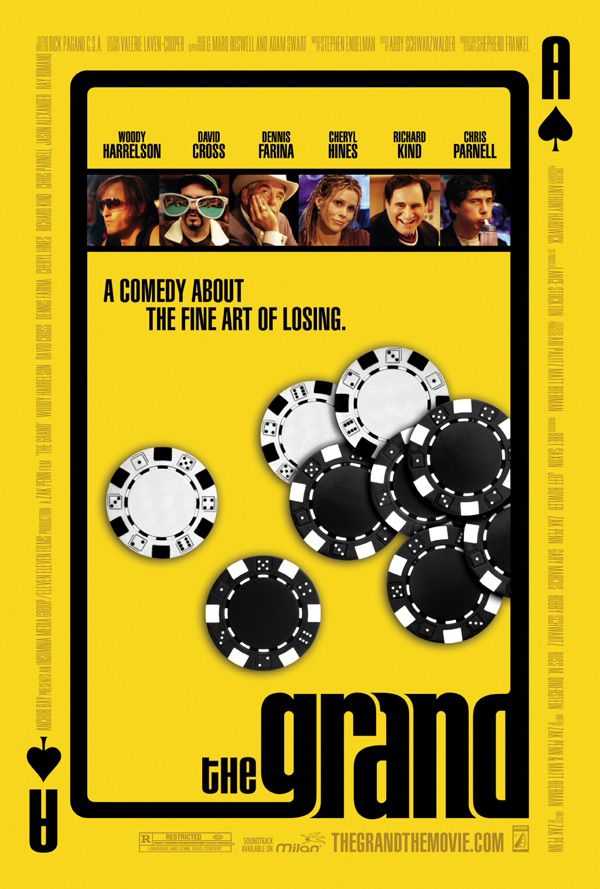
Revisit: The Grand


An Anchor Bay release 2007

Directed by Zak Penn

Written by Zak Penn & Matt Bierman

An improvisational comedy using a handful of actors playing characters competing in an actual poker tournament.


This movie is terrible. Not funny, not interesting, really dumb and lame. All sorts of bad.

Worst of all, they somehow convinced Werner Herzog to be in it, playing a German stereotype. I don't know if he needed the money to fund his next trip into the jungle or what, but poor Herzog. He provides the only real amusement, but at what cost?

According to IMDB, "The script was barely 29 pages long. Zak Penn had the actors improvise." Basically a bunch of actors did it as a favor for their writer/director pals and just decided to dick around. They probably had some fun making it, too. But it ain't no fun to watch. Seriously -- don't watch this crap.

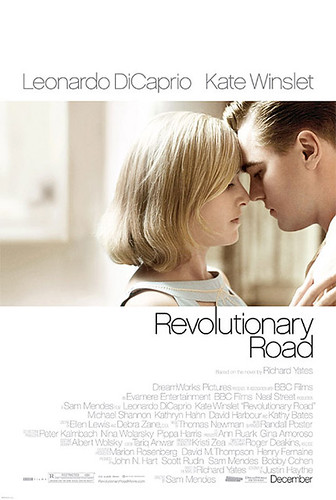
Review: Revolutionary Road


A Paramount Vantage release 2008

Directed by Sam Mendes

Written by Justin Haythe
Based on the novel by Richard Yates

A young couple living in a Connecticut suburb during the mid-1950s struggle to come to terms with their personal problems while trying to raise their two children.


This talky drama often feels more like a play than a film, but considering the talent of all involved that's not necessarily a bad thing. Leonardo DiCaprio, Kate Winslet, and Kathy Bates reunite for the first time in ten years since 1998's Titanic in this stirring drama, deftly handled by Winselt's husband and Oscar winner Sam Mendes (American Beauty, Road to Perdition).

The script is a little overt at times -- there's a lot of yelling about 'dissatisfaction' and 'this empty/hopeless/bleak life' -- but the performers have such natural chemistry and talent that they manage to elevate some of the more leaden dialogue into something more honest and heart-wrenching. Particularly impressive is veteran stage actor and Bug star Michael Shannon, who's electric, albeit brief turn as the so considered 'insane' son of Kathy Bates literally tears the screen apart. This is some of the finest acting you'll see all year, and it's a shame Shannon's screen time is so brief, or he'd be a shoo-in Oscar contender.

What struck me most about this film was the amount of humor it managed to wring out of such bleak, serious material. I'm not talking inappropriate laughs, either -- there were some genuinely humorous moments in this film. A lot of this can be attributed to the talented performers, who create real people with real struggles, rather than stage performances or succumb to their star qualities.

The film is, ultimately, a condemnation of American conformity in the 1950's. Another reason for some of the weightiness of the dialogue is that the film begins with a couple already past their breaking point. April's acting aspirations are revealed and cut down immediately in the opening scenes -- from here on out we are meant to understand her sacrifice to Frank and their suburban lifestyle. Frank, on the other hand, has no real aspirations of his own, and so his inability to look beyond the life they've already established is a natural track. Doing the minimum to get by at work without developing any alternative self, Frank finds himself earning a promotion -- a damning hypocrisy of the American workplace -- in contrast with April's taking concrete steps to accomplish their move to Paris. When that plan falls through, April becomes distraught, disillusioned, and broken -- the American dream is dead.

Winslet won a Golden Globe for her performance and is the front runner tapped for this year's Oscar -- much deserved. The film is carried by the actor's performances and hers is an especially difficult role. It's a crying shame to me that Mr. Shannon isn't receiving the same sort of accolades, but the mere fact that he can hold his weight with such heavy hitters shows a lot of promise for the future.

While not the best film of the year, or even the best condemnation of American conformity put to celluloid, Revolutionary Road is a good film, one worth seeking out if only for the performances. It also really makes me want to read the book by Richard Yates -- anything that makes me want to read I figure is a good thing.

Thursday, January 15, 2009

Revisit: The Enigma of Kasper Hauser


A New Yorker Films release 1975

Written & Directed by Werner Herzog

Based upon the true and mysterious story of Kaspar Hauser, a young man suddenly appears in Nuremberg in 1828, barely able to speak or walk. His benefactor attempts to integrate him into society, with intriguing results.


Herzog's Kasper Hauser tackles the German equivalent of the French L'Enfant sauvage -- a real life wild child, abandoned at birth and void of any linguistic or cultural understanding of the world. As doctors, scientists, and the cultural elite try to 'educate' the boy, tension mounts, and the child ultimately rejects civilization, preferring to run amok in nature.

But where Truffaut's L'Enfant Sauvage focuses on the struggles of the educator (indulgently, I might add, as Truffaut cast himself in the role of Dr. Itard), Herzog's film uses Hauser as a tool to question language, religion, and society as a whole.

After all, what would happen if a person had no concept of speech, of writing, of God? How would he react when presented with such things? Herzog tackles all these issues through Hauser's 'education', and, in typical Herzog fashion, they provide a springboard for some beautiful natural imagery and a condemnation of the 'unnatural' acts of man.

As always, Herzog's camera is constantly probing the Earth, and we get some beautiful shots here -- a gull picking apart a frog, plants spiraling out of the ground, shimmering lakes and stormy deserts. Likewise, Herzog cast the perfect actor as his idiot child -- Bruno S., the real life abandoned musician whose broken speech and awkward mannerisms blur the lines of reality and fiction. The New York Times published an amazing profile on Bruno S., Herzog's former muse and the start of Kasper Hauser. Check it out: Bruno S. NY Times Profile: From Berlin's Hole of Forgottenness, A Spell of Songs

Ultimately, I prefer Herzog's film over Truffaut's. Then again, I prefer Herzog over Truffaut in general. But where Truffaut saw drama in a doctor's attempt to conquer nature, Herzog found a character who could question the very fabric of life itself. The result is a much more profound and interesting film, one that challenges our conceptions of language and nature. Worth a gander.

Wednesday, January 14, 2009

Revisit: Heavy Metal


A Columbia Pictures release 1981

Directed by Gerald Potterton

Written by Daniel Goldberg & Len Blum, based on the short stories of various authors

A glowing orb terrorizes a young girl with a collection of stories of dark fantasy, eroticism and horror.


A sci-fi snuff film wrapped in colorful kid's clothing, Heavy Metal is about as silly as pulp stories can get. Crossing film noir with science fiction, erotica, action thriller, fantasy and grunt war genres, it's a hodge-podge of adolescent testosterone with a kick ass soundtrack.

The animation is circa 80's Bakshi style, back when studios still believed (somewhat) that there was an adult audience for such things. Crude but colorful, I actually prefer this style to the current CGI kick. I don't think I've seen so much animated sex in my life -- it actually gets kind of awkward -- and a lot of the stories are complete schlock, but it's pretty entertaining nonetheless. No doubt aided by the awesome soundtrack, which features some killer tunes by Black Sabbath, Blue Oyster Cult, Devo, Nazareth, among others.

Interesting production note: Ivan Reitman produced, with Harold Ramis, Eugene Levy & John Candy doing multiple character voices.