Friday, April 06, 2007

Review: Grindhouse


A Dimension films release 2007

Directed by
Robert Rodriguez (segment "Planet Terror") (fake trailer segment "Machete")
Eli Roth (fake trailer segment "Thanksgiving")
Quentin Tarantino (segment "Death Proof")
Edgar Wright (fake trailer segment "Don't Scream")
Rob Zombie (fake trailer segment "Werewolf Women of the S.S.")

Writing credits:
Robert Rodriguez (segment "Planet Terror")
Quentin Tarantino (segment "Death Proof")

Two full length feature horror movies written by Quentin Tarantino & Robert Rodriguez put together as a two film feature. Including fake movie trailers in between both movies.


For a film that's billed as having "uncensored sexuality and untamed thrills", Grindhouse is pretty tame. Sure, the violence is splatter-ific and the girls are scantily clad, but outside that the films offer little in terms of sex or violence. In fact, the visual grain and 'missing reel' effects - added to make the films appear more like one of their 70s counterparts - always kick in strongest when the violence and sex seems to get too overt.

So what's the point? Grindhouse is more tongue-in-cheek homage than actual grind, and plays exactly like what it is - a big budget pretend to be bad movie. Evenly split between Rodriguez's 'Planet Terror' and Tarantino's 'Death Proof', it thankfully doesn't suffer from a lack of consistent tone (a la Four Rooms). However both directors styles are clear in their approach the the grind film, with Rodriguez going for balls-out action and gore and Tarantino taking the slow route. Neither film is perfect, but I definitely preferred Rodriguez's (against most popular critical reception). Mostly because it's at least fun. Rodriguez is the perfect director for these kind of movies; content to tinker with special effects and concocting crazy death sequences, he leaves just enough room for the story be almost convincing (albiet incredibly silly).

Tarantino, on the other hand, bogs down 'Death Proof' with enough bad dialogue to kill everything fun about it. While it's refreshing to hear women speak frankly and with cuss words, one can't help but feel Tarantino's hand magically placing each syllable into his actors mouths. The dialogue is so forced and utterly meaningless that it degrades Kurt Russell's stellar performance and Tarantino's steady camera work, which is actually quite impressive.

It all brings me back to the most frustrating point of Tarantino's work - the man is talented, and could be making great films, if he would just quit wasting his time on this trash. The Rodriguezs and the Eli Roths have it covered, QT, let them handle it. We all know you can write dialogue out your ass, but make it mean something next time.

Grindhouse isn't the worst way to spend three hours - it's bloody and fun, for the most part. But it isn't a step forward for either filmmaker; in fact, it's a step back. It doesn't push the boundaries of good taste, either; you can't find anything in the film that your average videogame doesn't feature.

So, what's the point?

Revisit: Yankee Doodle Dandy


A Warner Brothers picture 1942

Directed by Michael Curtiz

Writing credits:
Robert Buckner
Edmund Joseph

The life and times of American song and dance man George M. Cohan (James Cagney)


Everyone knew Cagney made an excellent gangster, but who knew he could sing? Jimmy won an Oscar for his role as American broadway staple George M. Cohan, an award which was more than deserved; Cagney invests himself completely in the part, displaying his full range of talent. With all the flag-touting, it's surprising this isn't a Busby Berkeley musical. Perhaps only beat by the lessor known Footlight Parade.


Revisit: Now, Voyager


A Warner Brothers picture 1942

Directed by Irving Rapper

Writing Credits:
Olive Higgins Prouty (novel)
Casey Robinson (screenplay)

A Boston spinster blossoms under therapy and finds impossible romance.


Bette Davis successfully transforms from ugly duckling to socialite in this Hollywood equivalent of a Kate Chopin novel. The film capitolizes on Davis' ability to look homely, as well as her acting chops, which were second to none. At the time it was a revelation - how could someone so ugly become so beautiful? - but I can't help but think that this film is directly responsible for standard cinema cliche of the 'glasses' phenomenon that feminist theorist Laura Mulvey once outlined. Happiness is directly linked to beauty, and then male gaze, but can a woman not be happy on her own? Regardless, the film has a superb cast - including Claude Rains, Paul Henreid, and Gladys Cooper - and will probably be remembered as the quintessential woman's picture. Look for the scene in which Paul Henreid places two cigarettes in his mouth, lights them, and then passes one to Bette Davis - truly classic.

Tuesday, April 03, 2007

Revisit: La Dolce Vita


An Astor Pictures Corporation release 1960

Directed by Federico Fellini

Writing credits:
Federico Fellini (story & screenplay)
Ennio Flaiano (story & screenplay)
Tullio Pinelli (story & screenplay)
Brunello Rondi (screenplay)

Marcello (Marcello Mastroianni) is a young playboy journalist who spends his days between celebrities and rich people, seeking ephemeral joy in parties and sex.


With its three hour run time and a story that goes nowhere, La Dolce Vita is a film about excess in more ways than one. A master of image, Fellini uses the grandiose architecture of Italy to mirror the empty lives of the bourgeoises that inhabit such elegant spaces. By placing characters within context of such beautiful, but vast, cold stone buildings, he offers spectators a disenchanting glimpse into the ultimately unfufilling lives of Italia's most rich and famous.

Though not as playful as Godard, Fellini employs some interesting sound tricks as well. Characters in groups are presented without background noise, while personal conversations between two people are often suffocated by diagetic sound. A great example of this can be found in the scene when the American actress first arrives; the struggle of the paparazzi as they try to snap her picture is clear, but when she walks away with Marcello, their conversation is deafened by the hum of plane engines. Clearly this fits with the films overall theme - characters can function in a group setting but are blocked from personal communication, just as they can not seem to elevate their material fortunes into spiritual fulfillment.

Ultimately, La Dolce Vita is a film about escape. However, if your eyes aren't glued to the screen, the film might escape you as well. Despite its visual beauty (and the fact that Italian is one of the most lyrical languages around), the films three hour run time is a bit harsh. Not quite the biting satire of Bunuel's Discreet Charms, Fellini's film celebrates excess while simultaneously denouncing it. The films message isn't mixed, but perhaps too blunt; upper class Italians are decadant. Recommended for cinema fans.

Sunday, April 01, 2007

Review: The Lookout


A Miramax film 2007

Written & Directed by Scott Frank

Chris (Joseph Gordon-Levitt) is a once promising high school athlete whose life is turned upside down following a tragic accident. As he tries to maintain a normal life, he takes a job as a janitor at a bank, where he ultimately finds himself caught up in a planned heist.


A character-driven heist film that gets bogged down by its overly blatant redemption theme, The Lookout is perhaps most notable for an excellent performance by Joseph Gordon-Levitt. In fact, the whole cast, which includes Jeff Daniels, Matthew Goode, Isla Fisher, Bruce McGill, and Carla Gugino, is fantastic. At its best, the film is sharp, funny, and an unsettling; as it moves from Chris trying to accomplish basic, everyday tasks to finding himself being used in a bank heist, it becomes deliciously dark, with just the right amount of disturbing. But the film wears its redemption motiff on its sleeve, repeating images of Chris's tragic accident and too often reminding us that he's a guy who has something to prove. The fine performance from Gordon-Levitt is enough to know that - let the character speak, instead of the film speaking for him. Worth a look.

Tuesday, March 27, 2007

Brandos's Locks


Marlon Brando may have been the greatest actor of all time, but this is a little ridiculous. Our celebrity-obsessed culture is getting out of hand, I think...

Monday, March 26, 2007

Revisit: Tout Va Bien


A New Yorker Films release 1972

Written & Directed by
Jean-Luc Godard
Jean-Pierre Gorin

Examines the structure of movies, relationships and revolutions through the life of a couple (Jane Fonda, Yves Montand) in Paris.


One of the biggest problems I have with Godard is that his politics are often misinterpreted as sincere, concrete beliefs. It's easy to romaticize the iconoclast ideals of May '68, and unfortunately Godard's films are too often regarded as soapboxes for the student revolution. While he may be aligned with the left simply through his intellectual status, Godard himself would be the first to admit that he knows nothing of politics. Politics of the cinema, however, is Godard's fortee, and he uses his distinct ability to manipulate image and sound to playfully comment on all sorts of political manifesto.

No film may make this more clear than Tout Va Bien, in which Godard examines the rapidly changing politics of post-68 France. The film comically depicts both the bourgeoisie and working class, using multilayered sound, response style monologues, slow pans and other traditional Godardian tactics to render all politics into senseless jargon. The film is swift despite its heavy thematic undertones, and effective in portraying languages inability to communicate the complicated needs and desires of political advocates both right and left. Remember that scene in The Life Aquatic where the Belafonte is dissected through a side shot of all the cabins? Wes Anderson got that from this film.


Ten years later, this is what the French were up to:

Sunday, March 25, 2007

Review: Buffy Sing-A-Long


A Warner Brothers release 2002
Written & Directed by Joss Whedon


I've probably only seen about five episodes of Buffy the Vampire Slayer. While the whole WB teenspolision ravaged the rest of our country's impressionable youth, I lay idle, content watching cartoons. Teen dramas never interested me; they all seemed so superfluous, so forced, so melodramatic. I wanted bright colors and absurdity, not bumbling, awkward adoloescents like myself.

But I have to admit, there's something about the Buffy Sing-A-Long that finally makes me interested to see more. The Sing-A-Long features the musical episode, "One More with Feeling", in which the characters break into song and dance at the will of a musical demon, along with a suprise additional episode and, in the tradition of Rocky Horror, performances and goodie bags filled with tools for audience participation.

If you're too shy to participate or aren't a dedicated Buffy fan, the episode is still worth checking out. It's one of the better musical-based moments made for television. Creator Joss Whedon wrote and composed all the songs, each one catered to the cast and character’s strengths, and even shot it in theatrical widescreen to emulate old Hollywood Cinemascope musicals. The result is a surprisingly effective and fun episode that doesn't disrupt the story arch of the show.

Buffy Sing-A-Long plays once a month at the IFC Center. It's also going on a national tour, so check out the dates here.

Thursday, March 22, 2007

Hilarious Quote of the Day


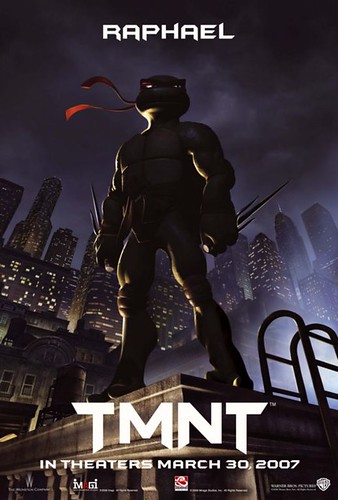
"As a piece of film design, the movie is first-rate; on sheer aesthetics alone, it rivals Triumph of the Will for astonishments." - Stephen Hunter of the Washington Post on TMNT


Seems like an apt comparison to me...

Grazergate Sweeps L.A. Times


Superproducer Brian Grazer was recently tapped as the first "guest editor" of the L.A. Times Current opinion section. You may know Grazer as the wunderkind behind such classic cinematic masterpieces as Flightplan, Nutty Professor II: The Klumps, and pretty much every Ron Howard movie ever made.

Well, L.A.-based media blog L.A. Observed broke a story yesterday claiming that Grazer got the position because Andrés Martinez, the editorial pages editor who selected Grazer, is involved in a romantic relationship with Kelly Mullens, an executive with the PR firm representing Grazer's Imagine Entertainment. The post caused a significant amout of backlash and mudd-slinging between editors and PR personal, resulting in a whole lot of 'he said-she said' quotes that could run circles around a White House press report.

The end result? Grazer is out.

"We have an appearance and not a case of actual undue influence. We want to do the right thing for our readers and for the paper," Times publisher David Hiller added.


Personally, I'm glad Grazer got dethroned. This might just be the first step Hollywoodland takes towards realizing that he's not an intellectual, but actually a money-grubber who makes bad movies. But I guess personal vendetta isn't really a fair reason to celebrate someones scandalous ousting, is it?

"We're concerned that even the appearance of a conflict is enough to discredit the hard work of reporters and editors in the newsroom," said Charles Ornstein, a Pulitzer Prize-winning investigative reporter. "This newspaper has worked very hard, even during these trying times, to consistently improve our coverage and remain upbeat about our future. To face a potential scandal is really discouraging."


Yeah, what he said.

Revisit: Cries & Whispers


A New World Pictures release 1972

Written & Directed by Ingmar Bergman

Karin (Ingrid Thulin) and Maria (Liv Ullmann) watch as their sister Agnes (Harriet Andersson) slowly and painfully passes away. Anchored by the servant Anna (Kari Sylwan), the lives of both sisters are described through flashbacks, which are full of lies, deceit, callousness, self despise, guilt and forbidden love.


Unlike most of Bergman's films, Cries and Whispers uses saturated colour, particularly crimson red. Like, a lot of crimson red. Of course, the color is used frequently by directors to highlight certain themes - Hitchcock used it often to accent psychological shock, M. Night Shyamalan used it in Sixth Sense to let us know there were dead people afoot - but Cries & Whispers is probably the most red movie of all time. The color is so intense and pervading that it's almost impossible not to associate it with the film after you've seen it.

Bergman explained the use of the color by saying, "Cries and Whispers is an exploration of the soul, and ever since childhood, I have imagined the soul to be a damp membrane in varying shades of red." Sounds a bit silly, but it works - the film is an exploration into the hearts and minds of its characters, and displays a range of complex emotions that can only be described as utterly human. Bergman is relentless in his portrayal of contrition and callousness, and the staunch red backgrounds only reinforce the blow. The slow pace may be off-putting to some, but end result is rich, rewarding cinematic experience. Worthy of repeat viewings.

Revisit: Yoijimbo/Fistful of Dollars


A Toho Company release 1961

Directed by Akira Kurosawa

Writing credits:
Akira Kurosawa
Ryuzo Kikushima

A wandering samurai (Toshiro Mifune) enters a rural town divided between two gangsters and plays one side off against the other.


A United Artists release 1964

Directed by
Sergio Leone

Writing credits:
Ryuzo Kikushima (screenplay Yojimbo)
Akira Kurosawa (screenplay Yojimbo)
Víctor Andrés Catena (screenplay)
Jaime Comas Gil (screenplay)
Sergio Leone (screenplay)

A wandering gunfighter (Clint Eastwood) plays two rival families against each other in a town torn apart by greed, pride, and revenge.


A Fistful of Dollars is most well known as the first installment of Sergio Leone’s popular spaghetti western trilogy featuring Clint Eastwood as the nameless gunslinger. These films demythologize the traditional American western, appropriating standard genre motifs and reinventing them; shot in Spain by Italians and produced by Germans, these spaghetti westerns exist as a reflection of America the melting pot. However, Fistful is also of particular note in that it is a transcultural adaptation of Akira Kurosawa’s samurai film Yojimbo. The films share much in common, especially in regards to character and story arc, but ultimately the transitioning of genres separates the two from each other.

Yojimbo takes place in 1860, a time where samurai were beginning to be erased by a thriving middle class. The film follows a hungry ronin (Toshiro Mifune) who finds himself in a desolate town split in two by a pair of feuding gangsters. The samurai, who names himself Sanjuro Kuwabatake in film, seizes the opportunity to play sides, ultimately killing all the gangsters and making some money in the process. Similarly, Fistful of Dollars deals with a nameless character that enters a town ravaged by gangsters and follows his attempts at confounding the corrupted. Both films also feature subplots that involve the rescue of a concubine and the subsequent return to her family.


The construction of character in both Yojimbo and Fistful is very similar as well. The main protagonist in each is portrayed as a mysterious, mythologized version of their real-life equivalent. Both the samurai and the gunslinger exhibit physical abilities beyond the norm: the gunslinger is a perfect shot, the samurai a fierce, unparalleled warrior. Their clever manipulation of the gangsters mimics a god-like force, supported by the frequent elevated character placement – “Everything looks different from up high,” says the gunslinger – and use of close ups and altered perspective to make the characters appear bigger than their surroundings. Rolling boughs of fog introduce each character, and both are equated with death and ghosts at some point, reinforcing character mythologization.


It is clear that the basic details of both of these films are very similar. However, what most disrupts these similarities is the transition of genre from samurai film to western. For example, the introduction of a gun in Yojimbo is a major turning point. The gun represents a new threat, western technology and the rising middle class, and the samurai’s ability to avoid and castrate the gun supports the mythological presentation of his character. Because it’s a western, everyone in Fistful uses a gun. The threat is now about size (colt vs. rifle), and though the mythological effect remains, the symbol of the gun loses its multi-layered meaning.

Likewise, the town in Yojimbo is divided evenly into two equally powerful gangs, whereas the town in Fistful is split between the ineffective law (Sheriff Baxter and his gang) and the ruthless Rojo gang. This alteration places the feud in a different context, making the division line between good and bad seem a bit more clear. This is a definite convention of Leone’s work: though the characters are all portrayed as morally ambiguous, there still exists a sort of tiered hierarchy that allows for the sympathy of characters on multiple levels. This does not really exist in Yojimbo; the gangsters are all clearly bad, and the samurai exists as the only morally complicated character. Finally, the subplot involving the concubine and her family is anchored as a central plot device in Fistful, rather than as an effect of narrative discourse like in Yojimbo. The concubine is shown within the first few frames in Fistful of Dollars, visually alerting the audience to her condition and foreshadowing the inevitable rescue. Eastwood’s character seems fascinated by her in the film, almost as if he were about to fall in love. This foregrounding of the concubine story shifts character motivation and provides a sort of romantic element that is unexplored in Yojimbo.

Ultimately, Yojimbo and A Fistful of Dollars share much in common. However, the translation of genre provides for some very distinct changes that make Fistful its own unique film.

Saturday, March 17, 2007

Revisit: Beerfest


A Warner Brothers release 2006

Directed by Jay Chandrasekhar

Written by Broken Lizard

Two brothers travel to Germany for Oktoberfest, only to stumble upon secret, centuries-old competition described as a "Fight Club" with beer games.


Broken Lizard are kind of funny, I guess. Super Troopers was kind of funny. Beerfest was kind of funny. Mostly it's funny that these movies even get made.

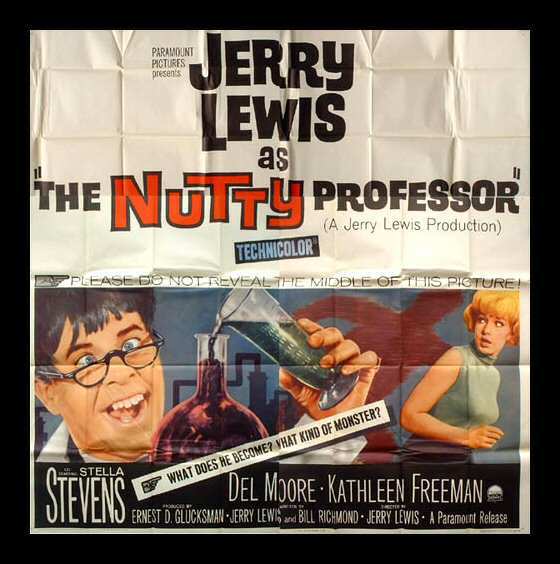
Revisit: The Nutty Professor


A Paramount Pictures release 1963

Directed by Jerry Lewis

Written by Jerry Lewis & Bill Richmond

To improve his social life, a nerdish professor (Jerry Lewis) drinks a potion that temporarily turns him into the handsome, but obnoxious, Buddy Love (Lewis again).


That 'don't reveal the middle!' trailer is a spoof of Hitchcock's Psycho trailer, where audiences were told not too miss the beginning.

The Nutty Professor is easily the best movie of Lewis's solo career.
Cartoonish and full of color, there's something about the humor of this film that simply wouldn't translate in a modern comedy. It's silly and outlandish, but also sincere, and surprisingly serious about being funny. Modern comedies aren't able to have that sort of tone without feeling sarcastic or mean-spirited. Simply stack this film against its 1996 Eddie Murphy countertpart and you'll see what I mean; the original is not only funnier, but friendlier to both its audience and its characters. They simply don't make them like this anymore.

Thursday, March 15, 2007

Revisit: High Noon


A United Artists release 1952

Directed by Fred Zinnemann

Writing credits
John W. Cunningham (story)
Carl Foreman (screenplay)

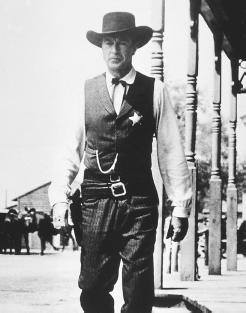
Retired lawman Will Kane(Gary Cooper), about to leave town with his new bride (Grace Kelly), seeks allies among the fearful townspeople when an outlaw he put in prison returns with his gang to take revenge.


A classic story about burning your bridges, High Noon is one of the great westerns, despite breaking of many time-honored genre codes. The film plays out in real time and contains little action until the last act, which is unique for westerns of the time. Likewise, it's politics seem to serve as an allegory for the rise of McCarthyism, but ironically the film was embraced by conservatives who admired its emphasis on duty and courage.

The film effectively draws tension from Kane's desperation. Various high angle shots and images of clocks reinforce the imposing time limit. The film reveals information about Kane's past involvement with the gang very slowly with each scene, so that they dialogue is both about the current attack and the past. Worth a gander.

Why Critics Don't Understand 300

Backlash against 300 has been brewing for quite sometime now, and this guy is sick and tired of it:

Let's get this out of the way once and for all.

300 has no politics.

At least, none worth yapping about - critics looking for allegory should look elsewhere (like, hmm, Harry Potter? Go mad, you crazy kids! Lot's of politics there...) In 300 there is no commentary on the Spartan attitude toward Athenian democracy, no soliloquys on totalitarianism. The Spartans only care about fighting well - politics and politicians are clearly the domain of old men, diseased inbreds, or the despicably corrupt.

...And it is because 300 is so unfamiliar that makes it harder to explain: this is an expensive art-house project, not your usual genre piece starring Gwyneth or Brad. Critics have tried to twist the story into some kind of contemporary allegory and failed.

...There is no backdrop of an American flag to sanitize the fighting, which is what is so unsettling about the nature of the violence in the film.


From brainsnap.com

Woah! Sounds like someone has some critical beef!

Personally, I always thought 300 looked like a second-rate action movie that should probably only be seen on IMAX. Something tremendously cheesey riddled with historical inaccuracies and unrealistic violence; like a super-amped Gladiator for high school kids. I mean, check out this clip:


So much slow motion! The pacing here is really hectic; the stop-go-stop-go speed makes it really uneven and pretty silly. I just can't buy into that containing any real allegorical message.

At the same time, I don't think I would unabashedly praise the film as the writer of that brainsnap article has. I haven't seen it yet, but I highly doubt 300 is an "art house picture" or even "unfamiliar". Looks like any old comic book movie to me, only this time there are Spartans instead of superheroes.

Speaking of which, pretty much everyone has ignored the fact that 300 is another comic book movie that derives its aesthetic almost entirely from its source, right down to the framing. Critics seem to be happier comparing it to a video game, and while that comparison is nice, I'm interested to see how this film may devalue Sin City. Whereas Sin City drew a lot of praise for its precise aesthetic, 300 seems to be getting an opposite response.

"The stylized action, set to crunching guitar riffs, feels suffocating in its artificiality," said Glenn Whipp of the Los Angeles Daily News.


Is making your film look exactly like its graphic novelization really that special? When you get down to it, that's really all Sin City had going for it. But if that's such an easy trick that the guy responsible for the Dawn of the Dead remake can do it, how big of a deal can it be? Frankly, I wish they'd just stop making these comic book movies all together.

Curtains Close on The Carpetbagger

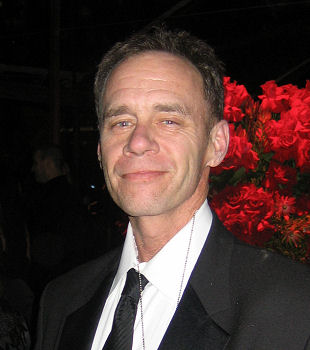
This week I sat down for a quick chat with David Carr of the New York Times for We Want Media. Here's the article:


With Hollywood shifting its focus back to big-budget blockbusters, the few of us still shaking our heads at The Departed’s win for Best Picture may have to buckle down and admit defeat. Awards season is most definitely over, as David Carr recently lowered the curtain on his annual NY Times-based Oscar blog The Carpetbagger. “The Bagger could pretend that he is leaving the season with regrets, but he has none,” Carr wrote. “Happy to have played, happy to have met all the people he met and glad it’s over.”

Carr, who is a regular in the Times Monday Business and Culture sections, started The Carpetbagger in 2005 as a noble attempt to accurately cover Hollywood’s most frenzied and ferociously competitive traditions. Since then, the blog has become the go-to spot for in-depth, interesting awards coverage, with Carr’s unique, singular voice leading the way. Adding quirky videos of Carr on the red carpet in 2006 also helped make the site a splash – and sparked many debates about a major publications crossover appeal.

“People begin to see us in a different way – one that doesn’t reshape the organization, but shows that we have muscles in any platform,” Carr says. “That the Times provides high quality media in print, video, even in the blogsphere.”

Carr feels the blog really opened The Times to its audience, as well, displaying “a level of friendliness and engagement we’re not known for.” He credits the blog’s success to its active readers.

“The whole kind of network intelligence thing was really surprising to me,” he says. “Sometimes I’d just flick at a topic, something I don’t have ferocious knowledge of and I’d get a band of comments. Lots of stuff people knew would outstrip what I had said.”

Of course open communication doesn’t always mean intelligent conversation. “You always get your trolls and your idiots too,” Carr says with a laugh, “But certain people know a lot, and their willingness to take the time to add or correct something I write, it makes me wonder, what do they do for a living?”

As for whether The Bagger will be back on the red carpet again next year, Carr won’t say. But one thing is for certain - the Oscars aren't going away any time soon, and we need someone like The Carpetbagger to shine some unbiased light on the subject.

Tuesday, March 13, 2007

Revisit: Mon Oncle


Criterion Collection 1958

Directed by Jacques Tati

Writing credits
Jacques Lagrange
Jean L'Hôte
Jacques Tati


M. Hulot bumbles his way through this satire of French modernization that emphasizes the problems with upperclass living - namely, style over practicality. Despite its two-hour run time, the film is light, easy to watch and geniuinely funny. Tati, as always, draws from silent-era slapstick and Chaplinesque characters to create humor that is easy to understand in any language. Highly-focused sound effects add to the films unique rhythm. Only bested by Tati's follow-up, Play Time.


Is there anyone who speaks French who could translate this interview for me? I'm really interested to see what Tati has to say about the making of the film.

Betty Hutton passes away at 86!

From Variety.com

Betty Hutton, the actress and singer who brought a brassy vitality to Hollywood musicals such as "Annie Get Your Gun," has died in Palm Springs, Calif. She was 86.

Unlike other actresses who have been called "blonde bombshells," Hutton had a screen personality that had more to do with energy and humor than sex.

Time magazine wrote in 1950: "Betty Hutton, who is not remarkably pretty, by movie standards, nor a remarkably good singer or dancer, has a vividly unique personality in a town that tends to reduce beauty and talent to mass-produced patterns. Watching her in action has some of the fascination of waiting for a wildly sputtering fuse to touch off an alarmingly large firecracker."


Three days after I post my own call for attention to the work of Betty Hutton, she passes away! How terribly sad. As I've said before, she was one of my favorite musical performers; she had a rare energy, her spirit really shined through in all of her work. In tribute, here's a video of my favorite Hutton performance - Murder He Says!


Go check out all of her films!

Monday, March 12, 2007

Reeling in Readers


The Reeler is one of my favorite film blogs, mostly because it keeps tabs on everything in New York City. If I want New York-based film news, reviews, or event listings, The Reeler basically has it covered. I was lucky enough to be able to sit down for a cup of coffee with Stu VanAirsdale, the man behind the site, one day last year.

It was late, and though the sun had set beyond the top of the Sixth Ave. skyline, Washington Sq. Park was brighter than day. Humongous lights hung off cranes connected to thick bundles of wire that lined the curb where people stopped to stare as the production commenced. Stu VanAirsdale moved briskly through the crowd, his wire-thin frame slipping between hard suitcases full of equipment scattered carelessly about the trailers and trucks and moving vans that occupied the better half of the park street. “I wonder what they’re shooting,” he asked. He wouldn’t get to find out; a nippy woman wearing a headset forced all the onlookers to walk around the opposite way. “That’s bullshit, I hate that,” grumbled Stu, “It’s our city too. Like when they put up those signs that say you have to move your car or else it’ll get towed. I remember they were doing a shoot up where I live and all these cars got towed, just so they could bring on prop cars! I hate that… Let the people watch, let them be part of it.”

In a town where dozens of films are being shot and screened everyday, it’s difficult to keep abreast of the latest events in cinema culture. Enter Stu VanAirsdale: a slim but broad shouldered man with slender framed glasses and a red coif, the kind of pasty flecked character you’d expect to see standing in line at the Angelika or waiting at the bar of the IFC Center. VanAirsdale is the creator and operator of TheReeler.com, a website devoted to the New York City film world. Everyday, VanAirsdale updates TheReeler with coverage from major premieres, special screenings, Q&A’s, and other unique-to-New York film events. His goal is to provide New Yorkers with an up-to-date, easy-to-access forum for New York film. “I’m not quite there yet,” he says, “but I’m in a position where I’m about to achieve [my goal].”

The website, which started as a blog, has been embraced by local industry insiders, and has positioned VanAirsdale as a reputable force in the New York film circuit. His writing has since appeared in The New York Times, the New York Daily News, Newsday and Filmmaker Magazine. Likewise, VanAirsdale was invited to speak at the 2006 IFP Market, and is now host to his own panel discussions titled The Reeler Screening Series, which is holding a Q&A with director Stanley Nelson on October 16th.

A native of Sacramento, VanAirsdale moved to Manhattan after leaving the Chapman Film School in California. Like many film-school drop outs, VanAirsdale says, “I learned more spending a day on set than in four days at film school.” He has made his share of short films – including a self-financed project based on the true story of an Australian man who murdered his manipulative mother that he shot in 2000 – but VanAirsdale has no plans of making any more in the future. A journalist at heart, VanAirsdale doesn’t view himself so much as a filmmaker or critic, but rather a purveyor of film culture. “I thought, writing – this is what I know I’m good at,” he says. He enrolled at NYU in June of 2004 looking to complete his masters in Journalism. “Looking back,” he says, “it was a mistake to get my masters at NYU. Not to say that NYU was a bad school or anything, but you get to a point where you just need to stop with school and go to the stories.”

After spending some time interning for the online independent film source indiewire.com, VanAirsdale was invited to participate on their blog page, where he found himself writing on a daily basis. “I’m generally a slow writer, so it helped me find discipline,” he says.

Eventually, VanAirsdale found himself speaking to a specific New York audience. Even though he’s not a native, VanAirsdale feels he’s the perfect voice for New York. “I’m just high strung enough, ambitious enough, disinterested in bullshit and excuses for this city,” he says. At the time, there was no real online source specific to New York film culture. “There was film criticism online, and there was film culture,” he says, “but no one was writing in the context that I was.” VanAirsdale split from indiewire and founded his own blog, The Reeler, in June of 2005, with hopes to fill that void.

Stu with producer Bingham Ray

But building an audience and a successful blog isn’t that easy. The site is largely operated solely by VanAirsdale, with the exception of three critics he enlisted to handle reviews and the occasional guest writer. A typical Reeler blog post usually revolves around a specific event, with background information, event details, VanAirsdale’s perspective, and quotes from the event itself. But with news feeds, events listings, reviews and the blog to update, it’s a big undertaking. “I drink a lot of coffee,” says VanAirsdale. “Probably too much.”

VanAirsdale works what he calls an “impossible work day”, often waking at 6am, writing until the afternoon, and then dealing with “bullshit business” while juggling events coverage. While the site’s increasing reputation has made gaining entry to exclusive events a bit easier, VanAirsdale still occasionally finds himself struggling to get on top of the latest news. “Last night I had to jump through a shitload of hoops to get into the premiere of Infamous. And when I finally did get in, they stuck me in a corner where I couldn’t see. I was pretty vexed,” he says.

But the frustrations appear to be worth it. On September 29th, the website re-launched with several new features, including web forums and a new layout. The product is getting closer and closer to VanAirsdale’s original vision. “Now that I’ve got it, I don’t know what to do with it,” he laughs. Future plans involve a book, the premise of which VanAirsdale is keeping under wraps, but involves “a collection of ideas originally on the website.”

For now, VanAirsdale feels fortunate to have made it as far as he has. “I’m lucky that I’m married,” he says, “that I have another insurance provider in the house.” In many ways, his site is like the indie films that get their weeks due at the Pioneer or Landmark Sunshine – a diamond amidst a boundary less, oversaturated market. “Everyone bitches about studios and indies, but I don’t care,” he says. “I’m just glad Gondry can get a film like The Science of Sleep released. If you have good work, it’ll be seen.”