There's an auction going on Ebay right now that offers the chance for a private dinner with director Brett Ratner. Right now the current bid is at US $8,643.73, which is a heck of a lot of money. The disclaimer says nothing about bodygaurds being present, so let's hope whomever wins this bad boy takes the opportunity to punch Ratner in the face. They'd be doing film fans everywhere a favor.
James L. Brooks screenplay Joel Cohen consultant writer John Frink consultant writer Matt Groening screenplay Al Jean screenplay Tim Long consultant writer Ian Maxtone-Graham screenplay George Meyer screenplay David Mirkin screenplay Michael Price consultant writer Mike Reiss screenplay Mike Scully screenplay Matt Selman screenplay John Swartzwelder screenplay Jon Vitti screenplay
After polluting the local lake, resulting in Springfield being put under a giant government instituted glass dome, Homer must simultaneously save the town and his marriage.
Those of you who read this site may have noticed that I haven't written a review of a new film in quite a long time. That's because I haven't been to the theaters in over two months. That's right - two whole months have passed since I've been compelled to go to my favorite place on Earth, the movie theater, and watch a film. I've been so fed up with the crap that Hollywood has churned out this summer that I simply decided to boycott pretty much every movie that has been released. Sequel after sequel, revised franchise to remake, I couldn't stand to sit through any of them.
But The Simpsons was something I had to see. Eighteen years in the making, The Simpsons Movie was something that was always on the tips of everyone's tongue, but seemed like it would never happen; a mythical idea that looked great on paper but could never be done. Like most of my generation, I grew up watching The Simpsons, and just couldn't picture a jump onto the big screen that would do the show justice.
So when the movie finally landed - to rave reviews, nonetheless - I had to see it. I went in with the best of expectations: that it would undoubtedly disappoint, but if there were two or three good jokes, I'd be happy. And I'm glad to say that the film not only met those expectations, but exceeded them. The Simpsons Movie is about as good of a film one could ask for from a show that seemed to have run its course almost a decade ago.
Without side-stepping the legacy that they've already built, Groening and Co. have managed to craft a fast paced, funny, cinematic counterpart to the show that retains its spot-on portrait of the American family. While some might complain that the satire isn't as biting as, say, South Park: Bigger, Longer, & Uncut, the film somehow manages to make its points clear while staying fresh. After all, The Simpsons was never really about controversy, at least not in the same way as South Park, but the dives it takes at religion and American life are still quite funny while aimed at an incredibly wide audience; I saw the flick with my whole family, and my parents laughed just as hard as I did.
Ultimately the film is a bit short and maybe too fast paced for its own good - it's a bit top heavy and starts to lose steam towards the last act - but I have to say I was impressed. Was it worth the eighteen year wait? No - but it didn't ruin the show in any way, and was certainly an improvement upon the last couple of seasons. If anything, it reminded me of why I liked The Simpsons so much to begin with, and that's certainly a good thing.
Lots of people have been asking me how I feel about the J.J. Abrams produced as-of-yet-untitled monster movie codenamed Cloverfield that's been driving the Infernets crazy these days. If you haven't heard about it, get on over to /film.com, who has the up to the minute skinny on this super secret, virally marketed flick. But back to my feelings... I think this photo sums it up pretty well:
Until they start releasing something more concrete than a two minute teaser, a no-name cast list and some blurry cell phone shots, I could care less about this 'mystery' project. After all, this is just a revised form of the marketing for Snakes on a Plane, and we all know how that turned out. Sorry, Paramount - Internet games and rumors are simply not enough to get this film nut in a frenzy. I'll get excited when I hear the film is actually watchable.
Writing credits: W.R. Burnett (novel & screenplay) John Huston (screenplay)
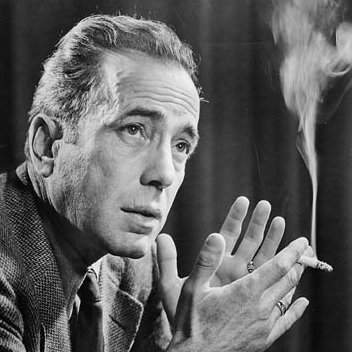
Roy 'Mad Dog' Earle (Humphrey Bogart) is broken out of prison by an old associate who wants him to help with an upcoming robbery.
The film that made Humphrey Bogart a star, High Sierra also put film-noir on the top of Hollywood's to do list. A tense crime caper with a dark, bloody ending, it's no surprise that Dillinger is mentioned in the trailer - Sierra was loosely based on his life, despite his name being high on the blacklist of topics too taboo for mainstream cinema. The film also features Ida Lupino, who despite being one of the first female directors in Hollywood doesn't quite get the recognition she deserves. She's a great actress, and a fine director to boot. The picture is pretty straight forward, but it's great to see a pre-Casablanca Bogie perfecting his hard-ass image.
Narrative digressions on sex, race, politics, and more from comedienne Sarah Silverman.
Essentially a Sarah Silverman stand-up special, Jesus is Magic doesn't veer far from the traditional three shot format of most comic films, but it does have some added benefits: a few suped-up musical interludes, and Sarah Silverman, whose uncouth, obnoxious J.A.P. persona is actually a better schtick on stage than in sketch shows or straight narratives. Everyone knows that girl, the kind of oblivious, self-centered show off whose heart is full of sentiment but in all the wrong places, and Silverman works it to perfection. The jokes are fierce and funny, and it certainly helps that she's a looker. But if you're not into those so-called 'alternative' comedians, this probably won't be for you. I can't help but add that I was disappointed by Liam Lynch's lackluster direction - the musical interludes look great, but he simply plopped the camera down for the stand-up, which could have benefit from some variety in terms of movement. Surely there are more ways to shoot a comedian on stage than just close-ups and medium shots, but this film isn't look to push the format any farther.
Here's a recent article written by Johnathan Foster discussing the two differing schools on Michael Bay: explosions vs art. Foster's makes a pretty simple argument
I gave up on Michael Bay movies having great stories or strong characters long ago, and yet, I find that he continually fails to deliver thrills. He wields explosions around as gracelessly as bad comedies do jokes, and yet his pyrotechnic fervor has wrongly come to symbolize the entire genre: the bigger the fireworks, the better the film.
but I think Bay's validity in cinema is a bit more complex. Bay's films are so overtly pro-American, patriotic in the truest sense of the word, that it's almost hard to ignore. Take Armaggeddon, for example, in which some variation of red white and blue can be found in every frame. While he may not have 'style', his aesthetic is so well defined that it alone can distinguish a film. Maybe its similar to the way people appreciate Ed Wood - bad, but so distinctly bad.
I haven't seen Transformers yet (or any of the other major blockbusters this season, they're all so crummy!) but I am definitely interested. I figure, if Hollywood can't get gigantic fucking fighting robots right, then they should really just stop making movies. Just stop.
Written by Sherman Edwards & Peter Stone (also play)
A musical outlining the birth of the Declaration of Independence.
Before he was roaming the halls as Mr. Fenie in Boy Meets World, William Daniels portrayed John Adams in this musical interpretation of the events that led to the birth of the United States. The film, based on the Broadway musical of the same name, is fairly straight-forward, unflashy, and lacks any real memorable numbers. However, if you're a history buff, or if the thought of seeing our fore-fathers parading around while singing songs about voting and Congress piques your interest, this may be the film for you.
Written by: Melvin Frank (screenplay) Norman Panama (screenplay)
Bob Hope and Lucille Ball fall in love during a romantic getaway in Acapulco. There's only one problem - they're both already married!
Not to be confused with the classic TV show of the same name, this adult comedy contains some racy material, considering the year of its release. Bob Hope and Lucille Ball fall in love, but both are already married with children, and hilarity ensues as they try to cope with an extramarital affair. It's probably the only classical Hollywood film I can think of that tries to place a humorous spin on adultery. Its very much a reaction to the tedium brought upon by the construct of the American family in the 1950's; tension is derived from the difficulties of trying to keep the affair a secret, and the affair is not criticized as harshly as the home life. In fact, the film forces you to root for the adulterers, because they are 'in love' and their marriages are so poor. Of course this is a Hollywood film, and things do go sour in the end as they realize their actions are wrong. But it succeeds in making quite the case for adultery. It's also interesting that Ball acts as the films narrator; we're given much of the "woman's" perspective (written by males), but no real insight into the man's desires. Hope and Ball are at the top of their game in a film that is far more serious than most of their previous roles, and the picture was nominated for five Academy Awards, winning one for Costume Design.
Written by: Pierre Dumarchais (novel) Jacques Prévert (screenplay)
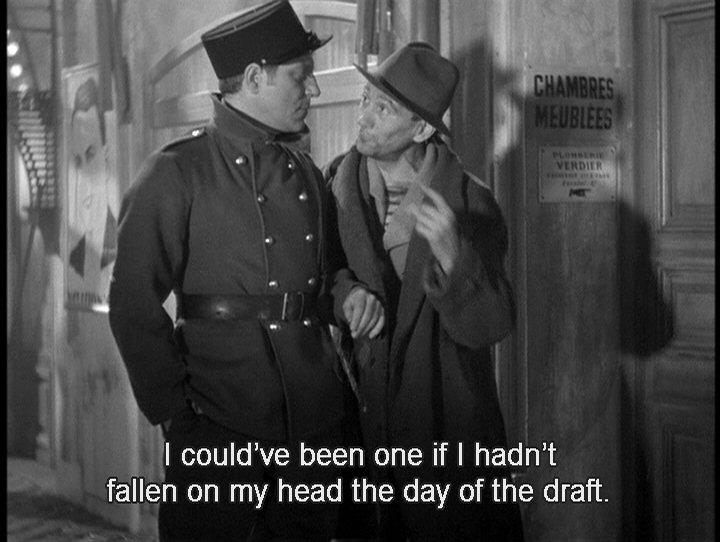
A military deserter (Jean Gabin) finds love and trouble in a smoky French port city.
A truly beautiful film that follows the classic Hollywood template, Carné's Port of Shadows is the kind of movie where all of the elements culminate into a near-perfect package. The air-tight script is chock full of fantastic dialogue and well-rounded characters, aided by the incredible cast, which includes Jean Gabin, Michel Simon, and Michele Morgan. Even minor characters are surprisingly well developed. Likewise, there isn't a shot in the film that feels out of place or sloppy; everything is essential. The lighting, grain, and over-all look of the film is quite stunning and especially effective in telling the story. It's interesting to note that this film is pre-WWII, as much of the script feels like an allusion to the war. A must see.
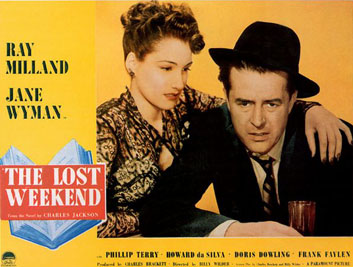
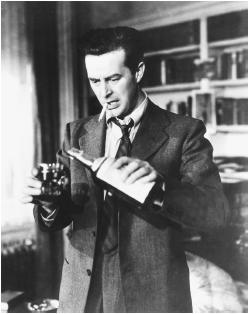
A writer (Ray Milland) struggles with alcohol addiction over the course of a five day binge.
Nominated for seven Acamedy Awards, and winner of four, including Best Picture, Best Director, Best Screenplay and Best Actor, The Lost Weekend shocked audiences in 1945 with it's frank, relentless, realistic portrayal of addiction. Like with many of his films, Wilder chose an unpopular subject and somehow turned it into a smash - partly due to the strong performance of Ray Milland as addict Don Birnam, and partly due to the way the film deals with the taboo subject matter head on. Audiences had never seen anything like it before - crass, revealing, and fully realized, The Lost Weekend gives a full picture of the struggles of the addict, including some particularly terrifying hallucination scenes. The film was also the first to contain a theramin in the soundtrack, an instrument which later became associated with B sci-fi pictures.
A proud strip club owner (Ben Gazzara) is forced to come to terms with himself as a man when his gambling addiction gets him in hot water with the mob, who offer him only one alternative.
Gazzara and Cassavetes were frequent collaborators, but their individual efforts culminate in this film, which tells the story of a drunk gambler who gets in over his head. Cassavetes uncomfortably close shots and lingering camera, mixed with the improv, emotionally driven acting style results in a rich, full protrayal that leaves a bitterswett mix of sadness, humor, and the complex emotions of real life. Gazzara's strip club owner character is constantly emasculated while trying to maintain his high roller image, setting up an interesting play in sexual politics. Make sure to watch the 138 directors version - its worth the extra thirty minutes.
The Annual New York Asian Film Festival starts this Friday at the IFC Center. Highlights include a screening of Takashi Miike's unreleased in the US Zebraman, anniversary showing of John Woo's Hard Boiled, shorts from Old Boy helmer Chan Wook Park, and more. This seventeen day orgy of new films will introduce you to buffalo-busting action flicks from Thailand, cartilage-cracking gangster films from Korea, and the first gore flick ever made in Pakistan!
You can find the full screening list and purchase tickets here.
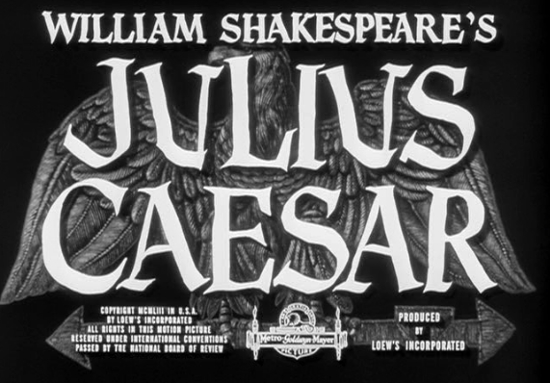
An MGM release 1952 Directed by Joseph L. Mankiewicz Written by William Shakespeare (play)
An epic version of Shakespeare's classic play of betrayal and repentance.
Brando recieved his third of four consecutive Oscar nominations for this film, in which he appears all of about twenty minutes. In that twenty minutes, however, Brando gives one of the most intense performances of his career as Marc Antony, delivering Shakespeare's classic "Friends, Romans, Countrymen" speech with such unbridled passion that it almost makes sitting through the rest of this snoozefest worth it. Edmond O'Brien makes an appearance as well, and is the only other actor on the screen who can seem to captapult this epic-in-scope retelling of Caesar beyond being a mere big-budget stage play. Mankiewicz has some interesting shots in there, but this one is for Brando fans only.
Four Eyed Monsters was one of last year's best and most innovative films, and now you can watch the whole thing for FREE on Youtube! I highly suggest checking it out, it's only 71 minutes and well worth the time and admission. But catch it soon, it's only gonna be available for one week. Also, be a good sport and sign up for Spout.com. It's free and for each person who signs up, Arin and Susan each get $1 towards paying off their debt. So help these guys out!
The formal differences between Godard’s approach to modernization in Two or Three Things and Tati’s Mon Oncle are clear: one takes on a lingual, documentary style while the other focuses on visual cues and spatial relations. However, both films feature similarly negative views on modern construction and seem to be of the viewpoint that ‘newer’ doesn’t necessarily mean ‘better’. While Godard is preoccupied with the cinema and modernizations effects on language, his assertions that commoditized culture has negatively impacted individualism mirror Tati’s sentiments. Likewise, Tati’s affinity for old time housing and ways of life can be seen in Godard’s demonizing of urban organization and physical growth.
However, neither film is without hope. While Tati’s message may seem bleak, his humor-based approach stands as a silver lining. Likewise, Godard’s playful attempts to render verbal and written language through the cinema act as a call for greater attention to language as a cultural entity. The results are a vision of Paris, a modern city, which is both culturally expanding and aware of its own deficiencies.
WORKS CITED
Barthes, Roland. “Towards a Semiotics of Cinema: Barthes in interview with Michel Delahaye, Jacques Rivette”. Cahiers du Cinema: The 1960s. Jim Hillier. Massachusetts: Harvard University Press, 1986.
Chion, Michel. The Films of Jacques Tati. New York: Guernica, 1997. Leutrat, Jean-Louis. “The Power of Language”. The Cinema Alone: Essays on the Work of Jean-Luc Godard. Michael Temple & James S. Williams. Amsterdam: Amsterdam University Press, 2000.
Makeieff, Macha. Playtime. Notes on Lecture, 4/10/2007.
Ramierz, Francis and Christian Rolot. Mon Oncle: Jacques Tati. Collection Synopsis, no. 16. Paris: Nathan, 1993.
Mon Oncle. Jacques Tati. DVD. Criterion, 2001.
Stam, Robert. French New Wave II. Notes on Lecture, 2/8/2007.
Thiher, Allen. “Postmodern Dilemmas: Godard's Alphaville and Two or Three Things That I Know about Her”. Boundary 2, Vol. 4, No. 3. (Spring, 1976), pp. 947-964.
Two or Three Things I Know About Her. Jean-Luc Godard. VHS. New Yorker Films, 1988.
Gordon Williams: (novel "The Siege of Trencher's Farm") (as Gordon M. Williams)
Sreenplay by: David Zelag Goodman and Sam Peckinpah
Plot description: A young American and his English wife come to rural England and face increasingly vicious local harassment.
Upon its release in 1971, director Sam Peckinpah was engulfed by a storm of controversy (what else is new?) surrounding his latest film, Straw Dogs. Peckinpah and his crew were attacked for the vicious and sick scenes of violence and rape that occur in the film. While many claime the scenes were too extreme for audiences, the film is not merely violent without purpose. Straw Dogs centers on David and Amy Sumner (played by Dustin Hoffman and Susan George), and their life in a small rural village in the UK. Sumner is an American mathematician who was given a grant to work in the film's setting, where he has recently overtook his wife's farm and where the couple now lives. In conducting renovations on the house the two are incessantly harassed by a violent collection of brutes who were commissioned to repair their home. Ultimately, the provocations turn to violent action and Amy Sumner is raped by the workers and their home assaulted by the men. David Sumner, ever the reluctant pacifist, is forced to defend his home and the lengths to which he goes are partly what give the film its gritty, extreme violence.
In Straw Dogs, Peckinpah (forever remembered for his unflinching and gruesome depictions of violence) is at the top of his game. What separates the film from his other works such as The Wild Bunch or Bring Me The Head of Alfredo Garcia is that in addition to jarring, blood-soaked physical violence (as expected), the film presents equally disturbing forms of psychological, and psycho-sexual torment. Hoffman plays David Sumner perfectly, summoning his then famous Benjamin Braddock persona from The Graduate, except adding a vicious, demented, and downright schizophrenic twist. Sumner is a reclusive, shy scholar whose reticence to engage in action is clearly established from his very first appearence. However, as the film progresses we see that he and his wife torment each other frequently, generally through verbal stabs and sexualized exchanges. In these exchanges we notice a peculiar agency on both their parts, as though David's shyness is not always sincere - it is in part an act, an attempt to outsmart others by allowing them the ease of assumption. Similarly, Susan George plays Amy with a double-face: In one sense she is the naive sexbot who never graduated from the lecherous gazes she no doubt received as a youngster/to this day. In other scenes, such as one in which she taunts the construction workers by walking topless in her bedroom as a form of revenge on David, she clearly possesses the agency and intelligence that her appearances before David obscure.
The film manages to provide both of these characters, each with seemingly split personalities all while using a setting in which every local townsperson is downright nasty, hateful and violent. What Peckinpah is suggesting with the stereotypical scholar David and the deviant, sexy wife have the capacity for all types of behavior, and as the film progresses David proves that he is in fact no different than the menacing lunatics trying to murder him and his family.
Overall, Straw Dogs is an extremely provocative and compelling film, and careful viewing proves that the criticisms that it is a one dimensional, blood-fest are unfounded. Peckinpah's strengths are in his ability to convey the potential darkness of man, and contextualizing this darkness within an appropriately familiar and quotidian setting. Much like Cronenberg's A History of Violence (only 35 years prior), Peckinpah's film deconstructs audience identification and their notions of "justifiable violence" in a meta-discursive fashion while within the narrative he explores the intricate sexual tensions that exist between man and woman. Straw Dogs is a primal and damn near bestial film both in its story and Peckinpah's signature film aesthetic of harshness and brutality. Peckinpah's shots (filthy and drained of all pleasantness the countryside could provide), disorienting edits and movements (perfectly embodied during Amy's rape flashbacks at a church gathering as well as the break-in scene), and ability to generate both seemingly obvious exploitation and ambiguity in the same breath make this flick a must-see.
Near Penn Station, next to the Amtrak tracks, squatters have been living for years.
This Sundance and Indie Spirit award-winning documentary follows the lives of several squatters as they deal with life in the New York subways. Shot in stunning 16mm black and white, director Marc Singer actually lived with these people for a short time, using them as his crew and his subject matter. The result is an amazing, honest portrait of the hardships homeless people face, a strong representation their tenacity and stubbornness. My only problem with the film is that it ends on such an overtly positive note - each of the characters recieves an apartment through a NYC works programs, but what happens next? I find it hard to believe that each person in the film managed to maintain a working lifestyle. This is one film that is begging for a sequel.
Lionsgate marketing exec and part-time photographer Tim Palen shot the photo as part of an upcoming book titled Guts: The Art of Marketing Horror Films. NYMag says that the book is “a collection of his creepiest work, including a pornographic, absolutely not-safe-for-work portrait of Roth”. The photo is called “Eli Roth Has the Biggest Dick in Hollywood.” The prosthetic was built by K.N.B. Effects, the same effects company that worked on The Chronicles of Narnia and The Island.
Godard plays with the idea of consumption and mass culture throughout Two or Three Things. He offers many symbols of culture – magazine covers, famous quotes, novels – but sets them up so that, as signifiers, they offer little meaning. In one scene, Juliette and fellow prostitute Miriam don duffel bags bearing TWA and PAN-AM logos and are forced to parade around naked. In another, two men sit in a café compiling sentences out of novels in the hope of composing the ultimate book. Both these scenes exhibit the appropriation of cultural images or objects, but recontextualize them so that all meaning is obscured.
Godard keeps a philosophical dialogue going throughout the film via a non-diegetic voiceover. Considering the narrator’s penchant for the first person, and his lengthy transcendental musings, it’s almost appropriate to assume that it is a surrogate for Godard himself. One scene is particularly telling of this idea: as the camera focuses in on a cup of coffee, the narrator laments his inability to understand objects, and his verbose speech peters out into a verifiable spew of words. It is as if Godard himself is lamenting the way language has been corrupted by culture, rendered ineffective. “To say that the limits of language, of my language, are those of the world, of my world, and that in speaking, I limit the world, I end it” he cries.
If Two or Three Things presents the idea that consumerism has limited man’s ability to communicate, than it also suggests that the modern environment limits man’s ability to connect. As previously stated, construction is depicted in the film as imposing, a dominating force. But already established edifices are given equally biting critiques. “A landscape is like a face”. Towards the end of the film, Godard pans around Juliette’s building complex as she says this phrase. We see that the area is completely enclosed by buildings, each one composed of tiny little boxes, presumably individual apartments. The space is called le grand ensemble, a new form of urban organization implying a certain sense of togetherness, and yet we can only perceive the area in fragments, as each individual who lives there must do as well.