Saturday, April 28, 2007

Revisit: Child's Play

An MGM release 1988
Directed by Tom Holland
Written by Don Mancini
The spirit of a serial killer seeking revenge possess a young boy's toy doll.
This flick scared the crap out of me as a little kid, but looking back, it's pretty ridiculous. I mean, it's a doll for christs sake, it's not threatening, just get rid of the damn thing! It really only works cause Chucky is so damn creepy looking. Look at that thing!
Terrifying!
A better concept would have been toying with audience perception on whether the doll or the boy were actually responsible for the murders. The original has since spawned 4 sequels, turning the franchise into a sort of black comedy. It's a horror classic, I guess, but I'm using that term lightly.
Friday, April 27, 2007
Simultaneous Release: Sound Strategy or Mere Ploy?
Have you noticed it? You walk past the local movie theater and see an ad for that documentary or dumb comedy you’ve been waiting to see. You promise yourself that you’ll catch it in theaters but you can’t make time, and within two weeks it’s gone, no longer playing. Normally you’d expect to wait months for the video, but a trip to Blockbuster proves surprising – it’s already available on DVD.
Yes, the time frame between a film’s theatrical release and its appearance on video store shelves is getting smaller. Facing competition from Internet piracy and websites like Youtube.com, Hollywood distributors are starting to abandon the age-old tradition of staggered release dates for shorter time frames between theatrical and DVD distribution. In fact, some distributors are eliminating that window of time entirely. It’s a distribution move called simultaneous multi-platform release, and it’s coming to a theater, TV screen, and DVD player near you.
The concept is simple: instead of releasing a film in theaters and waiting months or even years for it to become available for home viewing, distributors are removing that time window by releasing films in theaters, on DVD, and through digital on-demand cable all on the same day. Though the technique has been used mostly on small budget, independent films that normally wouldn’t get distribution, the strategy challenges one of Hollywood’s most basic – and lucrative – traditions.
The idea for such a radical form of distribution stems from “the belief that the choice as to how consumers view films should rest with the consumer and that theatrical, DVD and Internet forms of distribution need not threaten each other, and may indeed be mutually complimentary,” says John Lentaigne, producer of the film EMR, a deft thriller about drug addiction and paranoia shot for under $100,000 in both the UK and the US by James Erskine and Danny Mccullough. Distributed simultaneously in theatres, on DVD and over the Internet on July 15th, 2005 by a fledgling independent company in the UK called Dogwoof Digital, EMR was the first film to ever to attempt the simultaneous release strategy.
“Our main belief is that simultaneous releasing gives opportunities to release small independent films that are otherwise uneconomical to release,” says Andy Whittaker, CEO of Dogwoof Digital. “We hope to build an audience and give the audience a choice of when, where, and how they watch the film.”
“One of our biggest challenges is distribution,” says Michelle Byrd, executive director of IFP’s New York chapter. IFP – or Independent Feature Project, as the acronym stands for – is a non-profit organization that works to help struggling independent filmmakers find a place for their films. Byrd, who has seen the difficulties of distribution firsthand, believes that simultaneous multiplatform release can do a lot of good for the independent community. “Once you’re done [with your film], how do you actually connect and engage with an audience? I feel that topic is so important,” she says. “Simultaneous release gives filmmakers a way to cover all their bases.”
That belief seems to have caught on. Since EMR’s first attempt at simultaneous release in 2005, three films have followed in its footsteps: A-list director Steven Soderbergh’s improvisational experiment Bubble, released January 27th 2006, Caveh Zahedi’s autobiographical meta-film I Am A Sex Addict on April 12th 2006, and Michael Winterbottom’s docudrama The Road to Guantanamo on June 23rd. They were joined by another, when director Brad Silberling’s 10 Items or Less comes out on December 1st. 10 Items was of particular interest because it was be the first major star vehicle (the film is a road trip buddy comedy featuring Morgan Freeman) to utilize the simultaneous release strategy.
In each of these instances, the simultaneous release strategy seems to have made sense. All were features whose directors felt deserved theatrical release, but for whom such distribution was simply not economically viable. Soderbergh’s Bubble cost a little over 1.5 million dollars, yet went on to gross a mere $145,000 in theaters. Likewise, according to Caveh Zahedi, I Am Sex Addict would have had to gross “one million [theatrically] to put me in the black.” The film performed amiably, but failed to yield much more than $112,000 in revenue. Zahedi says that simultaneous release allowed for his dream of seeing his film on the big screen come true, while also making sure the film turned a profit. “Theatrical distribution is so high a risk that video on demand suppresses it. It’s a way of [distributors] protecting themselves, I don’t think they would have released it otherwise.”
Zahedi’s distribution story is particularly interesting in that it exhibits some of the problems with simultaneous release, as well. Originally expecting to see his film in cities across the nation, Zahedi received word a week before release that Sex Addict was being pulled from fifteen Landmark Theaters across the country. Landmark Theaters chain owner Mark Cuban pulled the film after he discovered that it was going to be available for viewing on Comcast On Demand, a major competitor of Cuban’s own HDTV/HDNet Films brand. Cuban, as he notes in his blog, is a “full supporter of the simultaneous release platform,” as he believes “that Hollywood’s distribution system requires radical change”. However, his decision to pull the film from theaters exemplifies the reality of the business, and the tricky situations simultaneous release may create.
For now, it seems as though the simultaneous multiplatform release structure may be relegated as a solution for the independent community only. Hollywood won't know the impact of simultaneous release until a studio tries it with a big-budget picture. But staggering the release of a movie between various formats has been a huge source of revenue for many years, and it might not be easy to dislodge such a lucrative, antiquated model. The biggest chain theaters, including AMC Entertainment, Cinemark Entertainment and National Amusements, have openly said they have no interest in carrying a film with a model that could undercut their own business. “We choose films to show based on what we think will fill the seats,” says a manager at City Cinemas Village East. “I wouldn’t choose something that I knew people could see at home.”
However, the consumer will ultimately make the decision. With new video technology appearing on the net each day, and home theater system quality improving, theatrical distribution faces a major threat. But for some, nothing can replace the magic of the theater. “I think it’s cool but it’s not for me,” says Paul Walker, a senior cinema studies student at NYU and employee at Focus Features. “I’m a theater man. I prefer to see films in theaters. But I could see its appeal for others.”
Revisit: The King of Comedy

A 20th Century Fox release 1983
Directed by Martin Scorsese
Written by Paul D. Zimmerman
Aspiring comic Rupert Pupkin (Robert DeNiro) wants to achieve success in showbiz, by resorting to stalking his idol, a late night talk show host (Jerry Lewis) who craves his own privacy.
A film about obsession that lacks any subtlety, The King of Comedy feels like a retread for Scorsese: a dumber, less politically energized version of Taxi Driver. While the direction and performances are on par, the problem here lies in the script. It is at once obvious, annoying, and full of unecessary filler scenes that culminate in a tacked on conclusion about our celebrity-obsessed culture. Ironic, considering we watched it for a screenwriting class.
The only pleasure here (if one could go so far as to say anything about this film is pleasurable) is the presence of Jerry Lewis. Essentially playing a caricature of himself, Lewis is cast in a dramatic role, which he handles deftly. It's interesting to see Lewis shout and scowl as the seemingly innocent showman who's merely looking for peace of mind. Unfortunately, he's given too little to do and his role becomes moot by the third act. Scorsese however, the ever-fawning film nerd that he is, manages to toy with the trappings that come with casting such an iconic performer. The film contains many of the hyper-bright colors that were standard in Lewis comedies, and even manages to get Tony Randall into the mix, posing the film as a nod to the satirical social comedies of the 1950's. Someone must have been a Tashlin fan!
Supposedly the production of this film was so grueling that it caused a rift between Scorsese and DeNiro; the two didn't work again for nearly seven years, which is a long time considering their history. With material as shoddy as this, it's easy to see why.
Thursday, April 26, 2007
The Gates of Jurassic Park
One of the most successful films in box-office history, Jurassic Park represents a milestone in big-budget filmmaking. Seamlessly blending science with adventure, humor, horror, and suspense, the film utilizes puppetry and computer generated images to bring one of nature's oldest mysteries—the dinosaurs—to life. Upon its release, Jurassic Park boasted the most innovative and breath-taking onscreen effect sequences, particularly in regards to CGI, a new medium at that time. Since then, the film has stood as a model for special effects filmmaking, a landmark moment in blockbuster history.
To attribute this success solely to the film's groundbreaking effects, however, would be unsound. Though the effects do serve as the ultimate spectacle for the audience, Jurassic Park exhibits a true understanding of timing and build-up, of how to construct a cinematic sequence in order to wring out the greatest amount of tension. This can be accredited to Steven Spielberg, the acclaimed director of other smash hits such as Jaws and Raiders of the Lost Ark. Spielberg acts almost as a guide through Jurassic Park, expertly building conflict while ultimately adding a sense of representational duality through editing, framing, and iconography. As an example of such multi-dimensional representation, the gated entrance in Jurassic Park serves not only as a symbolic introduction to the spectacle of the film, but acts as a conscious product of the standard Hollywood blockbuster.
The gated entrance of Jurassic Park is, quite literally, a giant gate. It appears approximately one third of the way into the film, just as the characters begin the motorized tour. Before this moment, Spielberg develops escalating levels of excitement, briefly exhibiting a dinosaur and using time to verbally explain the mystery and wonder of the park. However, the tour marks the point at which the characters (and audience) will finally receive visual confirmation of what they've been waiting to see, and consequentially the tone of the scene reflects this ripe anticipation. It is only appropriate that the gate is introduced by a guiding verbal announcement: “Hey, look!” This statement identifies and defines the gate foremost as an object to look at, a spectacle—a direct convention of the blockbuster genre, if defined as such. Following this dialogue is the first shot of the entranceway, a lengthy long-distance tracking shot in which the gate appears to grow in size as the camera approaches it. This slow build-up both mirrors and accelerates the tone of the scene; the slowly decreasing distance between the audience and the gate, coupled with its seeming rise in size and stature, affirms and builds audience anticipation.
As the cars move along the track, we see awe and enthusiasm among the characters faces. Spielberg's next shot brings the audience into the cars, eye-level with the characters in the film. This direct association between audience and character strengthens the sincerity of the visuals, placing the audience inside the adventure, promoting a shift from passive to active view. It also allows Spielberg to contort the size of the entranceway yet again; now it fills the entire front window of the car, spilling out past the frame. The camera pans upward, using the open sunroof to capture the rest of the image. At this view the gate appears huge, towering over the motorized cars with its immense presence. Spielberg continues this theme with his next two gate shots—a canted angle crane shot, followed by a medium distance shot of the entrance doors closing, both of which give the appearance of the gate dwarfing the tour group.
This concept of size, particularly at the introduction of the park tour, signifies the spectacle that waits within. Spielberg's construction of the gate through edits creates a towering force, producing a physical representation of the powerful visual display present throughout the film. However, elements of mis-en-scene other than editing aid in this interpretation. John William's score pervades the scene, bombastically celebrating the arrival at the park gate. Characterized by ecstatic blasts of trumpet and the epic rise and fall of strings, William's theme for the film not only narrates emotions felt by the characters, but guides the audience disposition as well. The swelling of the music, particularly as the gate closes, toys with the audience's anticipation, portraying sonically what Spielberg had previously conveyed visually.
Similarly, dialogue acts to reiterate the theme of magnitude. As the cars move through the entrance, Dr. Ian Malcolm (Jeff Goldblum) quips “What do they got in there, King Kong?” This direct reference to the 1933 classic about a colossal ape amok in New York City—a special effects extravaganza that remains a large influence on blockbuster filmmaking to this day—creates a link between the films in terms of graphic scale in relation to the presence of a giant gate. Like in Jurassic Park, the gate in King Kong appears approximately one-third of the way into the film. Unsurprisingly, it looks almost exactly like the one in JP—a towering wooden structure studded with torches. Introductory dialogue (“Colossal!” “I want to know what's on the other side!”) establishes the spectacle of the gate, while a thunderous aboriginal ceremony at its front signifies a certain larger symbolic significance. As the ceremony moves forward, we see the gate open to unveil a religious altar; the natives scale the top of the gate to watch as Kong, the gigantic ape, completes the sacrifice.
At this point, the gate serves three cinematic purposes: a self-referential object realizing the grandiosity of the film, a diegetic object of protection and religious importance for the indigenous peoples within the story, and a barrier between the civilized world and the world of Kong, a dangerous territory where spectacle and special effects reign. Before the display of the gate, King Kong builds anticipation through dialogue: “Money! Adventure! Fame! It's the thrill of a lifetime!” exclaims Carl Denham, the punchy, persistent coordinator of the fateful trip. However, once the characters pass through the gate, they are overwhelmed by effects, turned into pawns for puppets and claymation figures. Later in the film, as Kong busts through the gate, the two worlds collide, and the final spectacle of the film is realized—the blending of chaos and civilization.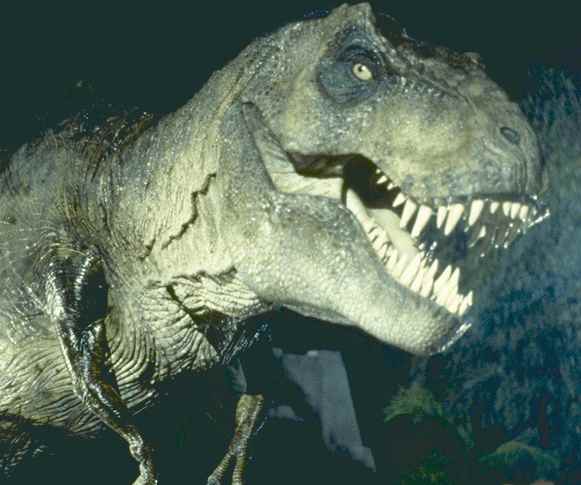
Ultimately, what purpose does the gate in Jurassic Park serve? In relation to the diegetic world of the film, the gate offers no protective use, disconnected from the electrified fences used to pen the dinosaurs. In fact, the gate is never shown in the film again! And though it presents the point at which the action bleeds into chaos, marked moments of effects before this point in the film separate Spielberg's building-block approach to tension from that of King Kong's distinct filmic binary. In the end, the gates of Jurassic Park represent a hypocritical sort of necessary excess, both within the world of the film and as part of the spectacle of modern blockbuster filmmaking. Constructed through multiple elements of mis-en-scene, the gate as an entity alludes to the important of size and showmanship without serving any other real function. It maintains the film's thematic narrative criticism of gluttonous entertainment-business practices (Represented, for example, by the lawyer, the JP products, “spared no expense,” etc), while at the same time succumbing to Hollywood's own brand of profligacy. Perhaps this complexity results from Spielberg's deft direction, but it seems more likely a product of Hollywood blockbuster tradition, where spectacle overrules necessity, even in this most minute scene.
Originally published on Metaphilm.com December 4th, 2005.
Revisit: North By Northwest

An MGM release 1959
Directed by Alfred Hitchcock
Written by Ernest Lehman
A hapless New York advertising executive (Cary Grant) is mistaken for a government agent by a group of foreign spies, and is pursued across the country while he looks for a way to survive.
Working with screenwriter Ernest Lehman, Hitchcock was originally comissioned to do an adaptation of the novel The Wreck of the Mary Deare by Hammond Innes, but the two hit a road block. After scrapping the project, Lehman said that he wanted to write the ultimate Hichcock flick. The legend goes that Hichcock had always wanted to make a film featuring an intense climax atop Mount Rushmore, and within days North by Northwest was born.
In many ways, North by Northwest is the ultimate Hitchcock film. Perhaps his most well known, it features two iconic scenes in Hitch's canon - the intense plane sequence and the even more intense chase atop Mount Rushmore. As always with Hitchcock, the film is visually brilliant; beautiful high angle crane shots and quick pans give way to resounding depth. The film deals with traditional Hitchcock themes of mistaken identity, blurred reality, and doubling, and features the most pure example of the Hitchcock 'MacGuffin' (a physical object that everyone in a movie is chasing after but which has no deep relationship to the plot): the microfilm containing government secrets which the spies are attempting to smuggle out of the country.
Cary Grant supposedly felt the script was convoluted and didn't make sense, but that doesn't show in his performance, which comes across as effortless and breezy. Grant was almost entering the 'grouch' phase at this point is his career, but he's a pleasure to watch as an affable victim of circumstance. 
A must see for anyone who enjoys the cinema.
Tuesday, April 24, 2007
WTF?

Darth Vadar Hot Air Balloon Takes Fandom to New Heights
I may be a Star Wars dork, but that thing is absurd!
Monday, April 23, 2007
I Scream Man

I tend to have strong affinity for super-cheesy horror flicks, the 1995 Clint Howard vehicle Ice Cream Man being the perfect example.
Well, /Film.com is reporting that Crispin Glover just signed on to star in The I Scream Man, an independent horror flick which follows a vengeful ice cream vendor, driven by brutal memories from his twisted past, who wreaks bloody havoc on the small town of Hooper, California.
Is it just me, or do these two films sound exactly the same? It was stupid and cheesy the first time around, what makes them think this will be any different? I love Crispin Glover, and I'm sure he will make this watchable, but simply putting a stronger cast in something that's silly as hell does not make for a better film.
Sunday, April 22, 2007
Revisit: eXistenZ
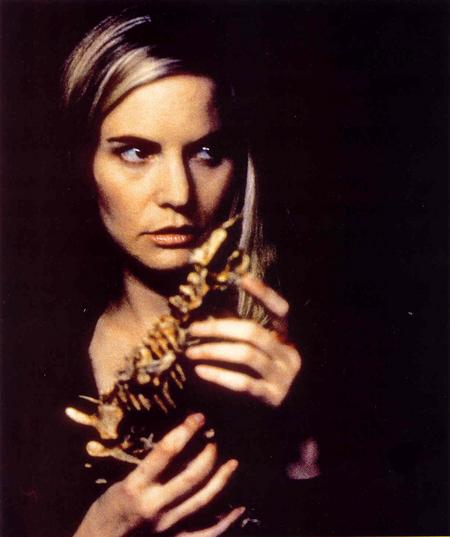
A Dimension films release 1999
Written & Directed by David Cronenberg
A videogame designer (Jennifer Jason Leigh) creates a virtual-reality game that taps into players' minds.
An existentialist film about the power of gaming, eXistenZ is unmistakably Cronenberg. Violent, gruesome, and rampant with flesh, the film acts as a sort of compendium to his 1983 masterpiece Videodrome; it explores similar themes of human sexuality and technology, along with blurred visions of reality, and even has many direct references to Videodrome ("Death to eXistenZ!", the fleshy gun/pods, etc). Cronenberg has an excellent way of taking imagery and recontextualizing it, reframing objects, characters, and settings so that they become unique, or take on new meanings. For example, the Chinese Restaurant present in this film. While not one of his premiere works, eXistenZ is a fun film by one of the best working directors of our time.
Tuesday, April 17, 2007
Paul Newman & the Cinematic South

The Ideal Imposter: Paul Newman & the Cinematic South
A parody of the Christ story set on a Florida chain gang, Cool Hand Luke is one of those movies so many people think is great that critics who recognize life is short just shudder and change the subject. It’s not worth trying to get fans to notice how pointless Luke is, or how inordinately pleased the filmmakers are by the hip equation of the hero with Jesus—which is cleverness in a vacuum, because the equation actually doesn’t tell us anything about either man.
That quote comes from an interesting article by Tom Carson that explores Paul Newman's connection with the American south. Newman starred in a slew of films that took place in our nation's heartland - from Cat on a Hot Tin Roof to Sweet Bird of Youth, Hud to Cool Hand Luke. While I don't agree with his assertion that Cool Hand Luke is "pointless" - Luke is one of my favorite films of all time, and regardless of the overt religious undertones, it is a fun picture that does explore the psychological effects of imprisonment to some degree. But Carson draws an interesting connection between Newman and the deep South; Despite his Cleveland, middle-class upbringing, Newman always managed to convince audiences that he was that lonesome southern man simply looking for his peace/piece.
it’d be a mistake to call the disconnect incongruous; a more accurate word would be crucial. Audiences always knew this puckish smoothie was just acting when he curled his lip to taunt us with his contempt for gentility—not really plumbing the depths of postwar sophistication or bitterness, but showing us what a rakish good time could be had in their shallows. A tragedian he wasn’t, and that’s why he was so phenomenally enjoyable. It made him the ideal inauthentic Southerner for a Hollywood whose new appetite for bold themes was in hock to the old imperative of making them congenial.
I've made the point before that anything Newman touches essentially turns to gold, and I'll stand by that statement. Even at his current age, Newman remains a nuanced performer. In tribute, here are some sweet scenes from Cool Hand Luke:
Monday, April 16, 2007
The Grindhouse Debacle
It was at the end of Death Proof that I came to the following conclusion – Quentin Tarantino needs a girlfriend.

Grindhouse has been out for two weeks now and it's official - the film is a bomb. There's been some outcry from the film-making community, and a lot of speculation as to why it failed - audiences who walked out not knowing it was a double feature, the 3 hour+ run time limiting turn over. Frankly, I think it failed for a couple of obvious reasons: it's a violent niche flick that isn't all that good. Not a very big market of people looking for that.
A lengthy comment about the film over at Film Brain essentially echoes my own feelings:
Simply stated, Tarantino can't write dialog for women to save his life. Listening to the palaver of the two disparate groups of women in the film – be it about making out or muscle cars – you'd think the screenwriter had never actually spent time with women. This isn't Quentin trying to write intentionally bad dialog, à la The Cheerleaders – the style is identical to that of his earlier films, except that unlike the nameless hoods of Reservoir Dogs, or the multitude of characters in Pulp Fiction, the women in Death Proof aren't characters at all, they're merely character types; agents for Tarantino's excursions into violence and vengeance. In past films, even minor characters (Gogo Yubari, Honey Bunny) had a certain three-dimensional quality to them. None of that is to be found here. (Unless of course you consider liberal use of "Nigga' please" as character defining.)
Several of the lengthy dialog scenes go absolutely nowhere, fizzle out, or are otherwise pointless. For example, Kim and Zoe's story about the ditch in Thailand – neither funny, revealing, nor particularly interesting, its function (as far as I can tell) is simply to prepare us for Zoe's miraculous survival later in the film. Where's the payoff we've come to expect from such setups?

Mr. Bean is Really Popular
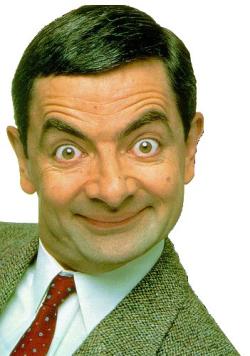
How did Mr. Bean become Britain's unofficial ambassador?
The lastest Bean film, Mr Bean's Holiday, is a global smash hit, No 1 in 21 countries and top of the international box office. And if you ask a non-Brit to describe Mr Bean, these are the words they deliver back: hapless, awkward, self-conscious, childlike, disaster-prone ... and British. Resplendent in geeky tweed, the Mini-driving Mr Bean increasingly seems to be a symbol of Britishness around the globe.
One of the many ironies in this story is that Atkinson says his quintessentiallyBritish creation was in part inspired by a French comic character, Monsieur Hulot, invented by French actor, director, writer and producer Jacques Tati, who released a series of films, including Monsieur Hulot's Holiday. Mainly, however, Bean was the result of decades of the comic studying himself.
That's an excerpt from a really interesting article in The Guardian probing the multi-cultural impact of Mr. Bean. The Tati influence is striking, when you think about it, but I think Rowan Atkinson takes the whole uncomfortable thing beyond the realm of idiocy. But what is most interesting is the impact Mr. Bean has had worldwide, particularly in the middle east.
The character has been popular across the Middle East, from Israel to Iraq, for years. The new film is currently the No 1 box-office attraction in Lebanon and the United Arab Emirates. There have been more than 14m Mr Bean videos sold worldwide; many have been sold in Tehran's shops and stalls.
Rowan Atkinson's lack of fine motor skills once again proves that brain-damage-adventure is still Britain's funniest genre. - I Watch Stuff
Saturday, April 14, 2007
Revisit: Mad Max Beyond Thunderdome

A Warner Brothers picture 1985
Directed by:
George Miller
George Ogilvie
Writing Credits:
Terry Hayes &
George Miller
Mad Max (Mel Gibson) is a former cop who finds himself in a post-apocolyptic desert town called Bartertown. He is hired by the leader of the city to fight in a gladiator like arena called Thunderdome, so he can kill Auntie's (Tina Turner) rival Master Mlaster. Later banished, Max finds a group of children that survived a plane crash during the war. Some of the children leave to find their fabled tomorrowmorrow land, so Mad Max has to save them from the desert and from Auntie's Bartertown.
Absurdity abounds in this third installment in Mel Gibson's post-apocalyptic Mad Max series. The Thunderdome sequence is cool as hell, and the car chases are sweet, but this thing starts sucking whenever it tries to go "Beyond Thunderdome". Coherence and logic are not one of the film's friends. And another thing - why do women find Mel Gibson attractive? The man grunts and groans his way through this flick looking like the missing link. I mean, I guess if you like illiterate drunk Australian douchebags you'd find him attractive. But at least its got some strange ideas (Tina Turner as the evil queen?!) and funny moments (Mel Gibson almost kills a retard!). They don't really make ridiculous action flicks like this anymore - insincere and totally insane - so the humor and spunk are definitely something to cherish.
Friday, April 13, 2007
Revisit: Seven Brides for Seven Brothers

An MGM release 1954
Directed by Stanley Donen
Writing credits:
Stephen Vincent Benet (story The Sobbin' Women)
Albert Hackett
Frances Goodrich
Dorothy Kingsley
Adam (Howard Keel), the eldest of seven brothers, goes to town and convinces Milly (Jane Powell) to marry him. Milly sets out to reform the uncouth siblings, who are anxious to get wives of their own.
One of my top three favorite musicals, Seven Brides is an absurd exploration o love as filtered through hyper-accentuated representations of gender. Adam - the manliest man imaginable - marries Milly - the most hopless romantic of women imaginable - and they sing lovely backwoods songs about lonliness and love. The film is a great example of widescreen formatting - MGM crams somewhere upwards 15 characters on screen at once, dancing intensely. Makes a great case against adjusted TV formatting. Fantastic entertainment.
Thursday, April 12, 2007
Rip Torn DUI Heads to Trial

A court clerk told The Journal News on Tuesday that Torn had decided on the nonjury trial, scheduled for June. The 76-year-old actor was charged Dec. 4 after a crash on Hardscrabble Road in North Salem, a suburb about 60 miles north of New York City. Torn, who lives in Lakeville, Conn., had lost control of his sedan and struck a tractor-trailer.
Frankly, I don't give a shit about this at all. I just wanted to share that excellent, excellent mug shot. Also, this hilarious video.
God, I love Rip Torn.
Barbarella to be Remade?

Casino Royale writers to remake Barbarella
A remake of Barbarella has been in the works for years now; originally Drew Barrymore had expressed interest in reviving the film, and now it seems like the writers from Casino Royale, Neal Purvis and Robert Wade, are gonna be tackling the script. Personally, I wish they would leave this film alone - it's one of my favorite sci-fi flicks of all time, a sly mix of camp, eroticism, and absurdity. Part of the reason it works so well is because it's trapped in it's time. You can't recreate the cheesy, psychadelic special effects or recapture the sexuality of Barbarella. A remake would simply imply a sluttier, suped-up version, and that would be terrible. Not too mention that Neal Purvis and Robert Wade don't exactly have the best track record.
They just can't leave anything alone anymore, can they? Oh well. Go out and rent the original with a couple of friends - it makes a great group viewing experience, and is loads of fun. Plus, Jane Fonda is super hot.
Jacques Tati Retrospective
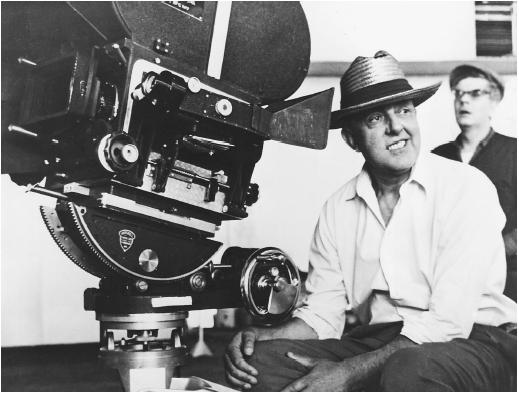
On Tuesday I was lucky enough to catch a screening of Play Time, Jacques Tati's undisputed comedic masterpiece and possibly my favorite film of all time. The print was absolutely beautiful - restored for the 2002 Cannes Film Festival by Macha Makeïeff through her distribution company, Les films de mon oncle. Makeïeff was even there in person for a Q&A afterwards, in which she discussed the beauty in Tati's image, theatrical influences, Tatiland as a representation of the modern city (rather than an interpretation of circa-1967 Paris), and Tati's amazing comedic ability to transform objects into sources of tension.
A clip from Play Time
I can not stress enough how beautiful Tati's films are. Though he only made five in the span of thirty years, each one is rich with humor and a unique understanding of the world. Generally unknown to those outside of the academic cinema world, his work remains criminally underrated and unseen. Thankfully the French Institute is hosting a retrospective of all of Tati's films throughout the month of April. While it may be too late to catch Play Time (make sure to rent the fantastic Criterion release on DVD), you can still go see Mon Oncle, Parade, and M.Hulot's Holiday. Catching these films on print is rare, so if you're in NYC anytime soon, I highly suggest you check them out. Here are the dates:
Tuesday, April 17 at 12:30, 4 & 7:30pm
Four Short Films By Tati
Friday, April 20 at 7pm
Mon Oncle (My Uncle)
Tuesday, April 24 at 12:30 & 7:30pm
Parade
Tuesday, April 24 at 4 & 9pm
Les vacances de Monsieur Hulot (Mr. Hulot's Holiday)
All screenings are at the Florence Gould Hall, 55 East 59th Street.
Wednesday, April 11, 2007
Revisit: Gates of Heaven

An MGM release 1980
Directed by Errol Morris
A documentary about a pet cemetary in California, and the people who have pets buried there.
Werner Herzog once bet that he would eat his shoe if a young film student named Errol Morris could complete a film about pet cemeteries. In response, Morris crafted one of the most bizarre, beautiful, funny, and pathetic documentaries of all time. Gates of Heaven probes issues of life, death, and the human condition through pet lovers, and in doing so creates a cast of vivid, real characters who are at once compelling and yet utterly strange. Featuring beautiful cinematography by Ned Burgess, the film's washed out, painterly quality ensures that it will only be more beautiful with age. A must see. 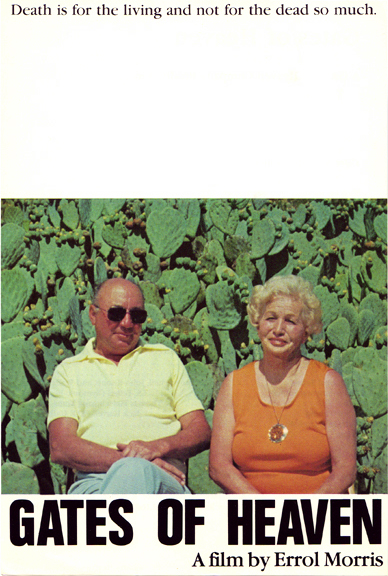
Revolt!
The Projectionist's Revolution
But what if the fiasco in Holtsville was no accident? Imagine an elite corps of prankster projectionists, forcing people to widen their horizons a little. We know you've bought a ticket for 300, but instead here's a lovely new print of All Quiet on the Western Front. Sure, all your friends at school told you to see Meet the Robinsons, but we think you should see Alphaville. Why waste your time on Wild Hogs when instead you can watch Husbands? And there's no way in hell we're going to let you see The Reaping until you've watched Day of Wrath.
Sounds like a plan.
Sunday, April 08, 2007
Revisit: Dead Poets Society

A Touchstone pictures release 1989
Directed by Peter Weir
Written by Tom Schulman
English professor John Keating (Robin Williams) inspires his students to love poetry and seize the day.
Before he donned a white coat and sickened audiences with extreme saccrine in Patch Adams, before he won an Oscar for portraying the hard-nosed mentor to Matt Damon's genius janitor in Good Will Hunting, Robin Williams tackled another inspirational role of sorts in this 1989 drama about prep-school students who step out of themselves and 'seize the day'. Something about dramas from the late 80s/early 90s make them so unmistakibly from that time period; the film hasn't aged poorly, per se, but you can tell that it's from that period right away. The script is good but not great (you can see a lot of the 'conflict' coming from a mile away), and Williams gives a surprisingly good, restrained performance (something he isn't very well known for, especially in such overly-affecting fare). One of his better films.
Subscribe to:
Posts (Atom)
